 Back
BackThe Microbial World and You: Introduction to Microbiology
Study Guide - Smart Notes
 Tailored notes based on your materials, expanded with key definitions, examples, and context.
The Microbial World and You
Microbes in Our Lives
Microorganisms, or microbes, are organisms too small to be seen with the unaided eye. They play essential roles in the environment, industry, and human health.
Types of Microbes: Bacteria, fungi, protozoa, microscopic algae, and viruses.
Pathogenicity: Only a minority of microbes are pathogenic (disease-causing).
Beneficial Roles:
Decomposition of organic waste
Oxygen generation via photosynthesis
Production of chemicals (e.g., ethanol, acetone, vitamins)
Fermentation of foods (e.g., vinegar, cheese, bread)
Industrial and medical products (e.g., cellulase, insulin)
Example: Microbes are used in the production of designer jeans (e.g., Trichoderma for denim fading, Gluconacetobacter for cotton production, Escherichia coli for indigo dye).
Naming and Classifying Microorganisms
Microorganisms are named using a binomial system established by Carolus Linnaeus, consisting of a genus and a specific epithet.
Scientific Names: Italicized or underlined; genus capitalized, species lowercase (e.g., Escherichia coli).
Abbreviation: After first use, genus may be abbreviated (e.g., E. coli).
Descriptive or Honorific: Names may describe features or honor scientists.
Types of Microorganisms
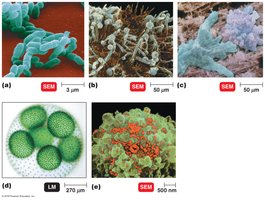
Microorganisms are classified into several major groups based on cellular structure and function.
Bacteria: Prokaryotic, peptidoglycan cell walls, divide by binary fission, diverse metabolism.
Archaea: Prokaryotic, lack peptidoglycan, often extremophiles (e.g., methanogens, halophiles, thermophiles).
Fungi: Eukaryotic, chitin cell walls, absorb nutrients, include yeasts (unicellular) and molds/mushrooms (multicellular).
Protozoa: Eukaryotic, motile (pseudopods, cilia, flagella), absorb/ingest nutrients, free-living or parasitic.
Algae: Eukaryotic, cellulose cell walls, photosynthetic, produce oxygen and carbohydrates.
Viruses: Acellular, DNA or RNA core, protein coat (sometimes lipid envelope), replicate only in host cells.
Multicellular Animal Parasites: Eukaryotic, include helminths (flatworms, roundworms), some microscopic stages.
Classification of Microorganisms: The Three Domains
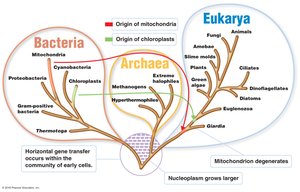
Carl Woese developed a classification system based on cellular organization, dividing life into three domains:
Bacteria: True bacteria, prokaryotic.
Archaea: Prokaryotic, distinct from bacteria, often extremophiles.
Eukarya: Eukaryotic organisms (protists, fungi, plants, animals).
A Brief History of Microbiology
Early Observations and Cell Theory
The development of microbiology began with the invention of microscopes and the observation of microorganisms.
Robert Hooke (1665): Observed cells in cork, beginning cell theory (all living things are composed of cells).
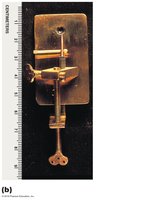
Anton van Leeuwenhoek (1623–1673): First to observe microbes ("animalcules") using simple microscopes.
Spontaneous Generation vs. Biogenesis
Debate existed over whether life could arise spontaneously (spontaneous generation) or only from preexisting life (biogenesis).
Spontaneous Generation: Life arises from nonliving matter ("vital force").
Biogenesis: Life arises only from preexisting living cells.
Key Experiments:
Redi (1668): Disproved spontaneous generation for maggots.
Needham (1745) and Spallanzani (1765): Contradictory results with broth experiments.
Virchow (1858): Proposed biogenesis.
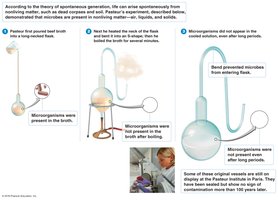
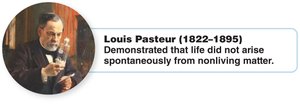
Pasteur (1861): Used S-shaped flasks to show microbes come from the air, not spontaneous generation.
The Golden Age of Microbiology
From 1857 to 1914, major discoveries established the relationship between microbes, disease, and immunity.
Pasteur: Demonstrated fermentation, pasteurization, and the role of microbes in spoilage and disease.
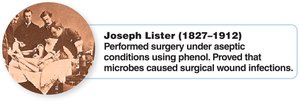
Germ Theory of Disease: Microbes cause disease (Bassi, Pasteur, Lister, Koch).
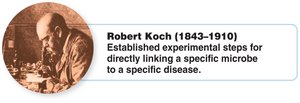
Koch's Postulates: Experimental steps to link a specific microbe to a specific disease.
Jenner: Developed vaccination using cowpox to protect against smallpox.
Antibiotics: Fleming discovered penicillin, the first antibiotic.
Modern Developments in Microbiology
Subdisciplines of Microbiology
Bacteriology: Study of bacteria.
Mycology: Study of fungi.
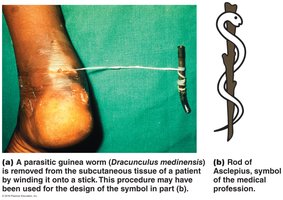
Parasitology: Study of protozoa and parasitic worms.
Immunology: Study of immunity and immune responses.
Virology: Study of viruses.
Genetics and Molecular Biology
Microbial Genetics: Study of inheritance in microbes.
Molecular Biology: Study of how DNA directs protein synthesis.
Genomics: Study of an organism's genes for classification and understanding function.
Recombinant DNA Technology: Combining DNA from different sources to produce useful products (e.g., insulin, vaccines).
Microbes and Human Welfare
Beneficial Activities of Microorganisms
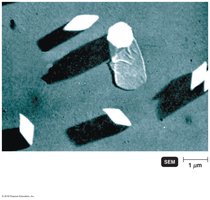
Recycling Elements: Bacteria convert elements (carbon, nitrogen, sulfur, phosphorus) into usable forms for plants and animals.
Bioremediation: Use of microbes to degrade pollutants (e.g., oil spills, sewage).
Insect Pest Control: Microbes such as Bacillus thuringiensis are used as biological insecticides.
Biotechnology: Use of microbes for industrial and medical applications, including recombinant DNA technology.

Microbes and Human Disease
Normal Microbiota and Resistance
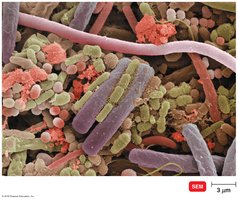
Normal Microbiota: Microbes normally present in and on the human body, providing protection and producing essential vitamins.
Resistance: The body's ability to ward off disease, involving physical barriers and immune responses.
Biofilms
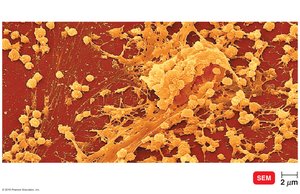
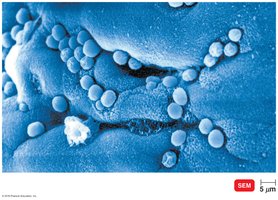
Biofilms are communities of microbes that attach to surfaces and grow into complex structures. They are important in natural environments, industry, and medicine.
Formation: Microbes attach to surfaces (e.g., rocks, teeth, medical devices) and form protective matrices.
Significance: Biofilms can cause persistent infections and are often resistant to antibiotics.
Emerging Infectious Diseases (EIDs)
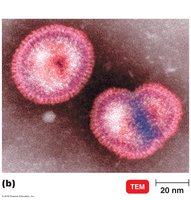
Emerging infectious diseases are new or increasing in incidence, often due to changes in environment, human behavior, or microbial evolution.
Examples:
MERS (Middle East respiratory syndrome)
Avian influenza A (H5N1)
MRSA (methicillin-resistant Staphylococcus aureus)
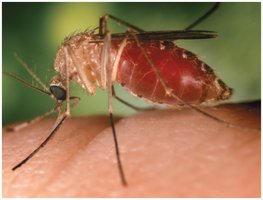
West Nile encephalitis
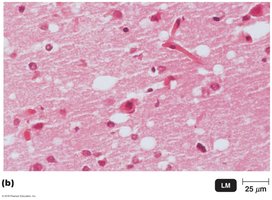
Bovine spongiform encephalopathy (prion disease)
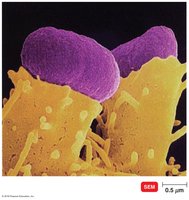
E. coli O157:H7 (toxin-producing strain)
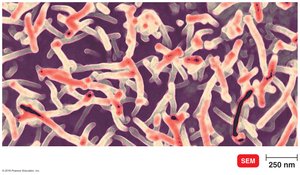
Ebola hemorrhagic fever
Cryptosporidiosis
AIDS (caused by HIV)
Additional info: This study guide covers the foundational concepts of microbiology, including the diversity of microorganisms, their roles in health and disease, historical milestones, and the impact of microbes on human society and the environment. It is suitable for exam preparation in an introductory college-level microbiology course.
