Back
BackThe Microbial World and You: Introduction to Microbiology
Study Guide - Smart Notes
 Tailored notes based on your materials, expanded with key definitions, examples, and context.
The Microbial World and You
Microbes in Our Lives: Germs vs Microbes
Microorganisms, or microbes, are minute living things that are typically too small to be seen with the unaided eye. The term "germ" historically referred to rapidly growing cells that cause disease, but most microbes are not harmful and play essential roles in the environment and human health.
Microbes include: Bacteria, fungi, protozoa, microscopic algae, and viruses.
Pathogenic microbes: Only a small fraction cause disease.
Beneficial roles: Decomposition, oxygen generation, food production, and biotechnology.

Microbes in Our Lives: Importance and Applications
Decompose organic waste and recycle nutrients.
Generate oxygen through photosynthesis (e.g., algae).
Produce chemicals (ethanol, acetone, vitamins) and fermented foods (vinegar, cheese, bread).
Used in manufacturing (e.g., cellulose) and medicine (e.g., insulin).
Knowledge of microbes helps prevent food spoilage, disease, and epidemics.
The Microbiome
The microbiome (or microbiota) refers to the community of microbes that live stably on and in the human body. These microbes are essential for health, helping to prevent the growth of pathogens and training the immune system.
Normal microbiota: Microbes acquired at birth and throughout life; may be permanent or transient.
Colonization: Occurs only at body sites with suitable nutrients and environment.
Human Microbiome Project (2007): Characterized typical microbiota and their roles in health and disease.
National Microbiome Initiative (2016): Explores microbial roles in various ecosystems.
Naming and Classifying Microorganisms
Scientific Nomenclature
Carolus Linnaeus established the binomial system of nomenclature in 1735. Each organism is given a two-part Latinized name: the genus (capitalized) and the specific epithet (lowercase), both italicized or underlined.
Example: Escherichia coli (E. coli) – honors Theodor Escherich and describes its habitat (colon).
Example: Staphylococcus aureus (S. aureus) – describes clustered, spherical cells and gold-colored colonies.
Classification of Microorganisms
Carl Woese (1978) developed the three-domain system based on cellular organization:
Bacteria
Archaea
Eukarya: Protists, fungi, plants, animals
Types of Microorganisms
Bacteria
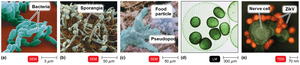
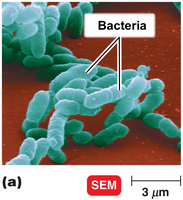
Bacteria are single-celled prokaryotes with peptidoglycan cell walls. They reproduce by binary fission and may move using flagella. Nutrition can be derived from organic or inorganic chemicals, or by photosynthesis.
Prokaryotes: Lack a true nucleus.
Cell wall: Contains peptidoglycan.
Reproduction: Binary fission.
Archaea
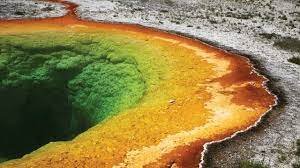
Archaea are prokaryotes that lack peptidoglycan in their cell walls and often live in extreme environments. They include methanogens, extreme halophiles, and extreme thermophiles. Archaea are generally not known to cause disease in humans.
Cell wall: May lack peptidoglycan or be absent.
Habitats: Extreme environments (e.g., hot springs, salt lakes).
Fungi
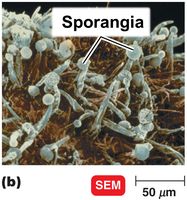
Fungi are eukaryotes with chitin cell walls. They absorb organic chemicals for energy. Yeasts are unicellular, while molds and mushrooms are multicellular. Molds consist of masses of mycelia made up of filaments called hyphae.
Cell type: Eukaryotic.
Cell wall: Chitin.
Nutrition: Absorptive heterotrophs.
Protozoa
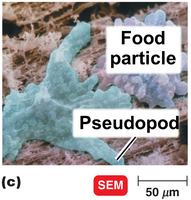
Protozoa are unicellular eukaryotes that absorb or ingest organic chemicals. They may be motile via pseudopods, cilia, or flagella, and can be free-living or parasitic. Some are photosynthetic and reproduce sexually or asexually.
Motility: Pseudopods, cilia, or flagella.
Nutrition: Absorptive or ingestive.
Algae
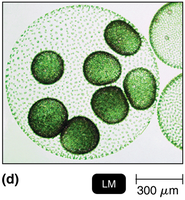
Algae are eukaryotes with cellulose cell walls, found in aquatic and terrestrial environments. They use photosynthesis for energy, producing oxygen and carbohydrates. Both sexual and asexual reproduction are possible.
Cell wall: Cellulose.
Energy: Photosynthesis.
Viruses
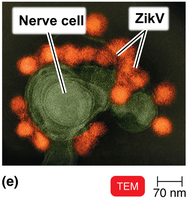
Viruses are acellular entities consisting of a DNA or RNA core surrounded by a protein coat, sometimes enclosed in a lipid envelope. They can only replicate within a living host cell and are inert outside hosts.
Structure: DNA or RNA core, protein coat, sometimes lipid envelope.
Replication: Only inside living cells.
Multicellular Animal Parasites
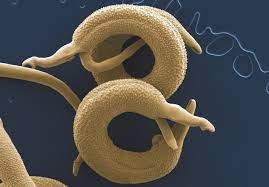
These are eukaryotic multicellular animals, such as parasitic flatworms and roundworms (helminths). While not strictly microorganisms, some stages of their life cycles are microscopic.
Examples: Flatworms, roundworms.
Relevance: Cause diseases in humans and animals.
A Brief History of Microbiology
The First Observations
Robert Hooke (1665) reported that living things are composed of cells, marking the beginning of cell theory. Anton van Leeuwenhoek (1623–1673) was the first to observe microbes, which he called "animalcules," using magnifying lenses.
The Debate over Spontaneous Generation
Spontaneous generation was the belief that life could arise from nonliving matter. Experiments by Francesco Redi, John Needham, and Lazzaro Spallanzani tested this idea, with Spallanzani showing that sealed, heated flasks did not develop microbial growth, supporting biogenesis (life arises from preexisting life).
The Theory of Biogenesis
Rudolf Virchow (1858) proposed biogenesis, but it was Louis Pasteur (1861) who provided experimental proof that microorganisms originate from other microbes, not mystical forces. Pasteur's work led to the development of aseptic techniques in laboratories and medicine.
The First Golden Age of Microbiology
Pasteur's discoveries established the relationship between microbes and disease, immunity, and antimicrobial drugs. He demonstrated fermentation and pasteurization, and his work, along with that of others like Koch and Lister, led to the germ theory of disease.
Fermentation: Microbial conversion of sugar to alcohol without air.
Pasteurization: High heat for a short time to kill harmful microbes in beverages.
Germ theory: Microorganisms cause disease.
Vaccination and Chemotherapy
Edward Jenner developed the first vaccine (against smallpox) using cowpox virus. Chemotherapy, the treatment of disease with chemicals, includes antibiotics (produced by microbes) and synthetic drugs. Alexander Fleming discovered penicillin, the first antibiotic, in 1928.
Branches of Microbiology
Bacteriology: Study of bacteria
Mycology: Study of fungi
Parasitology: Study of protozoa and parasitic worms
Immunology: Study of immunity
Virology: Study of viruses
Molecular Genetics and Biotechnology
Microbial genetics studies how microbes inherit traits, while molecular biology examines how DNA directs protein synthesis. Genomics and recombinant DNA technology have revolutionized classification and practical applications, such as producing human hormones and gene therapy.
Microbes and Human Welfare
Recycling Vital Elements
Microbial ecology studies the relationship between microbes and their environment. Bacteria recycle elements like carbon, oxygen, nitrogen, sulfur, and phosphorus for use by plants and animals.
Sewage Treatment and Bioremediation
Microbes are used to treat sewage and degrade pollutants, converting waste into harmless by-products and cleaning up oil spills and toxic substances.
Insect Pest Control
Microbes such as Bacillus thuringiensis are used as biological pesticides, targeting insect pests without harming other organisms.
Biotechnology and Recombinant DNA Technology
Biotechnology uses microbes for practical applications, including the production of foods, chemicals, vaccines, and enzymes. Recombinant DNA technology allows for genetic modification of microbes for medical and agricultural benefits.
Microbes and Human Disease
Normal Microbiota and Resistance
Normal microbiota are microbes that reside in and on the human body, preventing pathogen growth and producing essential vitamins. Resistance is the body's ability to ward off disease, aided by physical barriers and antimicrobial chemicals.
Emerging Infectious Diseases (EIDs)
EIDs are new or increasing diseases, such as Zika virus disease, which can cause severe birth defects if contracted during pregnancy. Antimicrobial resistance, such as MRSA (methicillin-resistant Staphylococcus aureus), poses significant challenges to treatment.