 Back
Part 2, Exam 1: The Microbial World: Microscopy, Historical Origins, and the Foundations of Microbiology
Study Guide - Smart Notes
 Tailored notes based on your materials, expanded with key definitions, examples, and context.
The Microbial World
Introduction to Microbiology
Microbiology is the study of microorganisms, which are organisms too small to be seen with the naked eye. This field encompasses the structure, function, and impact of microbes on human society and the environment. Microorganisms include bacteria, archaea, fungi, protozoa, algae, and viruses.
Microbial Cell Structure: Microbial cells can be prokaryotic (bacteria and archaea) or eukaryotic (fungi, protozoa, algae).
Activities of Microbial Cells: Microbes are involved in nutrient cycling, fermentation, pathogenesis, and symbiosis.
Impact on Society: Microorganisms play roles in health, disease, biotechnology, and ecological processes.
Microscopy and the Historical Origins of Microbiology
Development of Microscopy
The invention and refinement of the microscope were pivotal in the development of microbiology. Early microscopes allowed scientists to visualize microorganisms for the first time, leading to the discovery of the microbial world.
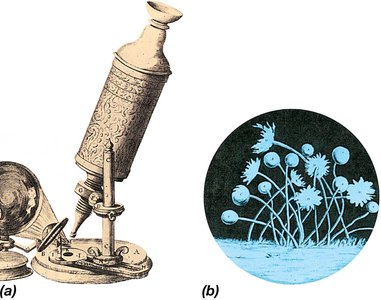
Robert Hooke: First to describe microbes (molds) using a compound microscope in the 17th century.
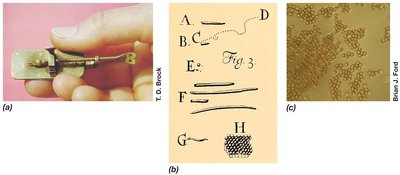
Antoni van Leeuwenhoek: First to observe and describe bacteria, referring to them as "wee animalcules." He used handcrafted single-lens microscopes.
Modern Light Microscopy
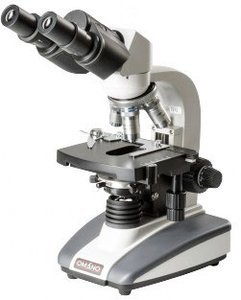
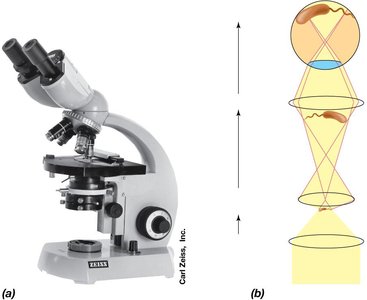
Modern compound light microscopes use visible light and multiple lenses to magnify specimens, allowing observation of cells ranging from 0.2 μm to 1 mm in size.
Ocular and Objective Lenses: Two sets of lenses provide total magnification (objective × ocular).
Magnification: The ability to enlarge an image, typically up to 2,000× in light microscopy.
Resolution: The ability to distinguish two adjacent objects as separate; limited by the wavelength of light (about 0.2 μm for light microscopes).
Types of Light Microscopy
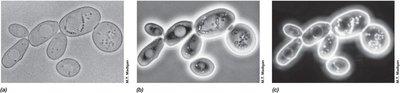
Bright-field Microscopy: Based on differences in contrast between specimen and surroundings; commonly used for stained or naturally pigmented samples.
Phase-contrast and Dark-field Microscopy: Enhance contrast in unstained cells by exploiting differences in refractive index or by collecting scattered light.
Fluorescence Microscopy: Uses fluorescent dyes or proteins to visualize specific structures or organisms.
Confocal Laser Scanning Microscopy: Provides high-resolution, three-dimensional images of cells and biofilms.
Microbial Cultivation and the Expansion of Microbiology
Aseptic Technique and Pure Cultures
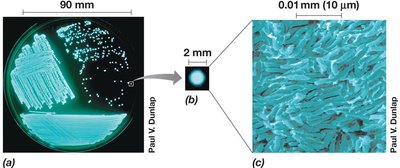
The development of aseptic techniques allowed microbiologists to isolate and grow pure cultures of microorganisms, which was essential for studying their properties and roles in disease.
Aseptic Technique: Procedures to prevent contamination by unwanted microorganisms.
Pure Culture: A culture containing only one type of microorganism, crucial for identifying causative agents of disease.
Historical Theories of Disease and Spontaneous Generation
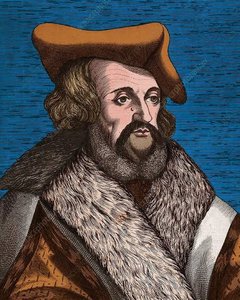
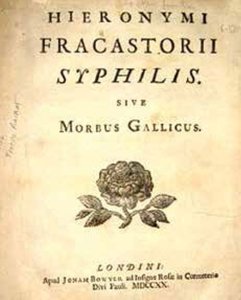
Before the acceptance of the germ theory, diseases were thought to arise from "miasmas" or spontaneous generation. Early thinkers like Girolamo Fracastoro proposed that invisible seeds (contagions) caused disease, but the true microbial nature of these agents was not understood until later.
Louis Pasteur and the Disproof of Spontaneous Generation
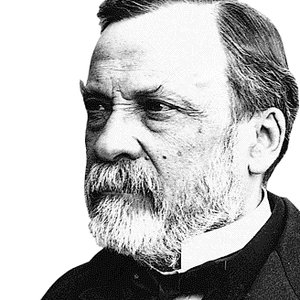
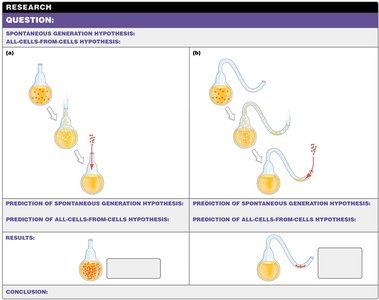
Louis Pasteur conducted experiments that disproved the theory of spontaneous generation, demonstrating that life arises from preexisting cells. His work laid the foundation for sterilization, pasteurization, and the development of vaccines.
Pasteur's Swan-neck Flask Experiment: Showed that sterilized broth remained free of microbial growth unless exposed to airborne microorganisms.
Implications: Established the principle of biogenesis and the common ancestry of all cells.

Koch, Infectious Disease, and Pure Cultures
Robert Koch and the Germ Theory of Disease
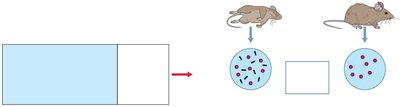
Robert Koch established the link between specific microbes and infectious diseases, formulating a set of criteria known as Koch's postulates. He identified the causative agents of anthrax and tuberculosis and developed solid media for culturing bacteria.
Koch's Postulates: Four criteria to establish a causative relationship between a microbe and a disease.
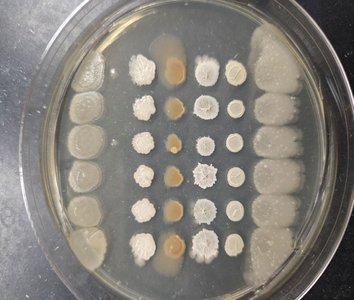
Solid Media and Petri Dishes: Innovations that enabled the isolation of pure cultures.
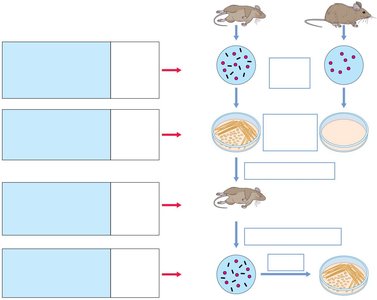
Koch's Postulate | Description |
|---|---|
1 | The suspected pathogen must be present in all cases of the disease and absent from healthy animals. |
2 | The suspected pathogen must be grown in pure culture. |
3 | Cells from a pure culture of the suspected pathogen must cause disease in a healthy animal. |
4 | The suspected pathogen must be reisolated and shown to be the same as the original. |
Limitations: Not all pathogens can be cultured, some diseases are polymicrobial, and suitable animal models may not exist for all diseases.
Discovery of Microbial Diversity
Beijerinck and Winogradsky
Martinus Beijerinck and Sergei Winogradsky expanded microbiology beyond medical applications, focusing on environmental and ecological roles of microbes. They developed enrichment culture techniques and discovered chemolithotrophy (energy generation from inorganic compounds).
Enrichment Culture Technique: Selective growth conditions to isolate specific microbes from natural samples.
Biogeochemical Cycles: Microbes catalyze transformations in the nitrogen and sulfur cycles.
Winogradsky Column: A model ecosystem for studying microbial communities and their metabolic activities.
The Discovery of Antibiotics
Fleming and Waksman
The discovery of antibiotics revolutionized medicine. Alexander Fleming discovered penicillin, while Selman Waksman identified streptomycin and coined the term "antibiotics." These discoveries launched the antibiotics era and transformed the treatment of infectious diseases.
Penicillin: The first true antibiotic, discovered by Fleming in 1928.
Streptomycin: Discovered by Waksman, effective against tuberculosis and other diseases.
Major Subdisciplines of Microbiology
Applied and Environmental Microbiology
Microbiology has diversified into numerous subdisciplines, including medical microbiology, immunology, agricultural and environmental microbiology, microbial ecology, industrial microbiology, biotechnology, and genomics.
Medical Microbiology: Study of pathogens and disease mechanisms.
Microbial Ecology: Study of microbial interactions with their environments.
Industrial Microbiology and Biotechnology: Use of microbes in manufacturing, food production, and pharmaceuticals.
Genomics: Study of the complete genetic material of organisms.
Microbiology as a Career
Microbiologists work in clinical medicine, research and development, public health, food and beverage industries, bioenergy, and bioremediation. The field offers diverse opportunities for contributing to science and society.
