 Back
BackThe Microbial World: Origins, Diversity, and Taxonomy
Study Guide - Smart Notes
 Tailored notes based on your materials, expanded with key definitions, examples, and context.
The Microbial World: Origins and Significance
Introduction to Microbial Life
Microorganisms have dominated Earth's history and continue to play essential roles in all ecosystems. Understanding their origins, abundance, and diversity is foundational to microbiology.
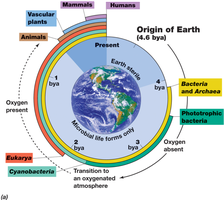
Origin of Life: Life began approximately 4.3–3.8 billion years ago (bya), with microbial life forms being the earliest and most persistent inhabitants of Earth.
Microbial Dominance: For about 80% of Earth's history, life was exclusively microbial, preceding the evolution of multicellular organisms.
Major Evolutionary Events: Key events include the "Great Oxygenation" (~2.4 bya) and the "Cambrian Explosion" (~600 million years ago), which marked the diversification of complex life.
Microbial Abundance: Microbes are the most numerous and diverse forms of life, with estimates of ~2 x 1030 microbial cells on Earth.
Human-Microbe Ratio: The human body contains roughly as many microbial cells (~4 x 10¹³) as human cells (~3 x 10¹³).
Microbial Contribution to Global Biomass
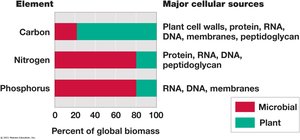
Microbes are major contributors to the global cycling of elements and constitute a significant portion of Earth's biomass.
Elemental Composition: Microbial cells are primary sources of carbon, nitrogen, and phosphorus in the biosphere.
Biogeochemical Cycles: Microbes drive essential processes such as nitrogen fixation, decomposition, and photosynthesis.
Taxonomy and Classification of Microorganisms
Historical Approaches to Classification
Taxonomy is the science of naming, defining, and classifying organisms. Early systems were based on observable traits, but modern taxonomy relies on genetic information.
Binomial Nomenclature: Each species is given a two-part Latin name (Genus species), e.g., Homo sapiens, Chlamydomonas reinhardtii.
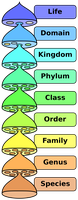
Hierarchical Classification: Organisms are grouped into increasingly specific categories: Kingdom, Phylum, Class, Order, Family, Genus, Species.
Modern Genetic-Based Taxonomy
Advances in molecular biology have revolutionized taxonomy, particularly through the analysis of ribosomal RNA (rRNA) sequences.
rDNA Classification: Organisms are grouped based on similarities in ribosomal RNA gene sequences, providing a more accurate reflection of evolutionary relationships.
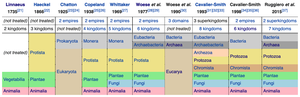
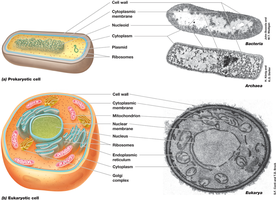
Three-Domain System: Carl Woese and George Fox (1977) proposed classifying life into three domains: Bacteria, Archaea, and Eukaryota, based on rRNA data.
Domains vs. Kingdoms: Domains are broader than kingdoms and reflect fundamental differences in cell structure and genetics.

Evolution of Taxonomic Systems
Taxonomic systems have evolved over time, reflecting new discoveries and changing perspectives on the relationships among organisms.
From Two Empires to Three Domains: Early systems divided life into Prokaryota and Eukaryota; modern systems recognize three domains.
Seven-Kingdom Model: Recent proposals suggest seven kingdoms within the three domains, highlighting microbial diversity in all kingdoms.
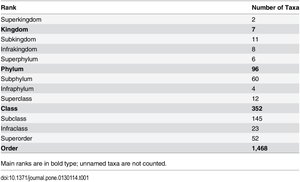
Taxonomic Ranks: Additional ranks such as superkingdom, subkingdom, and infra-classes are used for finer classification.
Tree of Life and LUCA
The Tree of Life illustrates the evolutionary relationships among all living organisms, tracing back to the Last Universal Common Ancestor (LUCA).
LUCA: The hypothetical common ancestor of all current life forms, estimated to have lived ~3.8 bya.
Major Splits: The primary split in the tree of life separates Bacteria from the lineage that gave rise to Archaea and Eukaryota.

Archaea: The Frontier Domain
Unique Features of Archaea
Archaea are a distinct domain of life, more closely related to Eukaryota than to Bacteria. They are known for their unique biochemistry and ability to inhabit extreme environments.
Phylogenetic Position: Archaea share a more recent common ancestor with Eukaryota than with Bacteria.
Extremophiles: Many Archaea thrive in extreme conditions (high temperature, salinity, or acidity), though not all are extremophiles.
Phyla: Five main phyla are described: Crenarchaeota, Euryarchaeota, Korarchaeota, Nanoarchaeota, and Thaumarchaeota. Environmental DNA studies suggest there may be more than 12 phyla.
Pathogenicity: No known Archaea cause diseases in plants or animals.
Examples of Extremophiles
Extremophiles are organisms that thrive in conditions considered extreme for most life forms. Many Archaea are extremophiles, including thermophiles, halophiles, and acidophiles.
Type of Extremophile | Environment | Example |
|---|---|---|
Thermophile | High temperature | Thermus aquaticus |
Halophile | High salinity | Halobacterium salinarum |
Acidophile | Low pH | Picrophilus oshimae |
Methanogen | Anaerobic environments | Methanobrevibacter smithii |
Additional info: Extremophiles are important for biotechnology, such as enzymes used in PCR (e.g., Taq polymerase from thermophiles).
Summary Table: Key Microbial Numbers and Facts
Fact | Value |
|---|---|
Estimated age of Earth | ~4.6 billion years |
Origin of microbial life | ~4.3–3.8 billion years ago |
Number of microbial cells on Earth | ~2 x 1030 |
Number of human cells in body | ~3 x 10¹³ |
Number of microbial cells in human body | ~4 x 10¹³ |
Avogadro’s number | 6.022 x 10²³ |
Key Terms and Definitions
Microbe: A microscopic organism, including Bacteria, Archaea, and some Eukaryotes.
Taxonomy: The science of classification of organisms.
Domain: The highest taxonomic rank, above kingdom.
LUCA: Last Universal Common Ancestor, the most recent population of organisms from which all organisms now living on Earth have a common descent.
Extremophile: An organism that thrives in extreme environmental conditions.
