 Back
BackThe Microbial World: Structure, Diversity, and Evolution
Study Guide - Smart Notes
 Tailored notes based on your materials, expanded with key definitions, examples, and context.
The Microbial World
Introduction to Microorganisms
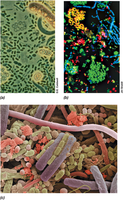
Microorganisms, often referred to as microbes, are life forms too small to be seen by the naked eye. They are highly diverse in both form and function, and are found ubiquitously throughout the Earth. Microbes can be single-celled, form complex structures, or even be multicellular, and they typically exist within microbial communities. As the oldest form of life, microorganisms constitute a major fraction of Earth's biomass and surround plants and animals, playing essential roles in ecological and biological processes.
Diversity: Includes bacteria, archaea, fungi, protozoa, algae, and viruses.
Ubiquity: Found in soil, water, air, and within other organisms.
Community Living: Microbes often interact in complex communities, influencing each other's growth and activity.
Biomass: Microorganisms represent a significant portion of Earth's living matter.
Microbial Applications
Microorganisms have numerous applications in biotechnology, medicine, agriculture, and environmental science. Their ability to metabolize a wide range of substances makes them invaluable for processes such as fermentation, bioremediation, and the production of antibiotics.
Biotechnology: Used in genetic engineering, enzyme production, and synthesis of pharmaceuticals.
Medicine: Production of antibiotics, vaccines, and diagnostic tools.
Agriculture: Nitrogen fixation, pest control, and soil health improvement.
Environmental Science: Bioremediation of pollutants and waste treatment.
Evolutionary Relationships and the Phylogenetic Tree of Life
The Universal Tree of Life
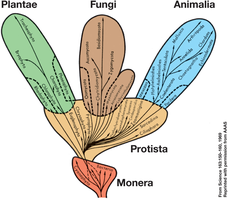
The Universal Tree of Life illustrates the evolutionary relationships among all living organisms, based on molecular and genetic data. It highlights the three domains of life: Bacteria, Archaea, and Eukarya. This phylogenetic framework helps scientists understand the origins and diversification of microbial life.
Bacteria: Prokaryotic, diverse metabolic capabilities.
Archaea: Prokaryotic, often found in extreme environments.
Eukarya: Includes plants, animals, fungi, and protists; characterized by membrane-bound organelles.
Structure and Activities of Microbial Cells
Cellular Structure
All cells share four fundamental structures: a cytoplasmic membrane, cytoplasm, ribosomes, and genetic material (DNA). The cell is a living compartment that interacts with its environment and other cells, forming the basis of microbial life.
Cytoplasmic Membrane: Barrier separating the cell from its environment.
Cytoplasm: Gel-like substance containing cellular components.
Ribosomes: Sites of protein synthesis.
Genetic Material: DNA (or RNA in some viruses) encodes cellular functions.
Prokaryotic vs. Eukaryotic Cells
Microbial cells are classified as either prokaryotic or eukaryotic. Prokaryotes include Bacteria and Archaea, which lack membrane-bound organelles and a nucleus. Eukaryotes include plants, animals, algae, protozoa, and fungi, and possess organelles such as mitochondria and chloroplasts, with DNA enclosed in a nucleus.
Prokaryotes: No nucleus, no organelles, single circular chromosome.
Eukaryotes: Membrane-bound nucleus, organelles, multiple linear chromosomes.
Viruses
Viruses are obligate parasites that replicate only within host cells. They are not considered cells and do not carry out metabolism independently. Viral genomes may consist of double-stranded or single-stranded DNA or RNA, and viruses are classified based on their structure, genome composition, and host specificity.
Obligate Parasites: Require host cells for replication.
Genome: DNA or RNA, small in size.
Classification: Based on structure, genome, and host range (e.g., bacteriophages infect bacteria).
Properties of Microbial Cells
Cell Size and Morphology
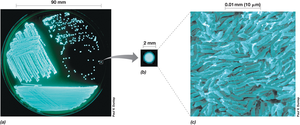
Cell morphology refers to the size and shape of microbial cells. Most prokaryotes range from 0.2 to 2 micrometers in diameter, while eukaryotic cells are typically 5 to 100 micrometers in length. Some prokaryotes are exceptionally large or small, and cell shape can vary widely (e.g., cocci, bacilli, spirilla).
Prokaryotic Size: 0.2–2 μm in diameter.
Eukaryotic Size: 5–100 μm in length.
Morphology: Shapes include spherical (cocci), rod-shaped (bacilli), spiral (spirilla), and others.
Surface Area and Volume Relationships in Cells
The surface area-to-volume ratio is a critical factor in cell function, affecting nutrient uptake and waste removal. Smaller cells have a higher ratio, enabling more efficient exchange with their environment, which is particularly important for prokaryotes.
High Surface Area-to-Volume Ratio: Facilitates rapid nutrient uptake and waste elimination.
Cell Efficiency: Smaller cells are generally more efficient in metabolic processes.
Cell Morphologies
Microbial cell morphology is determined by genetic and environmental factors. The main shapes include cocci (spherical), bacilli (rod-shaped), and spirilla (spiral-shaped). Morphology can influence motility, nutrient acquisition, and survival in different environments.
Cocci: Spherical cells.
Bacilli: Rod-shaped cells.
Spirilla: Spiral-shaped cells.
Summary Table: Prokaryotes vs. Eukaryotes
Feature | Prokaryotes | Eukaryotes |
|---|---|---|
Cell Type | Bacteria, Archaea | Plants, Animals, Fungi, Protists |
Nucleus | Absent | Present |
Organelles | Absent | Present |
Genome | Single, circular DNA | Multiple, linear DNA |
Size | 0.2–2 μm | 5–100 μm |
Additional info:
Microbial communities are essential for nutrient cycling, environmental stability, and human health.
Viruses, though not cellular, play significant roles in gene transfer and disease.
Surface area-to-volume ratio is mathematically expressed as , where A is surface area and V is volume.
