 Back
Lec 27: The Mosquito Microbiome and Its Impact on Vector Competence
Study Guide - Smart Notes
 Tailored notes based on your materials, expanded with key definitions, examples, and context.
The Mosquito Microbiome and Vector-Borne Disease Transmission
Introduction to the Mosquito Microbiome
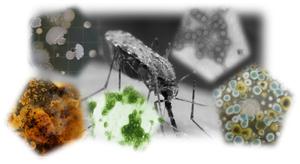
The mosquito microbiome refers to the diverse community of microorganisms residing within mosquitoes, including bacteria, fungi, and viruses. This field has revolutionized our understanding of vector-borne diseases, shifting the paradigm from a simple mosquito-pathogen interaction to a complex tripartite relationship involving the mosquito, its microbiome, and the pathogen.
Core Concepts in Vector Biology
Vector Competence
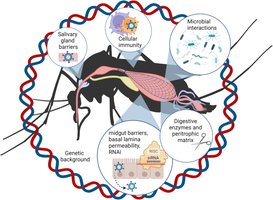
Vector competence is the intrinsic ability of a mosquito (determined by its genetics and physiology) to acquire, maintain, and transmit a pathogen. It is a key factor in the epidemiology of diseases such as malaria, dengue, and Zika.
Definition: The capacity of an individual mosquito to become infected with a pathogen and subsequently transmit it to a new host.
Determinants: Genetic background, immune responses, and interactions with the microbiome.
Vectorial Capacity
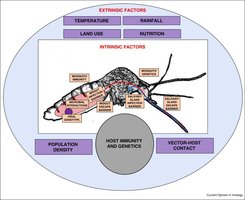
Vectorial capacity describes the overall ability of a mosquito population to transmit a pathogen within a community. It encompasses vector competence as well as ecological and behavioral factors.
Components: Mosquito abundance, biting rate, lifespan, and environmental influences.
Distinction: Vectorial capacity is a population-level measure, while vector competence is an individual-level trait.
Composition of the Mosquito Microbiome
Microbial Diversity and Localization
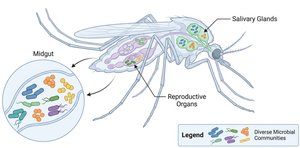
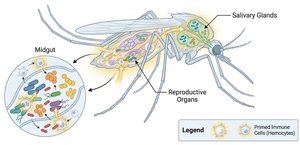
Mosquitoes harbor a diverse array of microorganisms, primarily in the midgut, but also in the salivary glands and reproductive organs. These microbial communities play crucial roles in mosquito physiology and vector competence.
Bacteria: Genera such as Wolbachia, Asaia, Enterobacter, and Serratia.
Fungi: Includes yeasts (e.g., Wickerhamomyces) and filamentous fungi (e.g., Talaromyces).
Viruses: Insect-specific viruses (ISVs) that infect mosquitoes but not humans.
Mechanisms of Microbiome Impact on Pathogen Transmission
Immune System Priming
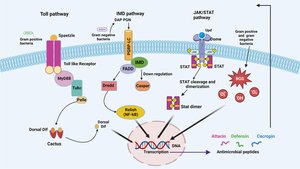
Resident bacteria in the mosquito microbiome continuously stimulate the mosquito's immune system, maintaining a basal level of immune activity. This priming enables the mosquito to mount a rapid and effective response against newly ingested pathogens.
Immune Pathways: Major pathways include Toll, IMD, and JAK-STAT, which are activated by microbial signals.
Antimicrobial Peptides (AMPs): These pathways induce the production of effectors such as cecropins and defensins that can directly target viruses and parasites.
Direct Pathogen Inhibition
Certain microbes within the mosquito microbiome produce metabolites that are directly toxic to pathogens, independent of the mosquito's immune system.
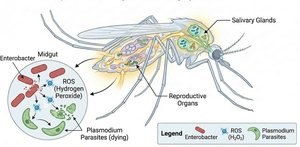
Reactive Oxygen Species (ROS): Some Enterobacter strains secrete ROS, such as hydrogen peroxide, which can kill Plasmodium parasites in the mosquito midgut.
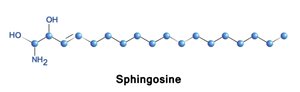
Viral Blocking: Bacterial metabolites like sphingosine can inhibit the fusion of viruses (e.g., Dengue) with mosquito host cells.
Resource Competition
Pathogens and symbiotic microbes often compete for essential nutrients within the mosquito. This competition can limit pathogen replication and transmission.
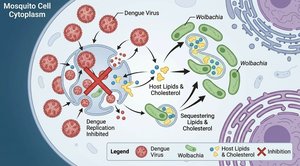
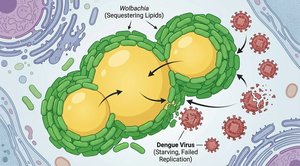
Lipid Sequestration: The Dengue virus requires host lipids for replication. Symbionts like Wolbachia can sequester these lipids, effectively starving the virus and preventing its growth.
The Wolbachia Phenomenon
Introduction and Mechanisms
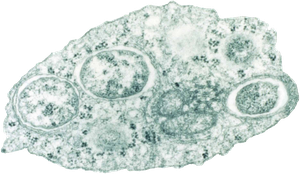
Wolbachia is a maternally inherited bacterium found in many insect species. Its introduction into Aedes aegypti mosquitoes has provided a powerful tool for blocking pathogen transmission.
Pathogen Blocking: Wolbachia primes the mosquito immune system and competes with viruses for space and nutrients.
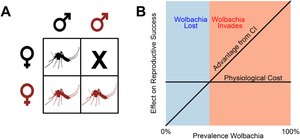
Cytoplasmic Incompatibility: Ensures the spread of Wolbachia through mosquito populations by favoring the reproductive success of infected females.
Population Replacement and Suppression Strategies
There are two main strategies for using Wolbachia in mosquito control:
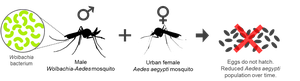
Population Replacement: Infected females pass Wolbachia to their offspring, gradually replacing the wild population with less competent vectors.
IIT-SIT (Incompatible Insect Technique): Release of infected males leads to unviable eggs when mating with wild females, suppressing mosquito populations.
Innovative Microbiome-Based Disease Control Strategies
Paratransgenesis
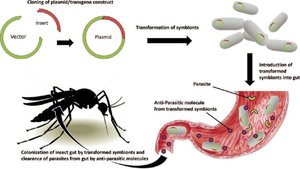
Paratransgenesis involves genetically engineering mosquito symbionts (e.g., midgut bacteria) to express molecules that kill pathogens before they can be transmitted.
Application: Engineered bacteria colonize the mosquito gut and secrete anti-parasitic or antiviral compounds.
Microbiome-Derived Products
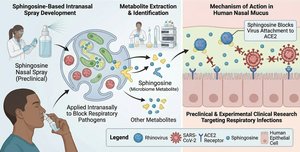
Natural metabolites produced by the mosquito microbiome, such as sphingosine, are being developed into new drugs or transmission-blocking sprays.
Example: Sphingosine-based nasal sprays are under investigation for blocking respiratory pathogens in humans.
Probiotics for Mosquitoes
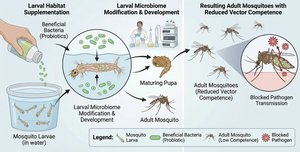
Altering larval environments to favor beneficial bacteria can reduce the vector competence of adult mosquitoes, providing a non-chemical method for disease control.
Method: Supplementing larval habitats with probiotics leads to adult mosquitoes with reduced ability to transmit pathogens.
The Case of Dengue: Epidemiological Impact and Microbiome Interventions
Global Surge and Serotype Complexity
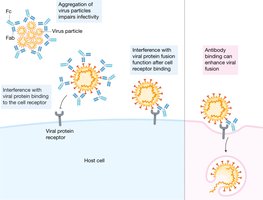
Recent years have seen a dramatic increase in Dengue cases worldwide, driven by climate change and expanding mosquito habitats. All four Dengue virus serotypes (DENV 1–4) are circulating, increasing the risk of severe disease due to antibody-dependent enhancement (ADE).
Antibody-Dependent Enhancement (ADE): A second infection with a different serotype increases the risk of severe Dengue (hemorrhagic fever).
Wolbachia-Based Success Stories
The introduction of Wolbachia into Aedes aegypti populations has led to significant reductions in Dengue transmission in real-world settings.
Lipid Competition: Wolbachia sequesters host lipids, starving the Dengue virus and preventing replication.
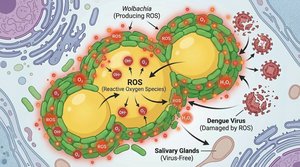
ROS Production: Wolbachia stimulates the production of reactive oxygen species, damaging the virus before it reaches the salivary glands.
Beyond Pathogen Blocking: The Nutritional Axis
Microbiome as a Nutrient Factory
The mosquito gut microbiome synthesizes essential nutrients, such as B vitamins, that mosquitoes cannot produce themselves. These nutrients are crucial for mosquito metabolism and, indirectly, for supporting pathogen replication.
B-Vitamin Link: Removal of vitamin-producing bacteria weakens mosquito metabolism, reducing their competence to transmit Dengue.
Singapore's IIT-SIT Model
Suppress and Replace Strategy
Singapore's IIT-SIT approach involves releasing millions of Wolbachia-infected male mosquitoes. When these males mate with wild females, the resulting eggs do not hatch due to cytoplasmic incompatibility, leading to population suppression and reduced disease incidence.
Outcome: Over 80% suppression of wild Aedes populations and a 71-72% reduction in Dengue incidence in treated areas.

New Horizons: Vaccines and Antivirals
Hybrid Strategies for Dengue Control
The future of Dengue control lies in combining microbiome-based interventions with human medical advances such as vaccines and antivirals.
Qdenga (TAK-003): A live-attenuated vaccine suitable for mass immunization, effective even in individuals without prior Dengue infection.
Mosnodenvir (Antiviral): An oral antiviral drug in clinical trials, targeting viral proteins NS3 and NS4B to inhibit viral replication.

Summary Table: Key Microbiome Mechanisms in Mosquito Vector Control
Mechanism | Microbial Agent | Pathogen Targeted | Mode of Action |
|---|---|---|---|
Immune Priming | Various bacteria | Viruses, parasites | Activation of Toll, IMD, JAK-STAT pathways; AMP production |
Direct Inhibition | Enterobacter | Plasmodium | ROS secretion (e.g., H2O2) |
Resource Competition | Wolbachia | Dengue virus | Lipid and cholesterol sequestration |
Population Suppression | Wolbachia-infected males | All pathogens | Cytoplasmic incompatibility (IIT-SIT) |
Paratransgenesis | Engineered symbionts | Parasites, viruses | Expression of anti-pathogen molecules |
Additional info: The study of the mosquito microbiome is a rapidly evolving field, integrating concepts from microbial ecology, immunology, genetics, and public health. Understanding these interactions is essential for developing sustainable and effective vector control strategies.
