 Back
The Prokaryotes: Domains Bacteria and Archaea – Classification, Structure, and Diversity
Study Guide - Smart Notes
 Tailored notes based on your materials, expanded with key definitions, examples, and context.
Chapter 11: The Prokaryotes – Domains Bacteria and Archaea
Overview of Prokaryotic Diversity
This chapter explores the classification, structure, and ecological roles of prokaryotes, focusing on the domains Bacteria and Archaea. Prokaryotes are the most abundant and diverse group of organisms on Earth, occupying a wide range of environments and playing essential roles in biogeochemical cycles, health, and disease.
Classification of Prokaryotes
Major Taxonomic Groups
Bacteria: Includes multiple phyla, classified by Gram reaction, metabolic properties, and genetic characteristics.
Archaea: Distinct from bacteria, often extremophiles, lacking peptidoglycan in their cell walls.
Prokaryotes are classified into phyla, classes, and genera based on genetic, morphological, and physiological traits. The following table summarizes selected groups:
Domain | Phylum | Selected Classes | Key Features |
|---|---|---|---|
Bacteria (Gram-Negative) | Pseudomonadota (Proteobacteria) | Alpha-, Beta-, Gamma-, Delta-, Epsilonproteobacteria | Largest group; diverse metabolism |
Bacteria (Gram-Negative) | Cyanobacteria | Cyanobacteria | Oxygenic photosynthesis |
Bacteria (Gram-Positive) | Bacillota (Firmicutes) | Bacilli, Clostridia | Low G+C content; endospore formers |
Archaea | Thermoproteota, Euryarchaeota | Thermoprotei, Methanobacteria, Halobacteria | Extremophiles: thermophiles, halophiles, methanogens |
Additional info: Classification is continually updated with advances in molecular phylogenetics.
Gram-Negative Bacteria
Pseudomonadota (Proteobacteria)
The largest and most diverse group of Gram-negative bacteria, divided into five classes based on genetic and metabolic differences.
Alphaproteobacteria: Adapted to low-nutrient environments; often have prosthecae (stalks or buds).
Betaproteobacteria: Diverse group, includes important pathogens and environmental bacteria.
Gammaproteobacteria: Includes many medically and ecologically significant genera.
Deltaproteobacteria: Includes bacteria with unique predatory or sulfur-reducing lifestyles.
Campylobacterota: Helical or curved rods, often microaerophilic.
Key Genera and Their Roles
Alphaproteobacteria
Pelagibacter: Among the most abundant marine bacteria; crucial in the carbon cycle.
Azospirillum: Nitrogen-fixing, associates with plant roots.
Acetobacteraceae (Acetobacter, Gluconobacter): Convert ethanol to acetic acid.
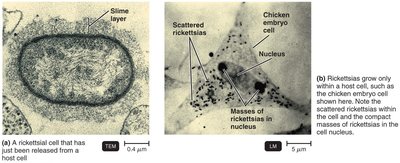
Rickettsia: Obligate intracellular parasites; cause spotted fevers (e.g., epidemic typhus, Rocky Mountain spotted fever).
Ehrlichia: Tick-borne pathogens causing ehrlichiosis.
Rhizobium and Bradyrhizobium: Nitrogen-fixing symbionts in legume roots.
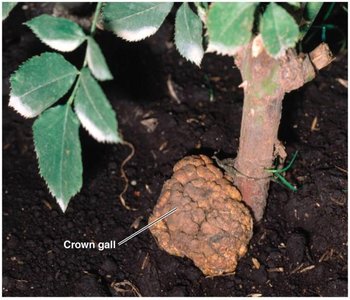
Agrobacterium: Plant pathogen causing crown gall disease by inserting a plasmid into plant cells.
Nitrobacter and Nitrosomonas: Chemoautotrophs involved in nitrification.
Betaproteobacteria
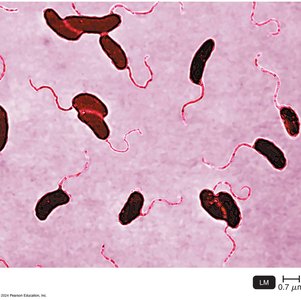
Spirillum: Motile freshwater bacteria with polar flagella.
Sphaerotilus: Forms protective sheaths; found in freshwater and sewage.
Burkholderia: Degrades diverse organic molecules; includes pathogens (e.g., B. pseudomallei).
Bordetella: Nonmotile rods; B. pertussis causes whooping cough.
Neisseria: Pathogens causing gonorrhea and meningococcal meningitis.
Zoogloea: Important in wastewater treatment (activated sludge).
Gammaproteobacteria
Acidithiobacillus: Oxidizes sulfur compounds for energy.
Beggiatoa: Oxidizes hydrogen sulfide in aquatic sediments.
Francisella: F. tularensis causes tularemia.
Pseudomonas: Metabolically diverse, opportunistic pathogens; common in soil and water.
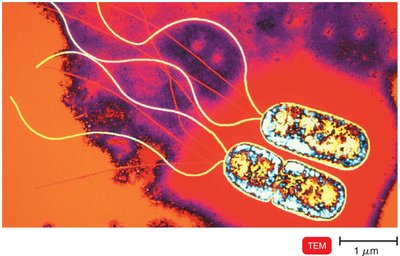
Legionella: Found in water systems; causes legionellosis.
Coxiella: C. burnetii causes Q fever; transmitted by aerosols or contaminated milk.
Vibrio: Aquatic; V. cholerae causes cholera, V. parahaemolyticus causes gastroenteritis.
Enterobacteriales (Enterics): Facultative anaerobes, ferment carbohydrates, peritrichous flagella.
Escherichia: E. coli is an indicator of fecal contamination; some strains cause disease.
Salmonella: Many serovars; causes foodborne illness and typhoid fever.
Shigella: Causes bacillary dysentery.
Klebsiella: K. pneumoniae causes pneumonia.
Serratia: Produces red pigment; nosocomial infections.
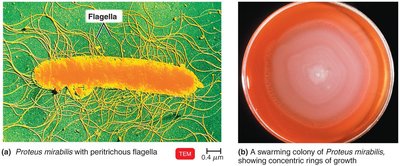
Proteus: Swarming motility; forms concentric rings on agar.
Yersinia: Y. pestis causes plague; flea-borne.
Erwinia: Plant pathogens.
Campylobacterota
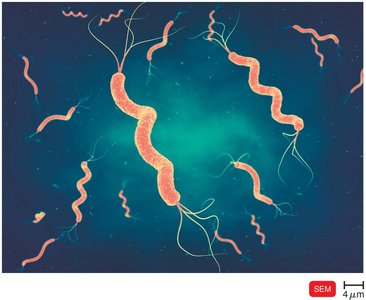
Campylobacter: Microaerophilic, curved rods; C. jejuni causes foodborne illness.
Helicobacter: Microaerophilic, multiple flagella; causes peptic ulcers and stomach cancer.
Photosynthetic Bacteria
Photosynthetic bacteria are classified by their pigments, electron donors, and oxygen production.
Common Name | Example | Phylum | Electron Donor | Oxygenic? |
|---|---|---|---|---|
Cyanobacteria | Anabaena | Cyanobacteria | H2O | Yes |
Green nonsulfur bacteria | Chloroflexus | Chloroflexi | Organic compounds | No |
Green sulfur bacteria | Chlorobium | Chlorobi | H2S | No |
Purple nonsulfur bacteria | Rhodospirillum | Proteobacteria | Organic compounds | No |
Purple sulfur bacteria | Chromatium | Proteobacteria | H2S | No |
Other Gram-Negative Bacteria
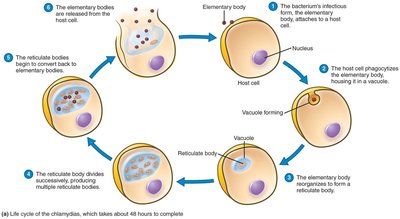
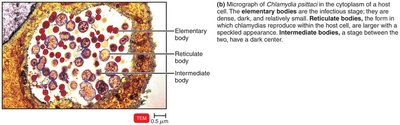
Chlamydiae: Intracellular pathogens; lack peptidoglycan; form infectious elementary bodies.
Bacteroidota: Anaerobes; abundant in the gut and mouth; degrade complex molecules.
Fusobacteria: Anaerobes; cause dental abscesses.
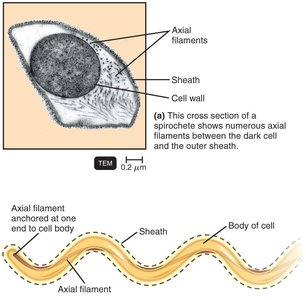
Spirochaetes: Helical, motile via axial filaments; includes Treponema (syphilis), Borrelia (Lyme disease), Leptospira (leptospirosis).
Gram-Positive Bacteria
Classification by G+C Content
High G+C: e.g., Streptomyces, Mycobacterium
Low G+C: e.g., Streptococcus, Clostridium
Bacillota (Low G+C Gram-Positive Bacteria)
Bacillus: Endospore-forming rods; includes B. anthracis (anthrax), B. cereus (food poisoning).
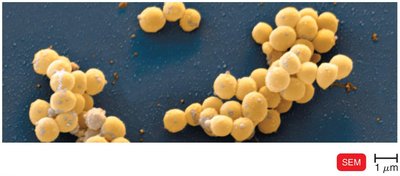
Staphylococcus: Grape-like clusters; S. aureus causes wound infections, is often antibiotic-resistant.
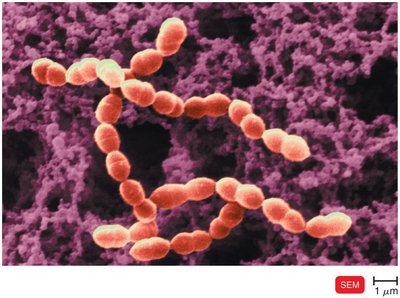
Streptococcus: Chains of cocci; diverse pathogens.
Domain Archaea
Diversity and Adaptations
Halophiles: Require high salt concentrations (>25%).
Thermophiles: Grow at temperatures >80°C.
Acidophiles: Grow at very low pH (approaching 0).
Methanogens: Anaerobic; produce methane; some are part of the human microbiota.
Additional info: Archaea lack peptidoglycan and have unique membrane lipids.
Microbial Diversity and Detection
Limits of Microbial Knowledge
Many microbes cannot be cultured in the laboratory.
Molecular techniques (e.g., PCR, metagenomics) are used to detect unculturable bacteria.
Example: Detection of environmental bacteria by sequencing 16S rRNA genes.
