 Back
BackThe Prokaryotes: Structure, Function, and Diversity
Study Guide - Smart Notes
 Tailored notes based on your materials, expanded with key definitions, examples, and context.
Prokaryotes: General Characteristics
Prokaryotes are a diverse group of unicellular organisms that lack a nucleus and membrane-bound organelles. They reproduce asexually and include the domains Bacteria and Archaea. Their genetic diversity and adaptability allow them to inhabit a wide range of environments.
No nucleus or membrane-bound organelles
Unicellular organization
Asexual reproduction (mainly binary fission)
Genetic diversity due to mutations, horizontal gene transfer, and rapid reproduction
Members: Bacteria and Archaea
Bacterial Morphology
Coccus (Cocci) Shape
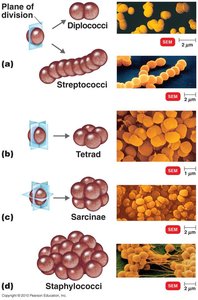
Cocci are spherical bacteria that can divide in one or more planes, resulting in various arrangements.
Diplococci: Pairs
Streptococci: Chains
Tetrads: Groups of four
Sarcinae: Cubes of eight
Staphylococci: Irregular clusters
Bacillus (Bacilli) Shape
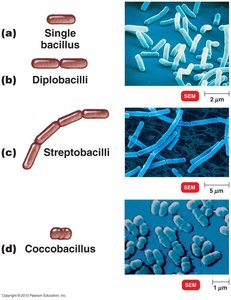
Bacilli are rod-shaped bacteria that typically divide in one plane, resulting in limited arrangements.
Single bacillus
Diplobacilli: Pairs
Streptobacilli: Chains
Coccobacillus: Short, oval rods
Other Bacterial Shapes
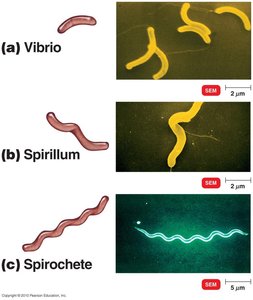
Curved rods: Includes Vibrio (comma-shaped), Spirillum (rigid spiral), and Spirochete (flexible spiral)
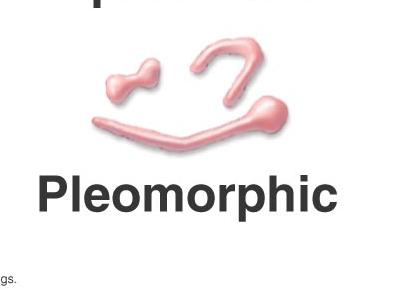
Pleomorphic: Bacteria that can change shape or have irregular forms
Bacterial Cell Structure Overview
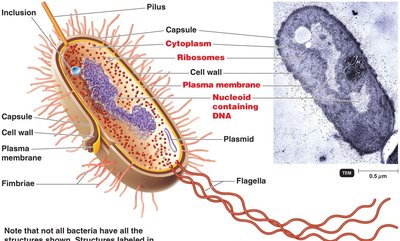
Bacterial cells share some similarities with eukaryotic cells but have unique features, especially in their external and internal structures.
External Structures
Glycocalyx
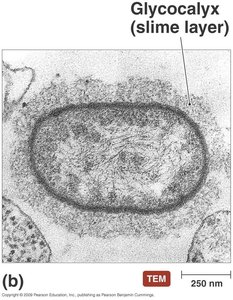
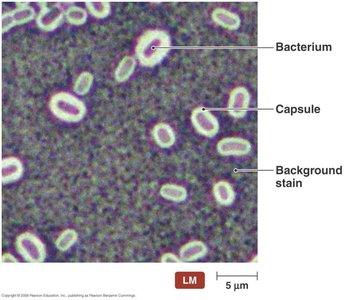
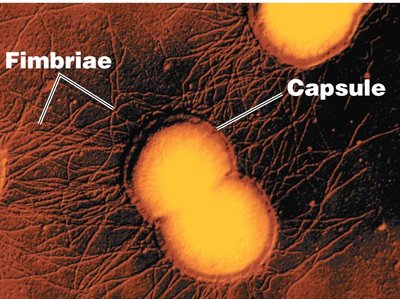
The glycocalyx is a polysaccharide-rich layer outside the cell wall. It can be organized as a capsule or a loose slime layer.
Capsule: Well-organized, firmly attached; protects against phagocytosis
Slime layer: Loosely attached; aids in adherence to surfaces
Flagella
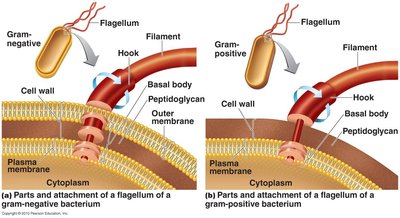
Flagella are long, whip-like structures made of flagellin that provide motility. Their arrangement can vary between species and is important for identification.
Monotrichous: Single flagellum
Lophotrichous: Tuft at one end
Amphitrichous: One or more at both ends
Peritrichous: All over the cell surface
Motility and Taxis
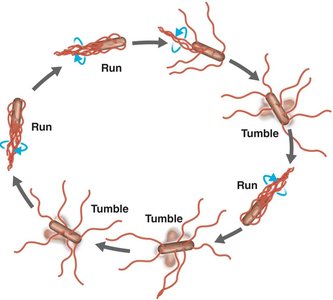
Bacteria move using a "run and tumble" mechanism, allowing them to navigate toward or away from stimuli (taxis).
Chemotaxis: Movement in response to chemicals
Phototaxis: Movement in response to light
Fimbriae and Pili
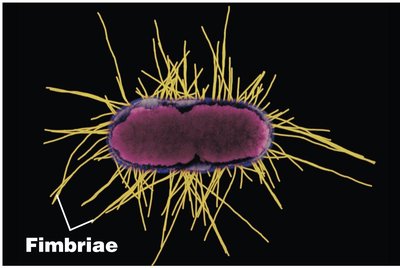
Fimbriae: Short, hair-like structures for attachment to surfaces and other cells
Pili: Longer, involved in DNA transfer (conjugation)
Cell Wall
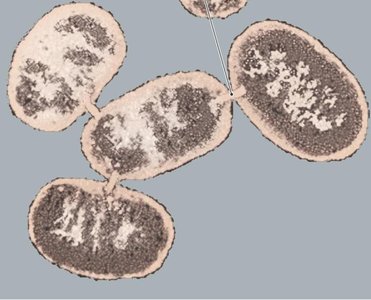
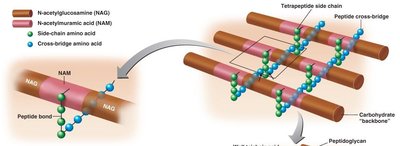
The bacterial cell wall provides shape and protection. It is primarily composed of peptidoglycan, which differs in thickness between Gram-positive and Gram-negative bacteria.
Gram-positive: Thick peptidoglycan layer
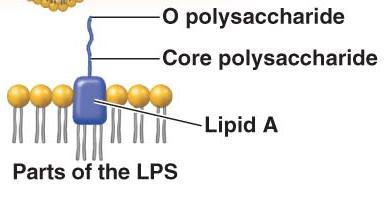
Gram-negative: Thin peptidoglycan layer, outer membrane with lipopolysaccharide (LPS)
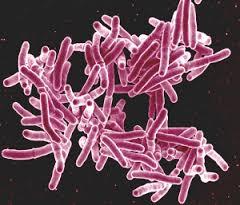
Some bacteria (e.g., Mycobacterium) have mycolic acid in their cell walls and require acid-fast staining.
Plasma (Cytoplasmic) Membrane
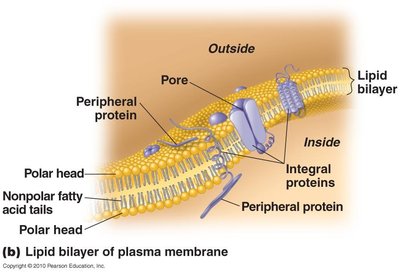
The plasma membrane is a phospholipid bilayer that controls the movement of substances in and out of the cell. It is semi-permeable and involved in energy generation and transport.
Osmosis
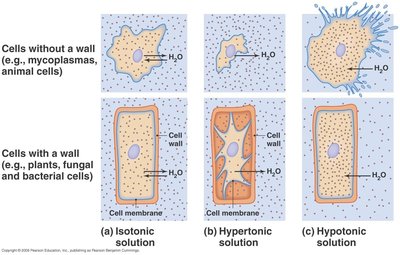
Osmosis is the movement of water across the membrane from high to low water concentration. Bacterial cells respond differently to isotonic, hypertonic, and hypotonic solutions.
Internal Structures
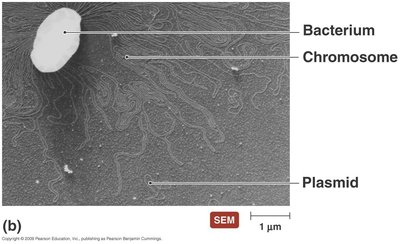
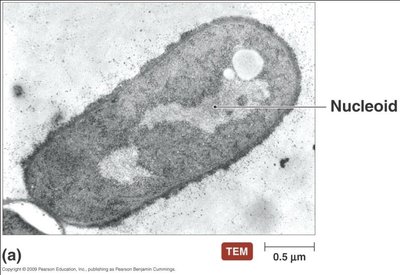
Nucleoid: Region containing the single, circular, supercoiled chromosome and plasmids
Cytoplasm: Gel-like substance containing enzymes, nutrients, and cell structures
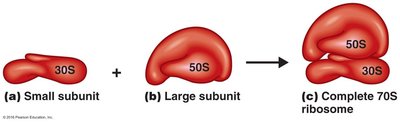
Ribosomes: Sites of protein synthesis (70S type, composed of 50S and 30S subunits)
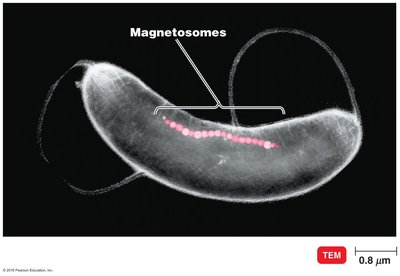
Inclusions: Storage granules for nutrients, gases, or metals; some bacteria have magnetosomes for orientation
Endospores: Highly resistant, dormant structures formed by some bacteria for survival in harsh conditions
Bacterial Diversity: Major Groups
Proteobacteria (Gram-negative)
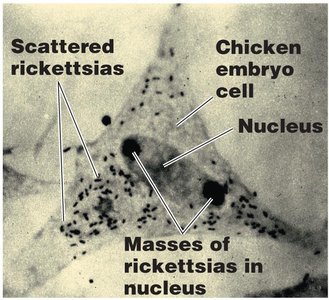
Alphaproteobacteria: Low nutrient environments, some fix nitrogen; e.g., Rickettsia typhi (typhus)
Betaproteobacteria: Use anaerobic byproducts; e.g., Bordetella pertussis (whooping cough), Neisseria gonorrhoeae (gonorrhea)
Gammaproteobacteria: Diverse; e.g., Pseudomonas aeruginosa (nosocomial infections), Legionella pneumophila (Legionnaire's disease), Salmonella enterica (food poisoning)
Deltaproteobacteria: Sulfur cycle; e.g., Bdellovibrio bacteriovorus (predatory)
Epsilonproteobacteria: Slender, helical; e.g., Helicobacter pylori (stomach ulcers)
Non-Proteobacteria (Gram-negative)
Cyanobacteria: Photosynthetic, often in groups surrounded by glycocalyx
Chlamydiae: No peptidoglycan, obligate intracellular pathogens; e.g., Chlamydia (STD)
Bacteroidetes: Anaerobic, found in human body and soil
Fusobacteria: Anaerobic, spindle-shaped, found in mouth and gums
Planctomycetes: Aquatic, stalk-producing
Spirochetes: Tightly coiled, axial filaments for movement; e.g., Treponema pallidum (syphilis)
Deinococcus: Highly resistant to radiation
Firmicutes (Gram-positive, Low G+C)
Includes endospore-forming pathogens
Examples: Clostridium difficile (gastroenteritis), Staphylococcus aureus (MRSA/VRSA)
Actinobacteria (Gram-positive, High G+C)
Pleomorphic, some produce antibiotics
Example: Streptomyces (antibiotic producer)
Archaea
Archaea are prokaryotes that often live in extreme environments and have unique cell wall and membrane features.
Extremophiles: Can survive high salinity (halophiles), extreme pH (acidophiles, alkaliphiles), and temperature (thermophiles, psychrophiles)
No peptidoglycan in cell walls; may contain pseudopeptidoglycan or other polymers
Some use ammonia for energy or produce methane (methanogens)
Example: Pyrodictium abyssi (deep ocean vents, 110°C, disk-shaped with tubules)
