 Back
BackVaccination and Immunization: Principles, Types, and Applications
Study Guide - Smart Notes
 Tailored notes based on your materials, expanded with key definitions, examples, and context.
Vaccination and Immunization
Introduction to Vaccination
Vaccination is a cornerstone of modern microbiology and immunology, aiming to generate a protective immune response against pathogens that cause severe illness, disability, or death. By preventing life-threatening infectious diseases, vaccination is estimated to avert 2-3 million deaths per year worldwide.
Purpose: To safely induce immunity and prevent infectious diseases.
Historical Example: Smallpox eradication through vaccination with cowpox (vaccinia).
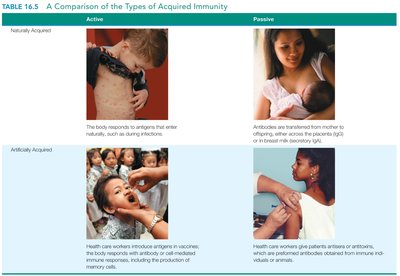
Active vs. Passive Immunization
Immunization can be achieved through active or passive means, each with distinct mechanisms and outcomes.
Active Immunization: Administration of antigens to induce an adaptive immune response. Examples include infection and vaccination.
Passive Immunization: Transfer of antibodies formed by an immune individual or animal. Examples include maternal antibody transfer and antibody therapy.
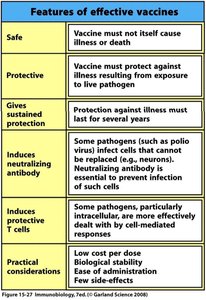
Features of an Effective Vaccine
Effective vaccines must meet several criteria to ensure safety and efficacy.
Safe: Must not cause illness or death.
Protective: Must protect against illness from exposure to the live pathogen.
Sustained Protection: Immunity should last for several years.
Induces Neutralizing Antibody: Essential for pathogens infecting irreplaceable cells (e.g., neurons).
Induces Protective T Cells: Important for intracellular pathogens.
Practical Considerations: Low cost, biological stability, ease of administration, and minimal side effects.
Types of Vaccines
Overview of Vaccine Types
There are five main types of vaccines, each with unique methods of preparation and immunological properties.
Inactivated/Killed Vaccines
Live, Attenuated Vaccines
Toxoid (Inactivated Toxin) Vaccines
Conjugate (Combination) Vaccines
DNA Vaccines
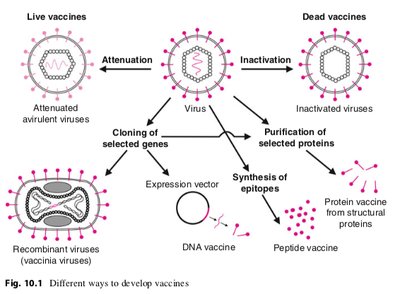
Inactivated/Killed Vaccines
Preparation: Whole pathogen is inactivated by heat or chemicals.
Examples: Polio (IPV), Hepatitis A, Rabies.
Advantages: Safe, no risk of reactivation, quick to produce.
Live, Attenuated Vaccines
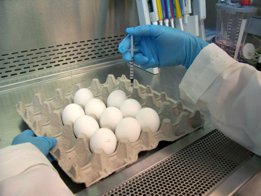
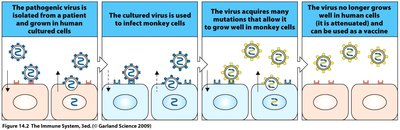
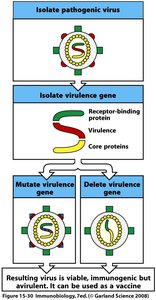
Preparation: Pathogens are attenuated by growing in non-human cells or by recombinant DNA techniques.
Examples: Measles, Mumps, Rubella (MMR), Varicella, Rotavirus, Polio (OPV), Yellow Fever, BCG.
Advantages: Strong, long-lasting immunity.
Disadvantages: Risk for immunocompromised individuals; possible reversion to virulent form.
Toxoid Vaccines
Preparation: Toxins are inactivated by heat or chemical treatment (e.g., formalin).
Examples: Tetanus, Diphtheria.
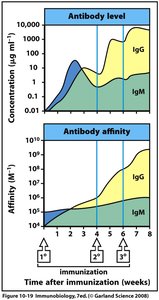
Features: Requires boosters to maintain protective antibody levels.

Subunit Vaccines
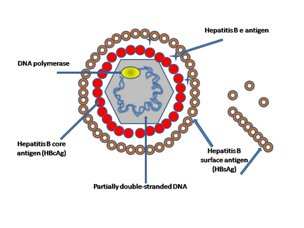
Preparation: Isolate or produce a specific component of a pathogen (protein or carbohydrate).
Examples: Hepatitis B, HPV, Pertussis, Influenza (shot), Pneumococcal polysaccharide, Meningococcal polysaccharide.
Features: Often mixed with adjuvants to enhance immune response.
Conjugate Vaccines
Preparation: Carbohydrate antigens are conjugated to a carrier protein (e.g., diphtheria toxoid) to enhance immune response, especially in infants.
Examples: Haemophilus influenzae (HiB), Pneumococcal conjugate, Meningococcal conjugate.
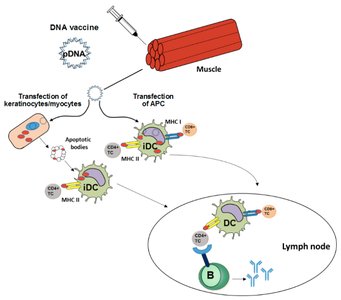
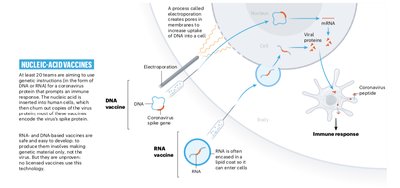
DNA Vaccines
Preparation: Plasmid DNA encoding pathogen-specific antigens is introduced into host cells, which express the antigen and stimulate adaptive immunity.
Features: Induces both antibody and T cell responses.
Vaccine Terminology
Vaccine Antigen: The molecule (protein or carbohydrate) in the vaccine that elicits an antibody response.
Adjuvant: Substance added to vaccines to non-specifically activate the immune system and enhance the response.
Vaccine Titer: A measure of the amount of antibody produced against a vaccine antigen.
Adjuvants and Immune Stimulatory Complexes
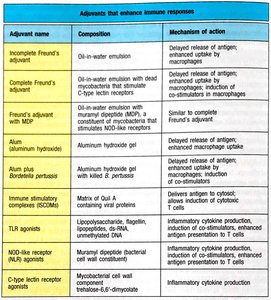
Adjuvants
Adjuvants are critical for enhancing the immunogenicity of vaccine antigens, especially in subunit and conjugate vaccines.
Mechanisms: Delayed release of antigen, enhanced uptake by macrophages, stimulation of cytokine production.
Examples: Aluminum hydroxide gel, Freund's adjuvant, ISCOMs, TLR agonists.
Immune Stimulatory Complexes (ISCOMs)
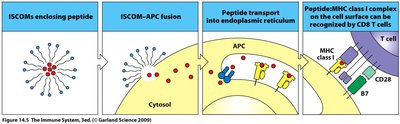
ISCOMs enhance cytotoxic T cell activation by delivering peptide antigens to the cytosol of antigen-presenting cells.
Function: Facilitate peptide transport into endoplasmic reticulum for presentation on MHC class I molecules.
Immunological Memory and Vaccine Effectiveness
Key Characteristics of Adaptive Immunity
Specificity: Targets specific parts of an antigen (epitopes).
Tolerance: Does not respond to self-antigens; failure leads to autoimmune disorders.
Minimal Self-Damage: Immune responses should not cause excessive harm to host tissues.
Immunological Memory: Enables rapid and vigorous responses to previously encountered antigens.
Impact of Vaccination on Disease Incidence
The introduction of vaccines has dramatically reduced the incidence of diseases such as polio and measles. 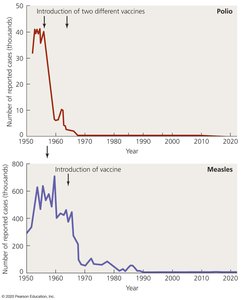
Concerns and Challenges in Vaccination
Vaccine Safety and Public Perception
Concerns over vaccine safety can lead to the resurgence of infectious diseases, highlighting the importance of public education and trust in scientific evidence. 
Summary Table: Types of Acquired Immunity
Type | Active | Passive |
|---|---|---|
Naturally Acquired | Antigens enter the body naturally; body induces antibodies and specialized lymphocytes | Antibodies pass from mother to fetus via placenta or to infant via mother's milk |
Artificially Acquired | Antigens are introduced in vaccines; body produces antibodies and specialized lymphocytes | Preformed antibodies in immune serum are introduced by injection |

Summary Table: Vaccine Types and Examples
Vaccine Type | Preparation | Examples | Advantages | Disadvantages |
|---|---|---|---|---|
Inactivated/Killed | Heat or chemical inactivation | Polio (IPV), Hepatitis A, Rabies | Safe, quick to produce | May require boosters |
Live, Attenuated | Growth in non-human cells or recombinant DNA | MMR, Varicella, Rotavirus, OPV, BCG | Strong, long-lasting immunity | Risk for immunocompromised, possible reversion |
Toxoid | Inactivated toxin | Tetanus, Diphtheria | Targets toxin-mediated diseases | Requires boosters |
Subunit | Isolated protein/carbohydrate | Hepatitis B, HPV, Pertussis | Safe, specific | May require adjuvants |
Conjugate | Carbohydrate conjugated to protein | HiB, Pneumococcal conjugate | Enhanced response in infants | Complex production |
DNA | Plasmid DNA encoding antigen | Experimental, COVID-19 | Induces both antibody and T cell responses | New technology, limited use |
Conclusion
Vaccination is a fundamental tool in microbiology for preventing infectious diseases. Understanding the principles, types, and mechanisms of vaccines is essential for microbiology students and future healthcare professionals. Additional info: Expanded explanations and context were added to ensure completeness and clarity for exam preparation.
