 Back
BackViral Structure, Replication, and Pathogenesis: Focus on SARS-CoV-2, Influenza, Measles, and HIV
Study Guide - Smart Notes
 Tailored notes based on your materials, expanded with key definitions, examples, and context.
Virus Classification and Baltimore System
Overview of Virus Classification
Viruses are classified based on several structural and genetic characteristics, which are essential for understanding their replication and pathogenesis.
Nucleic Acid Type: DNA or RNA, single-stranded (ss) or double-stranded (ds), positive (+) or negative (−) sense.
Envelope Presence: Viruses may be enveloped or non-enveloped.
Capsid Symmetry: Helical, icosahedral, or complex symmetry.
Virion and Capsid Dimensions: Size and shape are diagnostic features.
Baltimore Classification System
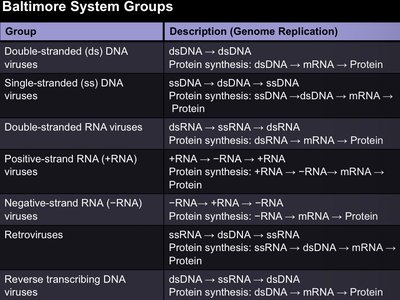
The Baltimore system groups viruses by their genome type and replication strategy, which determines how viral mRNA is produced.
Group | Description (Genome Replication) |
|---|---|
Double-stranded (ds) DNA viruses | dsDNA → dsDNA; Protein synthesis: dsDNA → mRNA → Protein |
Single-stranded (ss) DNA viruses | ssDNA → dsDNA; Protein synthesis: ssDNA → dsDNA → mRNA → Protein |
Double-stranded RNA viruses | dsRNA → ssRNA → dsRNA; Protein synthesis: dsRNA → mRNA → Protein |
Positive-strand RNA (+RNA) viruses | +RNA → -RNA → +RNA; Protein synthesis: +RNA → mRNA → Protein |
Negative-strand RNA (−RNA) viruses | −RNA → +RNA → −RNA; Protein synthesis: −RNA → mRNA → Protein |
Retroviruses | ssRNA → dsDNA → ssRNA; Protein synthesis: ssRNA → dsDNA → mRNA → Protein |
Reverse transcribing DNA viruses | dsDNA → ssRNA → dsDNA; Protein synthesis: dsDNA → mRNA → Protein |
Viral Genome Replication Strategies
Positive-Strand RNA Viruses
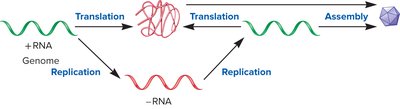
Positive-strand RNA viruses have genomes that can serve directly as mRNA for translation upon entry into the host cell.
Genome acts as mRNA: Immediately translated by host ribosomes.
First protein synthesized: RNA-dependent RNA polymerase (RdRp).
Replication: RdRp synthesizes a complementary negative-strand RNA, which serves as a template for more positive-strand genomes.
Negative-Strand RNA Viruses
Negative-strand RNA viruses must carry their own RdRp to synthesize mRNA from their genome, as their RNA cannot be directly translated.
Genome is template for mRNA synthesis.
RdRp synthesizes positive-strand RNA (mRNA), which is then translated into viral proteins.
SARS-CoV-2 (Coronavirus) Structure and Genome
Structural Features
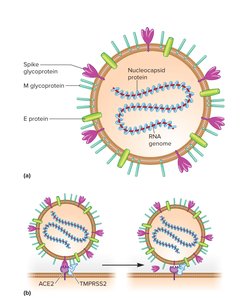
SARS-CoV-2 is an enveloped, positive-sense single-stranded RNA virus belonging to the genus β-coronavirus, family Coronaviridae.
Genome: ~30,000 base pairs, positive-sense ssRNA.
Structural Proteins: Spike (S), Envelope (E), Membrane (M), and Nucleocapsid (N).
Accessory and Non-structural Proteins: Involved in replication and immune evasion.
Genome Organization and Protein Synthesis
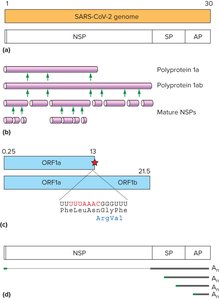
The SARS-CoV-2 genome encodes multiple open reading frames (ORFs), including those for polyproteins that are cleaved into functional units.
Polyproteins: Large precursor proteins are cleaved into mature non-structural proteins (NSPs).
Structural and Accessory Proteins: Encoded in the 3' region of the genome.
SARS-CoV-2 Life Cycle and Pathogenesis
Entry and Replication
Portals of Entry: Nasal/oral passages, conjunctiva, oral cavity, and esophagus.
Attachment: Spike (S) protein binds to ACE2 receptor on host cells, facilitated by TMPRSS2 cleavage.
Replication: Viral genome is released into the cytoplasm, translated, and replicated.
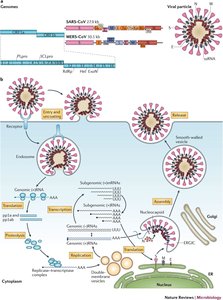
Mechanisms of Pathogenicity
Once inside the host cell, SARS-CoV-2 hijacks the cellular machinery for replication, causing direct cytopathic effects and triggering immune responses.
Direct Damage: Cell rounding, detachment, degeneration, and syncytium formation.
Immune Response: Inflammatory cytokines are released; in severe cases, a 'cytokine storm' damages tissues.
Progression: Virus can infect multiple organs expressing ACE2, including lungs, kidneys, heart, and GI tract.
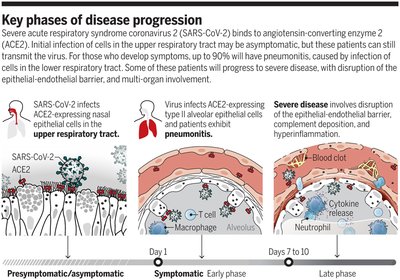
COVID-19: Clinical Manifestations and Epidemiology
Disease Manifestations
COVID-19 affects multiple organ systems, especially in severe cases.
Respiratory: Pneumonia, ARDS, alveolar damage.
Neurological: Loss of smell, confusion, seizures.
Gastrointestinal: Diarrhea, liver enzyme abnormalities.
Cardiovascular: Clotting, myocarditis, heart attacks.
Renal: Kidney damage.
Risk Factors
Older adults (65+), especially in care facilities.
Underlying conditions: diabetes, asthma, kidney disease, obesity, heart disease, immunosuppression.
Diagnostic Techniques
RT-qPCR: Detects viral RNA; highly sensitive.
Antigen Tests: Less sensitive, faster, cheaper.
Antibody Tests: Detect past infection, not active infection.
Influenza Virus: Structure, Replication, and Antigenic Variation
Influenza Virus Basics
Influenza viruses (family Orthomyxoviridae) are enveloped, negative-strand RNA viruses with segmented genomes.
Genome: Eight RNA segments, each in a nucleocapsid.
Entry: Receptor-mediated endocytosis; low pH triggers fusion and genome release.
Replication: Occurs in the nucleus; new virions bud from the cell surface.
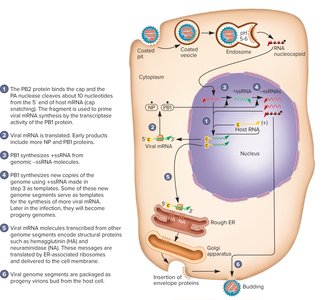
Antigenic Drift and Shift
Antigenic Drift: Minor mutations in HA/NA proteins; causes seasonal epidemics.
Antigenic Shift: Major reassortment of RNA segments; can lead to pandemics.
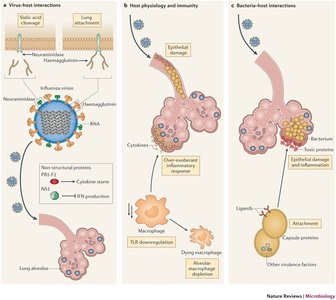
Treatments and Prevention
Neuraminidase Inhibitors: Oseltamivir, zanamivir, peramivir.
Vaccination: Annual vaccine recommended.
Measles Virus (Rubeola)
Structure and Transmission
Measles virus is a negative-stranded, enveloped RNA virus in the genus Morbillivirus.
Transmission: Respiratory droplets.
Symptoms: Cough, fever, conjunctivitis, Koplik’s spots, CNS complications.
Prevention: MMR vaccine; no specific treatment available.
HIV and Retroviruses
HIV Structure and Genome
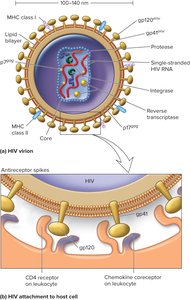
HIV is an enveloped retrovirus with two copies of positive-strand RNA and the enzyme reverse transcriptase.
Genus: Lentivirus.
Key Enzymes: Reverse transcriptase, integrase, protease.
HIV Life Cycle
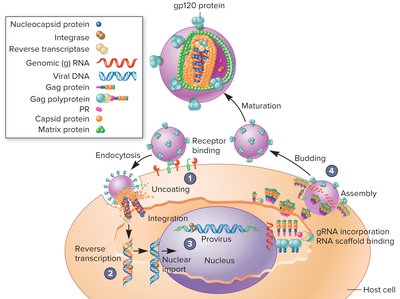
Attachment: gp120 binds to CD4 and co-receptors (CCR5 or CXCR4) on host immune cells.
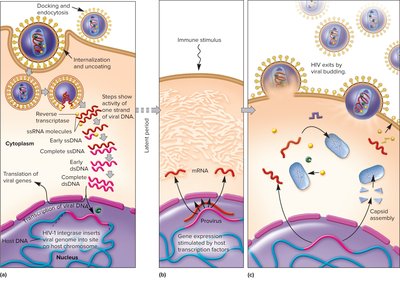
Entry and Uncoating: Viral RNA is reverse transcribed into dsDNA.
Integration: Viral DNA integrates into host genome (provirus).
Transcription and Translation: Host machinery produces viral proteins and genomes.
Assembly and Budding: New virions assemble and bud from the host cell.
HIV Pathogenesis and Clinical Stages
Acute Phase: 2–8 weeks post-infection; flu-like symptoms, high viral load.
Asymptomatic (Latent) Phase: Lasts months to years; low viral load, ongoing replication.
Chronic Symptomatic Phase: Immune suppression, opportunistic infections, cancers (e.g., Kaposi’s sarcoma, lymphomas).
Diagnosis and Treatment
Diagnosis: Detection of anti-HIV antibodies, antigens, and viral RNA (PCR).
Treatment: Combination antiretroviral therapy (ART); no cure or vaccine.
Prevention: Education, barrier protection, blood screening, needle safety.
Summary Table: Virus Types and Replication Strategies
Virus Type | Genome | Replication Key Points |
|---|---|---|
Coronavirus (SARS-CoV-2) | +ssRNA | Genome acts as mRNA; RdRp synthesizes −RNA template; polyprotein processing |
Influenza | −ssRNA (segmented) | RdRp synthesizes +RNA (mRNA); genome reassortment (shift/drift) |
Measles | −ssRNA | RdRp synthesizes +RNA (mRNA); direct cytopathic effects |
HIV | +ssRNA (diploid) | Reverse transcription to dsDNA; integration into host genome; provirus state |
Key Terms
Virion: Complete, infectious virus particle.
RdRp (RNA-dependent RNA polymerase): Enzyme required for RNA virus replication.
Antigenic Drift/Shift: Mechanisms of genetic variation in influenza viruses.
Provirus: Integrated viral DNA in host genome (retroviruses).
Cytokine Storm: Excessive immune response causing tissue damage.
Additional info:
Tables and diagrams have been recreated and expanded for clarity.
Mechanisms of viral entry, replication, and immune evasion are central to understanding viral pathogenesis and epidemiology.
