 Back
BackViruses and Prions: Structure, Classification, and Replication
Study Guide - Smart Notes
 Tailored notes based on your materials, expanded with key definitions, examples, and context.
Viruses and Prions
General Characteristics of Viruses
Viruses are unique infectious agents that differ fundamentally from cellular organisms. They are considered obligatory intracellular parasites, meaning they require living host cells to multiply.
Obligatory intracellular parasites: Viruses cannot reproduce outside a host cell.
Genetic material: Viruses contain either DNA or RNA, but never both.
Protein coat: The genetic material is enclosed in a protein coat called a capsid.
No ribosomes or ATP-generating mechanisms: Viruses lack the cellular machinery for protein synthesis and energy production.

Viruses vs. Bacteria
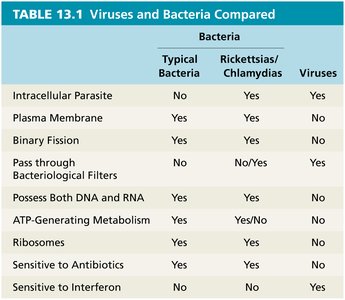
Viruses differ from bacteria in several key aspects, including their structure, replication, and sensitivity to antibiotics.
Typical Bacteria | Rickettsias/Chlamydias | Viruses | |
|---|---|---|---|
Intracellular Parasite | No | Yes | Yes |
Plasma Membrane | Yes | Yes | No |
Binary Fission | Yes | Yes | No |
Pass through Bacteriological Filters | No | No/Yes | Yes |
Possess Both DNA and RNA | Yes | Yes | No |
ATP-Generating Metabolism | Yes | Yes | No |
Ribosomes | Yes | Yes | No |
Sensitive to Antibiotics | Yes | Yes | No |
Sensitive to Interferon | No | No | Yes |
Host Range
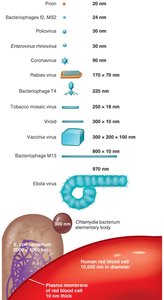
The host range of a virus refers to the spectrum of host cells it can infect.
Specificity: Most viruses infect only specific types of cells in one host, determined by host attachment sites and cellular factors.
Bacteriophages: Viruses that infect bacteria.
Animal viruses: Receptor sites are typically on the plasma membrane.
Viral Structure
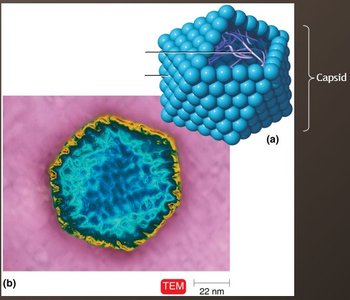
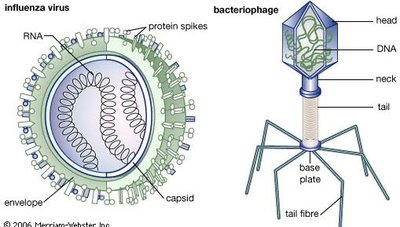
The complete, fully developed viral particle is called a virion.
Nucleic acid: DNA or RNA, single- or double-stranded, linear or circular.
Capsid: Protein coat made of capsomeres (subunits).
Envelope: Lipid, protein, and carbohydrate coating present in some viruses.
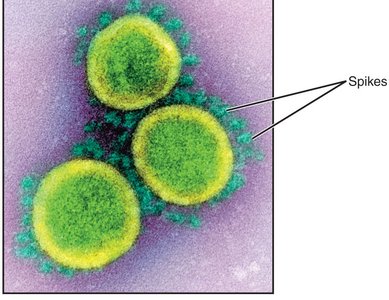
Spikes: Surface projections that aid in attachment to host cells.
General Morphology of Viruses
Viruses exhibit diverse morphologies, classified as:
Helical viruses: Hollow, cylindrical capsid.
Polyhedral viruses: Many-sided, often icosahedral.
Enveloped viruses: Envelope covering the capsid.
Complex viruses: Complicated structures, such as bacteriophages.
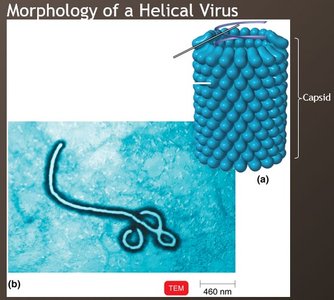
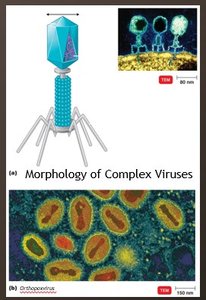
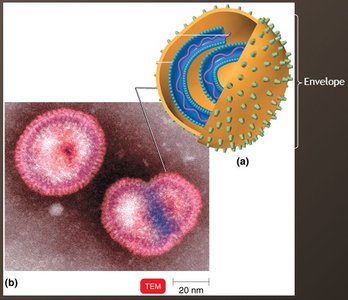
Taxonomy and Identification of Viruses
Viruses are classified based on their nucleic acid and replication strategy, using the Baltimore classification system.
Genus names: End in -virus.
Family names: End in -viridae.
Order names: End in -ales.
Viral species: Group of viruses sharing the same genetic information and ecological niche.
Viral Multiplication
For a virus to multiply, it must invade a host cell and take over the host’s metabolic machinery. The process is often illustrated by the one-step growth curve. 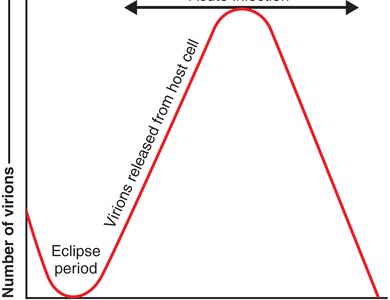
Bacteriophage Replication: The Lytic Cycle
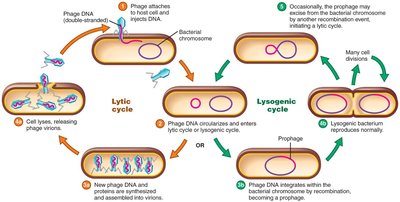
The lytic cycle results in the destruction of the host cell.
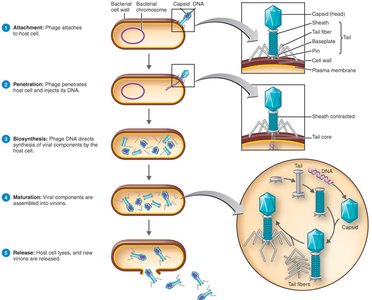
Attachment: Phage attaches by tail fibers to the host cell.
Penetration: Phage lysozyme opens the cell wall; tail sheath contracts to inject DNA.
Biosynthesis: Production of phage DNA and proteins.
Maturation: Assembly of phage particles.
Release: Phage lysozyme breaks the cell wall, releasing new virions.
Bacteriophage Replication: The Lysogenic Cycle
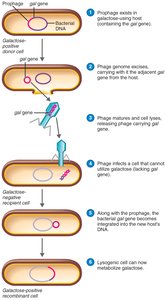
In the lysogenic cycle, phage DNA is incorporated into the host DNA as a prophage, allowing the virus to remain latent.
Phage conversion: Host cell exhibits new properties.
Specialized transduction: Specific bacterial genes are transferred to another bacterium via a phage.
Comparison of Bacteriophage and Animal Viral Multiplication
Stage | Bacteriophages | Animal Viruses |
|---|---|---|
Attachment | Tail fibers attach to cell wall proteins | Receptor sites are plasma membrane proteins and glycoproteins |
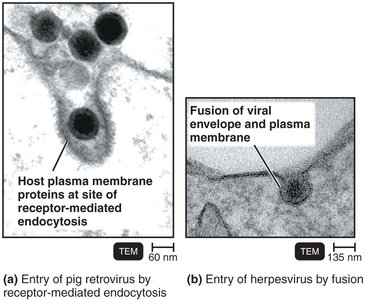
Entry | Viral DNA is injected into host cell | Capsid enters by receptor-mediated endocytosis or fusion |
Uncoating | Not required | Enzymatic removal of capsid proteins |
Biosynthesis | In cytoplasm | In nucleus (DNA viruses) or cytoplasm (RNA viruses) |
Chronic infection | Lysogeny | Latency, slow viral infections, cancer |
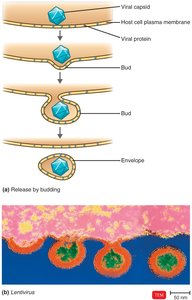
Release | Host cell is lysed | Enveloped viruses bud out; nonenveloped viruses rupture plasma membrane |

Multiplication of Animal Viruses
Animal viruses follow a similar but distinct process compared to bacteriophages.
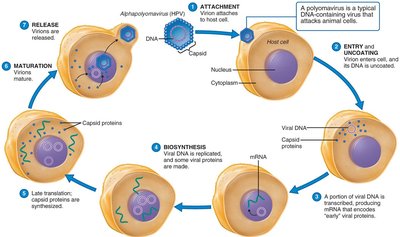
Attachment: Viruses attach to the cell membrane.
Entry: Entry by receptor-mediated endocytosis or fusion.
Uncoating: Uncoating by viral or host enzymes.
Biosynthesis: Production of nucleic acid and proteins.
Maturation: Nucleic acid and capsid proteins assemble.
Release: Release by budding (enveloped viruses) or rupture.
The Biosynthesis of DNA Viruses
DNA viruses replicate their DNA in the nucleus of the host using viral enzymes and synthesize capsid proteins in the cytoplasm using host cell enzymes.
Capsid proteins migrate into the nucleus where assembly occurs.
DNA Virus Families and Diseases
Adenoviridae: Double-stranded DNA, nonenveloped; causes respiratory infections and tumors in animals.
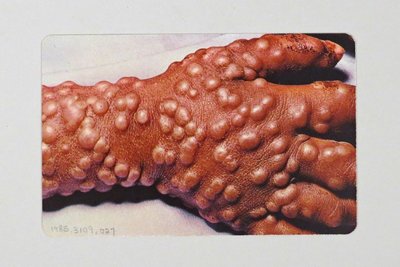
Poxviridae: Double-stranded DNA, enveloped; causes skin lesions (e.g., smallpox).
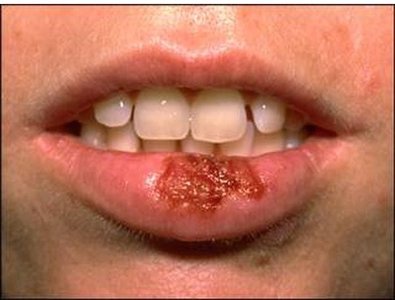
Herpesviridae: Double-stranded DNA, enveloped; includes viruses causing cold sores, chickenpox, mononucleosis, and Kaposi’s sarcoma.
Papovaviricetes: Double-stranded DNA, nonenveloped; includes human papillomavirus (HPV), which can cause warts and cancer.
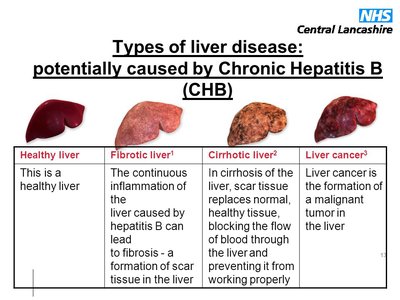
Hepadnaviridae: Double-stranded DNA, enveloped; includes hepatitis B virus, which uses reverse transcriptase.

The Biosynthesis of RNA Viruses
RNA viruses multiply in the host cell’s cytoplasm using RNA-dependent RNA polymerase.
ssRNA (+) strand: Viral RNA serves as mRNA for protein synthesis.
ssRNA (−) strand: Viral RNA is transcribed to a + strand to serve as mRNA.
dsRNA: Double-stranded RNA viruses.
RNA Virus Families and Diseases
Coronaviridae: Single-stranded RNA, + strand, enveloped; includes SARS-CoV-2 (COVID-19).
Picornaviridae: Single-stranded RNA, + strand, nonenveloped; includes enteroviruses, poliovirus, rhinovirus, and hepatitis A virus.
Togaviridae: Single-stranded RNA, + strand, enveloped; includes alphaviruses.
Rhabdoviridae: Single-stranded RNA, − strand; includes rabies virus.
Reoviridae: Double-stranded RNA, nonenveloped; includes rotavirus.
Retroviridae: Single-stranded RNA, produce DNA using reverse transcriptase; includes HIV and oncoviruses.
Oncogenic Viruses and Cancer
Some viruses can cause cancer by transforming normal cells into tumor cells.
Proto-oncogenes: Genes that encode proteins involved in stimulating normal cell growth.
Oncogenes: Mutated proto-oncogenes that transform cells into cancerous cells.
Oncogenic viruses: Become integrated into host cell DNA and induce tumors.
Latent and Persistent Viral Infections
Latent infections: Virus remains in asymptomatic host cell for long periods; may reactivate (e.g., herpesviruses).
Persistent infections: Occur gradually over a long period and are generally fatal (e.g., subacute sclerosing panencephalitis).
Prions
Prions are proteinaceous infectious particles that cause neurodegenerative diseases.
Transmission: Inherited and transmissible by ingestion, transplant, and surgical instruments.
Diseases: Include spongiform encephalopathies, mad cow disease, Creutzfeldt-Jakob disease, and others.
Additional info: Prions lack nucleic acids and are resistant to standard methods of sterilization. ----------------------------------------
