 Back
Viruses and Prions: Structure, Classification, and Replication
Study Guide - Smart Notes
 Tailored notes based on your materials, expanded with key definitions, examples, and context.
Viruses and Prions
General Characteristics of Viruses
Viruses are unique infectious agents that differ fundamentally from bacteria and other microorganisms. They are obligate intracellular parasites, meaning they require living host cells to multiply. Viruses are acellular and lack the machinery for metabolic energy generation and protein synthesis, relying entirely on host cells for these functions.
Contain DNA or RNA (never both)
Protein coat (capsid) surrounds the nucleic acid
No ribosomes or ATP-generating mechanisms
Size: typically 20–400 nm; rod-shaped or spherical
Viruses do not grow or divide; they are assembled from pre-formed components
Viruses vs. Bacteria
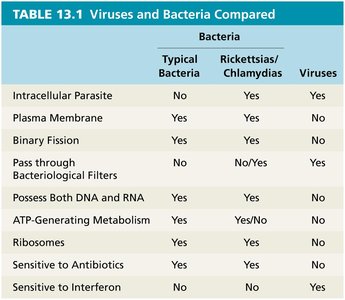
Viruses and bacteria are both infectious agents, but they differ in structure, replication, and cellular machinery. The following table summarizes key differences:
Typical Bacteria | Rickettsias/Chlamydias | Viruses | |
|---|---|---|---|
Intracellular Parasite | No | Yes | Yes |
Plasma Membrane | Yes | Yes | No |
Binary Fission | Yes | Yes | No |
Pass through Bacteriological Filters | No | No/Yes | Yes |
Possess Both DNA and RNA | Yes | Yes | No |
ATP-Generating Metabolism | Yes | No | No |
Ribosomes | Yes | Yes | No |
Sensitive to Antibiotics | Yes | Yes | No |
Sensitive to Interferon | No | No | Yes |
Host Range and Specificity
The host range of a virus refers to the spectrum of host cells it can infect. Most viruses infect only specific types of host cells, determined by the presence of specific attachment sites and cellular factors.
Bacteriophages infect bacteria (e.g., T4 phage binds only to E. coli receptors)
SARS-CoV-2 binds specifically to ACE2 receptors on human cells
Viral Structure
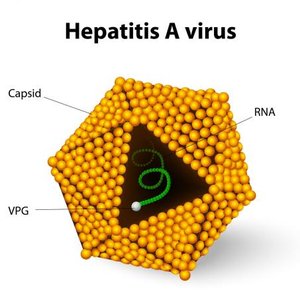
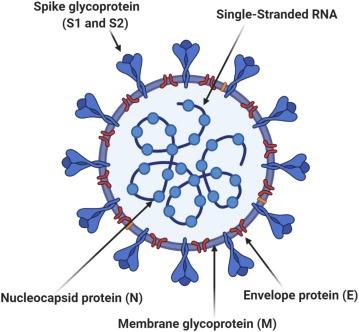
The virion is the complete, fully developed viral particle. Viruses can have either DNA or RNA as their genetic material, which may be single- or double-stranded, linear or circular. The protein coat, called the capsid, is made of subunits called capsomeres. Some viruses have an envelope (lipid, protein, and carbohydrate coating) and spikes (projections from the outer surface).
Capsid/Nucleocapsid: Stable array of proteins, sometimes glycosylated
Envelope: Usually derived from host cell membrane, contains virus-specific proteins (peplomers), acquired during budding
Spikes: Aid in attachment to host cells
Virion vs. Virus
A virus exists in two phases: as a virion (infectious particle) outside the cell, and as a virus inside the cell after losing its virion structure. The virion is responsible for transmission, while the virus inside the cell directs replication.
Viral Genomes
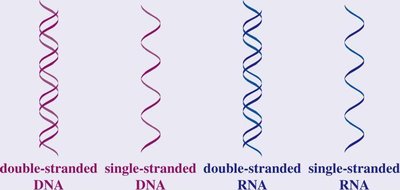
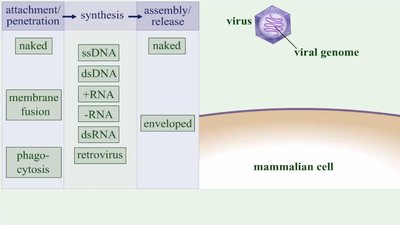
Unlike host cells, which always have DNA genomes, viruses can have a variety of genome types:
ssDNA (single-stranded DNA)
dsDNA (double-stranded DNA)
ssRNA (single-stranded RNA)
dsRNA (double-stranded RNA)
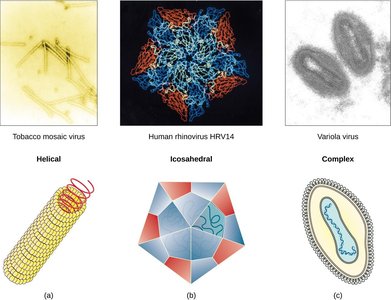
Nucleocapsid Structure and Virus Morphology
Viruses exhibit several structural forms:
Helical: e.g., Tobacco mosaic virus (TMV)
Icosahedral: e.g., Human rhinovirus
Complex: e.g., Variola virus, T4 bacteriophage (combines helical and icosahedral components)
Enveloped vs. Non-Enveloped Viruses
Enveloped viruses acquire their lipid bilayer from the host cell membrane during budding. This envelope contains virus-specific proteins (peplomers) and is essential for infectivity. Non-enveloped (naked) viruses lack this lipid layer.
Fundamental Properties of Viruses
All viruses share several key properties:
Have a nucleic acid genome (DNA or RNA, never both)
Virus particles break down and release their genomes inside the cell
Virus particles are assembled from pre-formed components, not by division
Depend on host cell ribosomes for protein synthesis
Depend on host cell for energy generation
Virus Replication and Infectivity
Viruses are only biologically active inside host cells. They recruit the host cell's biosynthetic machinery to produce new viruses, often resulting in the destruction (lysis) of the host cell. Some viruses cause productive infections, while others may transform host cells (tumor viruses).
Virus numbers can expand explosively, producing thousands of copies per infected cell
Replication involves attachment, penetration, synthesis, assembly, and release
Prions
General Characteristics of Prions
Prions are unique infectious agents composed solely of protein, with no nucleic acid component. The prion protein and its encoding gene are found in normal, uninfected cells. Prions are associated with both infectious and inherited diseases.
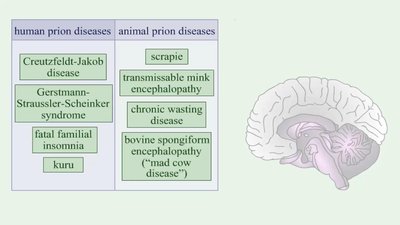
Prion diseases include Creutzfeldt-Jakob disease in humans, scrapie in sheep, and bovine spongiform encephalopathy (BSE, "mad cow disease") in cattle
Prions cause neurodegenerative diseases characterized by spongiform changes in the brain
Additional info: Prions propagate by inducing misfolding of normal cellular proteins, leading to disease. They are resistant to conventional methods of sterilization and are not affected by nucleic acid-targeting treatments.
----------------------------------------
