 Back
BackViruses and Prions: Structure, Classification, Life Cycle, and Impact
Study Guide - Smart Notes
 Tailored notes based on your materials, expanded with key definitions, examples, and context.
Viruses and Prions
Introduction to Viruses
Viruses are unique infectious agents that occupy a distinct position in the biological spectrum. They infect all types of cells, including bacteria, algae, fungi, protozoa, plants, and animals. Their discovery was pivotal in understanding diseases caused by agents smaller than bacteria.
Filterable viruses: Early experiments showed that infectious agents could pass through filters designed to trap bacteria, proving their minute size.
Alive or dead? Viruses are best described as active or inactive, not alive or dead, since they cannot multiply independently and lack most cellular life processes.
Role in evolution: Viruses influence genetic makeup and evolution of cells, with viral sequences comprising significant portions of both human and bacterial genomes.
Properties and Classification of Viruses
Viruses are obligate intracellular parasites, meaning they require a host cell to multiply. They are ultramicroscopic, ranging from 20 nm to 1,000 nm in diameter, and are not cells but rather compact structures.
Basic structure: Protein shell (capsid) surrounding a nucleic acid core.
Nucleic acid: Can be DNA or RNA, but never both; may be single- or double-stranded.
Surface molecules: Provide specificity for attachment to host cells.
Classification: Based on host, disease, structure, chemical composition, and genetic makeup.
Size Comparison of Viruses and Cells
Viruses are the smallest infectious agents, with sizes ranging from parvoviruses (20 nm) to herpes simplex virus (150 nm). Some, like Pandoravirus, approach the size of small bacteria.
Comparison: E. coli (2 μm), yeast cell (7 μm), hemoglobin (15 nm), yellow fever virus (22 nm), HIV (110 nm), herpes simplex virus (150 nm).
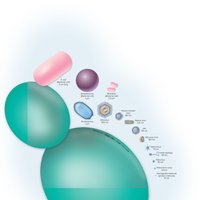
Methods of Viewing Viruses
Viruses are visualized using electron microscopy and fluorescent techniques, revealing their diverse shapes and surface features. 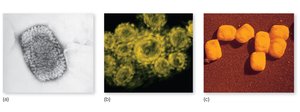
Viral Structure and Components
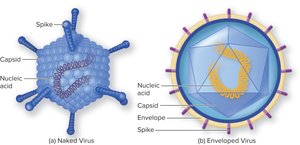
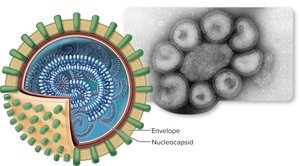
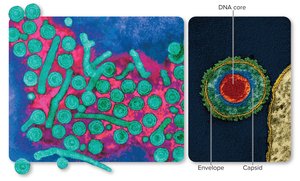
Viruses lack resemblance to cells and contain only parts necessary to invade and control a host cell. The main components are:
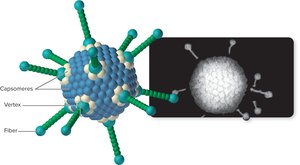
Capsid: Protein shell surrounding nucleic acid.
Nucleocapsid: Capsid plus nucleic acid.
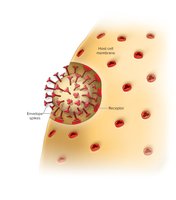
Envelope: Modified piece of host cell membrane external to the capsid (in enveloped viruses).
Spikes: Surface proteins for docking with host cells.
Virion: Fully formed virus capable of infection.
Capsid Types and Viral Morphology
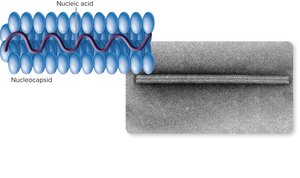
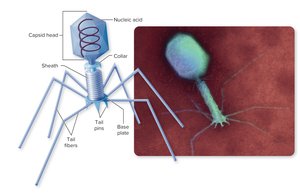
Capsids are constructed from protein subunits called capsomeres and can be helical or icosahedral.
Helical capsid: Rod-shaped, with nucleic acid coiled inside.
Icosahedral capsid: Spherical, with 20-sided symmetry.
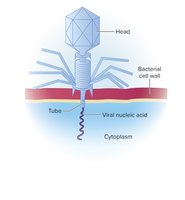
Complex capsid: Found in bacteriophages, with additional structures like tails and fibers.
Viral Genome and Nucleic Acid Types
The viral genome consists of either DNA or RNA, with a small number of genes compared to cells. The nucleic acid can be:
DNA: Single-stranded (ss) or double-stranded (ds), linear or circular.
RNA: Single-stranded (positive-sense or negative-sense), double-stranded, segmented, or retroviral.
Retroviruses: Carry enzymes to create DNA from RNA (reverse transcriptase).
Viral Replication: Life Cycle of Animal Viruses
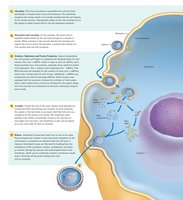
The replication cycle of animal viruses consists of five main steps:
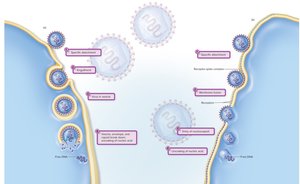
Adsorption: Virus binds to specific receptors on the host cell membrane.
Penetration and Uncoating: Virus enters the host cell via endocytosis or membrane fusion, and the capsid is removed to release nucleic acid.
Synthesis: Viral nucleic acid directs the synthesis of viral components. DNA viruses replicate in the nucleus; RNA viruses in the cytoplasm.
Assembly: Viral components are assembled into mature virions.
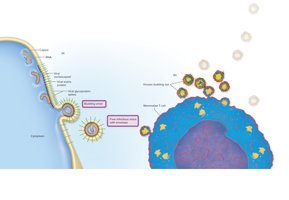
Release: Viruses exit the cell by lysis (nonenveloped viruses) or budding (enveloped viruses).
Cytopathic Effects and Host Cell Damage
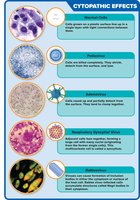
Viruses induce cytopathic effects (CPEs), altering the microscopic appearance of host cells. Types include:
Gross changes: Shape and size alterations.
Inclusion bodies: Compacted masses of viruses or damaged organelles.
Syncytia: Fusion of multiple cells into giant cells with multiple nuclei.
Persistent and Transforming Infections
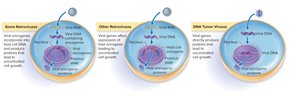
Some viruses establish persistent infections, where the host cell harbors the virus without immediate lysis. Latent viruses can reactivate, and some viruses cause transformation, leading to cancer.
Provirus: Viral DNA incorporated into host DNA.
Oncoviruses: Viruses that cause cancer by altering cell growth regulation.
Examples: Papillomaviruses (cervical cancer), herpesviruses (Burkitt’s lymphoma), hepatitis B virus (liver cancer).
Bacteriophages: Viruses That Infect Bacteria
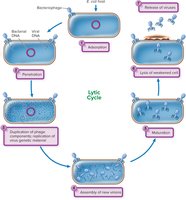
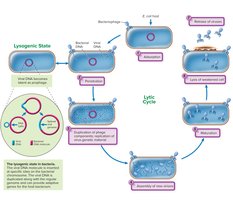
Bacteriophages infect bacteria and can follow either a lytic or lysogenic cycle.
Lytic cycle: Virus replicates and lyses the host cell.
Lysogenic cycle: Viral DNA integrates into the host genome as a prophage, replicating with the host cell.
Lysogenic conversion: Bacteria acquire new traits from phage genes, such as toxin production.
Noncellular Infectious Agents: Prions, Satellite Viruses, and Viroids
Besides viruses, other noncellular infectious agents include:
Prions: Infectious proteins causing diseases like Creutzfeldt-Jakob disease and mad cow disease.
Satellite viruses: Depend on other viruses for replication (e.g., adeno-associated virus, delta agent).
Viroids: Naked RNA strands infecting plants, causing significant agricultural diseases.
Viruses and Human Health
Viruses are responsible for a wide range of human diseases, from acute infections (colds, influenza) to chronic conditions (cancers, diabetes). Antiviral drug development is challenging due to the need to target viral processes without harming host cells.
Antibiotics: Ineffective against viruses.
Antiviral drugs: Target specific steps in the viral life cycle (e.g., integrase inhibitors for HIV, Paxlovid for COVID-19).
Vaccines: More feasible for prevention than treatment.
Summary Table: Viral Properties and Classification
Property | Description |
|---|---|
Structure | Capsid, nucleic acid, sometimes envelope and spikes |
Nucleic Acid | DNA or RNA, single- or double-stranded |
Replication | Obligate intracellular, hijacks host machinery |
Classification | Host, disease, structure, genetic makeup |
Size | 20 nm to 1,000 nm |
