 Back
BackViruses and Prions: Structure, Classification, Replication, and Clinical Aspects
Study Guide - Smart Notes
 Tailored notes based on your materials, expanded with key definitions, examples, and context.
General Virus Characteristics
Viruses as Nonliving Microbes
Viruses are considered nonliving pathogens because they lack cellular structure and metabolic processes, and cannot reproduce independently. They are obligate intracellular parasites, meaning they require a host cell to replicate.
Virion: A single, infectious virus particle composed of a protective protein capsid and genetic material (DNA or RNA).
Virology: The scientific study of viruses.
Bacteriophages: Viruses that infect bacteria.
Animal viruses: Viruses that infect animals, including humans.
Comparison to Prokaryotic and Eukaryotic Cells
Viruses lack organelles, cytoplasm, and a cell membrane.
They do not carry out metabolic processes independently.
Unlike prokaryotic and eukaryotic cells, viruses cannot reproduce without a host.
Viral Structure
Capsid
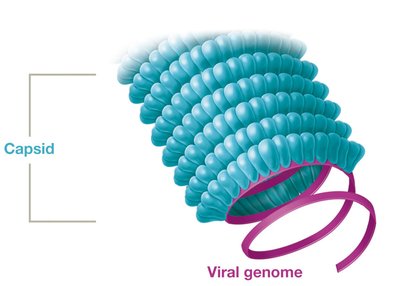
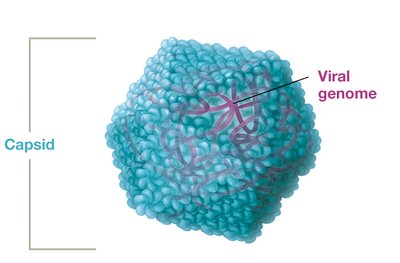
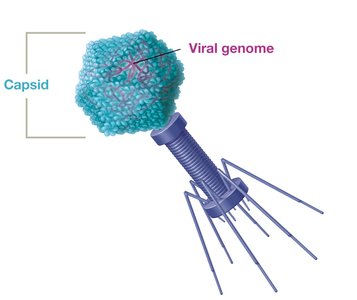
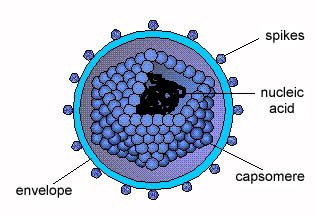
The capsid is a protein shell that packages and protects the viral genome. It is made of subunits called capsomeres and can have different shapes:
Helical capsid: Rod-shaped structure with the genome coiled inside.
Icosahedral capsid: Spherical structure with 20 triangular faces.
Complex capsid: Found in some bacteriophages, with additional structures like tails and fibers.
Envelope
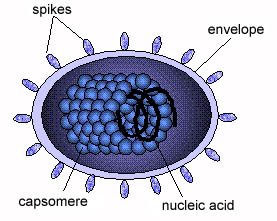
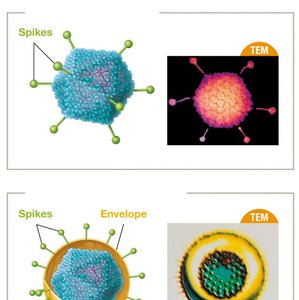
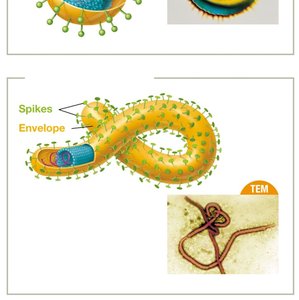
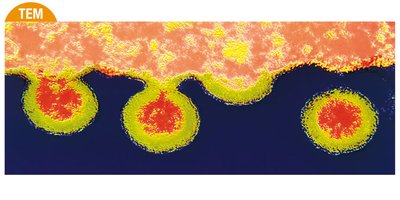
Some viruses have a lipid-based envelope surrounding the capsid, acquired from the host cell membrane during budding. Others, called naked viruses, lack an envelope and are released by cell lysis.
Enveloped viruses: More sensitive to environmental conditions.
Naked viruses: More resistant to desiccation and disinfectants.
Spikes
Spikes are glycoprotein extensions on the surface of viruses that facilitate attachment and entry into host cells. They are critical for host specificity and immune recognition.
Hemagglutinin (HA) and Neuraminidase (NA): Spikes found in influenza viruses.
Spikes are targets for immune responses and vaccines.
SARS-CoV-2 Structure
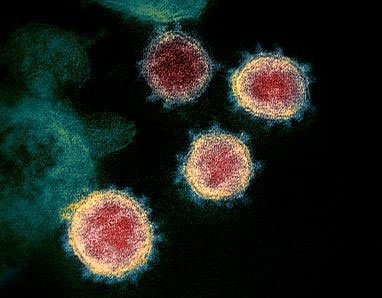
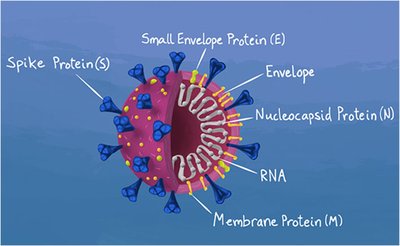
SARS-CoV-2, the virus responsible for COVID-19, is an enveloped virus with prominent spike proteins that give coronaviruses their crown-like appearance.
Spikes are essential for binding to host cell receptors.
Envelope and nucleocapsid proteins are important for viral assembly and replication.
Viral Genomes
Genomic Variations
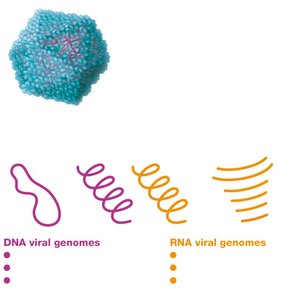
Viral genomes can be composed of DNA or RNA, and may be single-stranded (ss) or double-stranded (ds), linear, circular, or segmented.
DNA viruses: Often double-stranded, may be linear or circular.
RNA viruses: Often single-stranded, may be linear or segmented.
Viral genes encode capsomere proteins, enzymes, and structural factors.
Making mRNA from Viral Genomes
Viruses use various strategies to produce mRNA for protein synthesis, depending on their genome type.
DNA viruses typically use host cell machinery for transcription.
RNA viruses may carry their own polymerases or use host enzymes.
Retroviruses use reverse transcription to convert RNA into DNA.
*Additional info: DNA viruses often replicate in the nucleus, while RNA viruses usually replicate in the cytoplasm.* 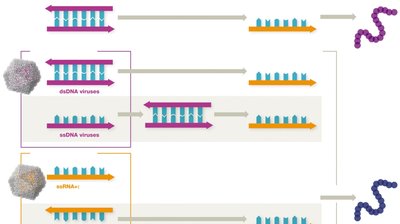

Viral Genome Evolution
Viral genomes change rapidly due to quick replication and high mutation rates, especially in RNA viruses.
Mutations: Can be neutral, beneficial, or deleterious.
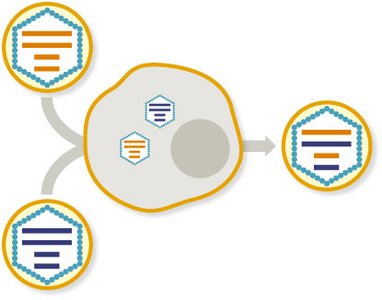
Reassortment: Occurs when two different viral strains coinfect a host cell, leading to new genetic combinations.
Antigenic Drift and Shift
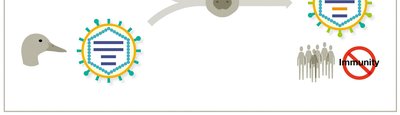
Antigenic drift: Minor changes in viral surface proteins (e.g., HA and NA spikes in influenza) due to mutations, leading to new strains and reduced immunity.
Antigenic shift: Major genetic reassortment, often resulting in new, highly virulent strains and potential pandemics.
Classifying and Naming Viruses
Criteria for Classification
Viruses are classified based on several features:
Type of nucleic acid (DNA or RNA)
Capsid symmetry (helical, icosahedral, complex)
Presence or absence of an envelope
Genome architecture (ssDNA, dsDNA, ssRNA, etc.)
Medically Important Viral Families
Family | Capsid Shape | Envelope | Genome Features | Examples |
|---|---|---|---|---|
Parvoviridae | Icosahedral | Naked | ssDNA | Human parovirus B19 |
Herpesviridae | Icosahedral | Enveloped | dsDNA linear | Herpes simplex virus |
Coronaviridae | Helical | Enveloped | ssRNA+ | SARS-CoV, SARS-CoV-2 |
Retroviridae | Icosahedral | Enveloped | ssRNA+ (reverse transcriptase) | HIV |
*Additional info: See textbook for full list of viral families and their clinical significance.*
Host Range, Tropism, and Sizes
Host range: The collection of species a virus can infect.
Tropism: Tissue or cell specificity determined by viral surface factors.
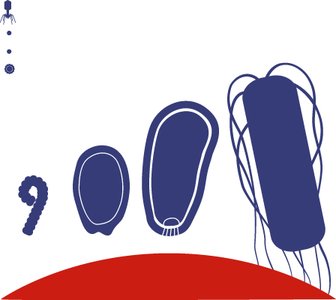
Viruses vary in size, typically 20–400 nm, but some are much larger.
Naming Conventions
Viruses are named using standardized rules established by the International Committee on the Taxonomy of Viruses (ICTV).
Taxon | Example | Naming Rule |
|---|---|---|
Order | Herpesvirales | Italicized, capitalized, ends in 'virales' |
Family | Coronaviridae | Italicized, capitalized, ends in 'viridae' |
Genus | Betacoronavirus | Italicized, capitalized, ends in 'virus' |
Species | SARS-related coronavirus | Italicized, capitalized |
Common name | SARS-CoV-2 | Not italicized, proper nouns capitalized |
Viral Replication Pathways
Bacteriophage Lytic and Lysogenic Replication
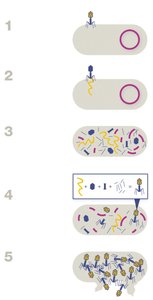
Lytic cycle: Virus infects host, replicates, assembles new virions, and lyses the cell.
Lysogenic cycle: Viral genome integrates into host genome as a prophage, replicates with host, and can later enter lytic cycle.
Phage conversion: Acquisition of new pathogenic properties by bacteria due to prophage genes.
Animal Virus Replication
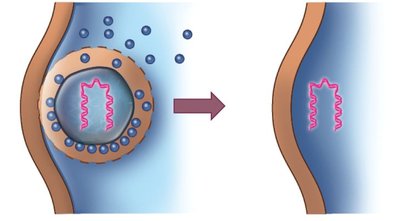
Animal viruses follow a generalized replication pathway:
Attachment: Virus binds to host cell receptors.
Penetration: Entry by fusion (enveloped viruses) or endocytosis (enveloped and naked viruses).
Uncoating: Capsid is digested, genome released.
Replication: Genome is replicated, viral proteins synthesized.
Assembly: New virions are formed.
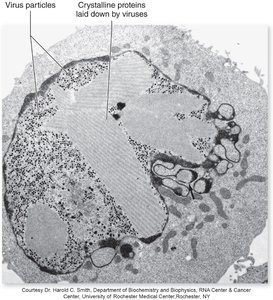
Release: Enveloped viruses bud off; naked viruses rupture the cell.
Persistent Infections
Acute infections: Rapid onset, short duration.
Persistent infections: Chronic or latent, with ongoing or intermittent viral replication.
Chronic infection: Continuous production of virions (e.g., HIV).
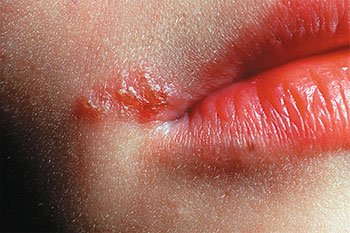
Latent infection: Periods of dormancy with occasional flare-ups (e.g., Herpesviridae).
Oncogenic Viruses
Oncogenic viruses can cause cancer by stimulating uncontrolled cell division or reducing cell death signals.
Examples: Human papilloma viruses (HPVs), Human T-lymphotropic viruses (HTLV).
Oncoviruses are responsible for 10–15% of human cancers.
Clinical Aspects of Viruses and Prions
Growing Viruses
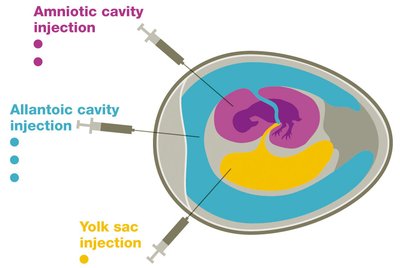
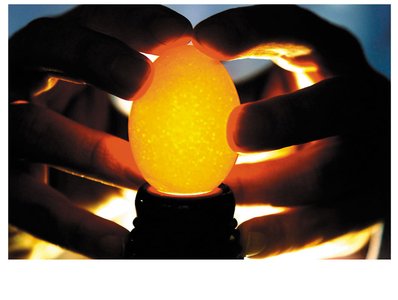
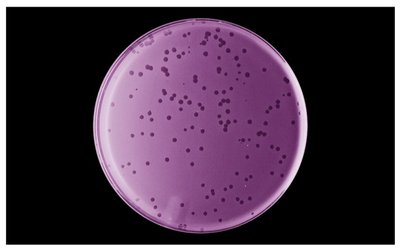
Viruses are grown in laboratory settings using tissue culture, live animal hosts, or embryonated eggs.
Tissue culture: Cells grown in vitro for virus propagation.
Embryonated eggs: Used for growing certain viruses, such as influenza.
Detecting Viral Proteins
Agglutination tests: Use antibodies or antigens linked to latex beads to detect viral proteins or patient antibodies.
Positive agglutination indicates presence of virus or antibodies.

Detecting Viral Genetic Material
Nucleic acid detection techniques are highly sensitive and specific.
Clinical samples are collected and nucleic acids extracted.
Detection methods include fluorescent probes, sequencing, and PCR.
*Additional info: PCR is widely used for rapid detection of viral infections, including SARS-CoV-2.*
Antiviral Drugs
Antiviral drugs target various stages of viral replication:
Attachment inhibitors: Block virus binding to host cells (e.g., Maraviroc for HIV).
Penetration inhibitors: Prevent viral entry (e.g., Amantadine for influenza).
Uncoating inhibitors: Block release of viral genome (e.g., Rimantadine).
Replication inhibitors: Block viral genome replication (e.g., NRTIs for HIV).
Release inhibitors: Prevent virion release (e.g., Oseltamivir for influenza).
*Additional info: Nucleoside analogs, such as acyclovir, mimic nucleotides and halt viral DNA replication.*
Prions
Prions are infectious proteins that lack genetic material and do not replicate like viruses. They cause transmissible spongiform encephalopathies (TSEs) in humans.
Diseases include Gerstmann-Straussler-Schienker syndrome and Creuzfeldt-Jakob disease (CJD).
Prions are transmitted by ingestion, transplantation, or contaminated medical instruments.
