 Back
BackViruses and Prions: Structure, Replication, and Clinical Aspects
Study Guide - Smart Notes
 Tailored notes based on your materials, expanded with key definitions, examples, and context.
General Virus Characteristics
Viruses as Nonliving Pathogens
Viruses are submicroscopic infectious agents that are considered nonliving because they lack cellular structure and metabolic processes. They are obligate intracellular pathogens, meaning they require a host cell's machinery to replicate. Their size ranges from 20–400 nm, making them much smaller than prokaryotic and eukaryotic cells.
Virology is the study of viruses.
Viruses are acellular and cannot reproduce independently.
Many viral infections are zoonotic, originating in animals and sometimes crossing into humans.
Viruses and Human Health
Viruses are the most common cause of acute infections that do not require hospitalization, such as colds, influenza, and chickenpox. Some viruses, like rabies and Ebola, have high mortality rates, while others can cause long-term disabilities (e.g., polio, neonatal rubella). Rapid mutation rates make it difficult to design effective therapies, so vaccines are a primary tool for prevention.
Interferons (IFNs) are natural human proteins that help resist viral infections by activating immune cells and upregulating antigen presentation.
Comparing Viruses, Prokaryotes, and Eukaryotes
Viruses differ fundamentally from prokaryotic and eukaryotic cells in structure, replication, and metabolism. They lack cellular components and only contain genetic material (DNA or RNA) within a protein shell.
Feature | Viruses | Prokaryotes | Eukaryotes |
|---|---|---|---|
Cellular Structure | No | Yes | Yes |
Genetic Material | DNA or RNA | DNA | DNA |
Replication | Host-dependent | Binary fission | Mitosis/meiosis |
Metabolism | No | Yes | Yes |
Viral Structure and Genomic Features
Virion Structure
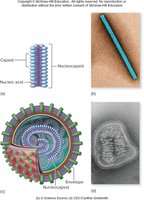
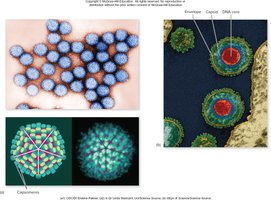
A virion is a single, infectious virus particle. It consists of a protective protein shell called a capsid, which encloses the viral genome (DNA or RNA). Some viruses also possess a lipid-based envelope derived from the host cell membrane.
Capsid: Made of capsomere subunits; provides protection and shape.
Envelope: Present in some animal viruses; acquired during budding from the host cell.
Spikes (peplomers): Glycoprotein extensions that facilitate attachment to host cells and are antigenic.
Capsid Morphologies
Most animal viruses have either helical or icosahedral capsids, while bacteriophages often have complex structures.
Helical capsids: Hollow tube-like structure (e.g., tobacco mosaic virus, influenza).
Icosahedral capsids: Three-dimensional polygonal shape (e.g., rotavirus, herpes simplex virus).
Complex capsids: Found in bacteriophages, often with additional structures for genome injection.
Viral Envelopes
Enveloped viruses have a lipid membrane surrounding the capsid, acquired from the host cell during budding. Naked viruses lack this envelope and are released by cell lysis. All bacteriophages are naked.
Viral Spikes (Peplomers)
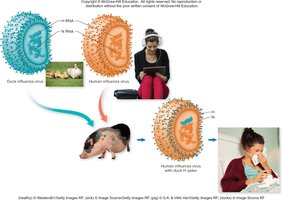
Spikes are glycoproteins that protrude from the capsid or envelope, mediating attachment to specific host cell receptors. They are key antigens and can mutate, as seen in influenza viruses (hemagglutinin [HA] and neuraminidase [NA]).
Viral Genomes
Viral genomes are highly variable and can be composed of DNA or RNA, which may be single- or double-stranded, segmented or non-segmented, and circular or linear. Most viruses have fewer than 300 genes, encoding structural proteins, enzymes, and replication factors.
dsDNA viruses: Use host RNA polymerases to transcribe mRNA.
ssDNA viruses: Converted to dsDNA before transcription.
ssRNA (+): Genome acts as mRNA, directly translated.
ssRNA (−): Complementary to mRNA; requires viral RNA-dependent RNA polymerase.
Retroviruses: Use reverse transcriptase to convert RNA to DNA, which integrates into the host genome.
dsRNA viruses: Require RNA-dependent RNA polymerase for mRNA synthesis.
Viral Genome Evolution
Viruses mutate rapidly due to quick replication and lack of proofreading in RNA polymerases. This leads to antigenic drift (minor changes) and antigenic shift (major reassortment), especially in influenza viruses, impacting immunity and pandemic potential.
Classifying and Naming Viruses
Classification Criteria
The International Committee on Taxonomy of Viruses (ICTV) classifies viruses based on:
Type of nucleic acid (DNA or RNA)
Capsid symmetry (helical, icosahedral, complex)
Presence or absence of envelope
Genome architecture (e.g., ssDNA, dsRNA)
Host Range and Tropism
Host range is the spectrum of species a virus can infect, while tropism refers to the specific tissues or cells targeted by the virus. Some viruses have broad host ranges and tropism, while others are highly specific (e.g., measles virus infects only humans).
Virus Sizes and Visualization
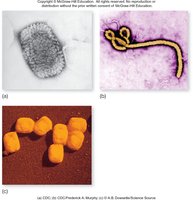
Viruses vary greatly in size, from 30 nm (rhinoviruses) to 1,500 nm (pithovirus). Electron microscopy is required to visualize them due to their small size.
Viral Replication Pathways
Bacteriophage Replication
Bacteriophages replicate via two main pathways:
Lytic cycle: Phage infects, replicates, and lyses the host cell, releasing new virions.
Lysogenic cycle: Phage genome integrates into the host genome (prophage), replicates with the host, and can later enter the lytic cycle.
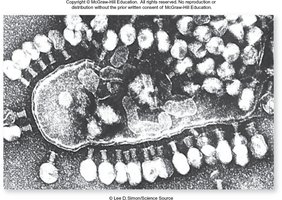
Phage conversion can confer new pathogenic traits to bacteria, such as toxin production (e.g., Corynebacterium diphtheriae, Clostridium botulinum).
Animal Virus Replication
Animal viruses follow a six-step replication pathway:
Attachment
Penetration
Uncoating
Replication
Assembly
Release
Enveloped viruses are released by budding, while naked viruses cause cell lysis.
Cytopathic Effects (CPEs)
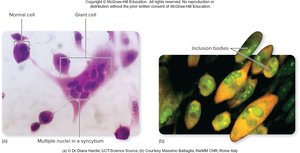
Viruses can cause visible changes in host cells, such as cell fusion (syncytia) and inclusion bodies. These effects are used in diagnostics and research.
Persistent Infections
Chronic infections: Continuous release of virions over time (e.g., HIV forms a provirus).
Latent infections: Periods of dormancy with intermittent flare-ups (e.g., herpesviruses).
Oncogenic Viruses
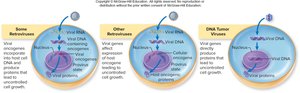
Oncogenic (cancer-causing) viruses can stimulate uncontrolled cell division or inhibit cell death. Examples include human papillomavirus (HPV) and human T-lymphotropic virus (HTLV). Mechanisms include incorporation of viral oncogenes or alteration of host oncogene expression.
Clinical Aspects of Viruses
Laboratory Cultivation
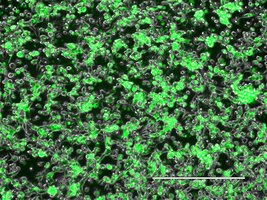
Viruses are grown in the lab using cell cultures, embryonated eggs, or live animal hosts. Bacteriophages are quantified using plaque assays, where clear zones (plaques) indicate lysis of bacterial cells.
Diagnostic Methods
Agglutination tests: Detect viral antigens or antibodies using latex beads.
ELISA: Enzyme-linked immunosorbent assay for detecting viral proteins or antibodies.
Nucleic acid detection: PCR, sequencing, and fluorescent probes for viral genome identification.
Diagnostic tests must be specific (no false positives) and sensitive (detect low levels).
Antiviral Drugs
Antiviral drugs target various stages of the viral life cycle but rarely cure infections. Vaccines are crucial for prevention. Drug classes include:
Entry/uncoating inhibitors (e.g., docosanol, palivizumab)
Nucleoside analogs (e.g., acyclovir, ribavirin)
Reverse transcriptase inhibitors (e.g., AZT for HIV)
Antisense antivirals (e.g., Vitravene)
Interferons (immune modulators)
Neuraminidase inhibitors (e.g., oseltamivir, zanamivir for influenza)
Prions
Prion Diseases
Prions are infectious proteins that cause fatal neurodegenerative disorders known as transmissible spongiform encephalopathies (TSEs). They lack genetic material and do not replicate like viruses. Prion diseases include:
Creutzfeldt-Jakob disease (CJD)
Variant CJD (vCJD)
Fatal familial insomnia (FFI)
Gerstmann-Straussler-Scheinker syndrome
Animal diseases: Scrapie (sheep), Bovine spongiform encephalopathy (cows)
Transmission can be inherited, iatrogenic (medical procedures), sporadic, or through contaminated food (e.g., vCJD from BSE-infected beef). Prion diseases are invariably fatal and currently untreatable.
Prion-like Neurodegenerative Diseases
Other neurodegenerative diseases, such as Alzheimer's, Parkinson's, and amyotrophic lateral sclerosis (ALS), are associated with misfolded proteins and may exhibit prion-like mechanisms.
