 Back
BackViruses, Microbial Growth, and Principles of Infectious Disease: Study Notes
Study Guide - Smart Notes
 Tailored notes based on your materials, expanded with key definitions, examples, and context.
Viruses and Viral Variation
Influenza Virus Structure and Classification
The influenza virus is classified based on two major surface proteins: Hemagglutinin (HA) and Neuraminidase (NA). These proteins are critical for viral entry and release from host cells.
Hemagglutinin (HA): 18 known subtypes (H1–H18)
Neuraminidase (NA): 11 known subtypes (N1–N11)
Influenza A Naming System: Based on HA and NA combinations (e.g., H1N1, H3N2, H5N1)
Note: Only Influenza A uses the H and N subtype system; Influenza B and C do not.
Antigenic Drift and Shift
Variation in HA and NA leads to two main types of genetic changes in influenza viruses:
Antigenic drift: Small, gradual mutations over time; responsible for seasonal flu changes.
Antigenic shift: Major genetic changes due to reassortment; produces new virus strains and can cause pandemics.
Impact of Viral Mutations
Genotype: The virus’s genetic makeup.
Phenotype: Observable traits such as infectivity or virulence.
Major mutations (especially antigenic shift) are most likely to cause pandemics.
Antiviral Medications and Treatments
Nucleoside Analogs: Block viral replication by mimicking normal nucleotides, causing premature termination of nucleic acid synthesis.
Ribavirin: Targets RNA polymerase; treats RSV and Hepatitis C.
Acyclovir: Inhibits DNA replication; effective against HHV-1, HHV-2, and Varicella-zoster virus.
Nucleoside Reverse Transcriptase Inhibitors (NRTIs): Example: Azidothymidine (AZT); inhibits reverse transcriptase, used in HIV treatment.
Interferons: Naturally produced proteins that signal neighboring cells to induce antiviral defenses; can be used as antiviral therapy.
Vaccination and Antiviral Limitations
Few effective antiviral drugs exist.
Vaccination is the most effective prevention method; trains the immune system to recognize viruses.
Antibiotics do not treat viral infections.
Microbial Growth and Control
Microbial Growth and Binary Fission
Microbial growth refers to an increase in cell number, not cell size. Most bacteria reproduce by binary fission, a process where one cell divides into two identical daughter cells.
Microbial Growth Curve
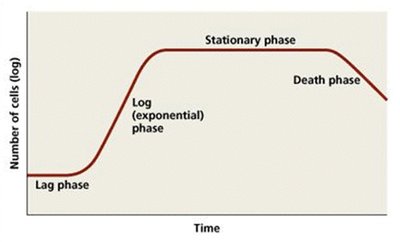
Bacterial populations typically follow a four-phase growth curve in batch culture:
Lag phase: Cells adjust to the environment; no division occurs.
Log (exponential) phase: Rapid cell division; highest metabolic activity.
Stationary phase: Growth rate equals death rate; nutrients become limited.
Death phase: Cells die due to nutrient depletion and waste accumulation.
Environmental Growth Requirements
Microbial growth depends on environmental factors such as temperature, oxygen, salt, pressure, and nutrients.
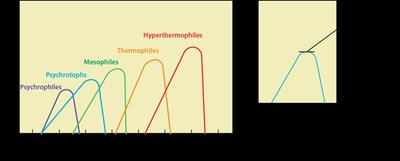
Temperature Classifications
Psychrophiles: Cold-loving; e.g., Arctic bacteria.
Mesophiles: Moderate temperature; most pathogens (e.g., Escherichia coli).
Thermophiles: Heat-loving; e.g., hot springs bacteria.
Extreme thermophiles (Hyperthermophiles): Extremely high temperatures.
Barophiles: Pressure-loving microbes; e.g., deep ocean microbes.
Salt Classifications
Halophiles: Require salt; e.g., Halobacterium.
Facultative halophiles: Tolerate salt but do not require it; e.g., Staphylococcus aureus.
Nutritional Classification of Microbes
Microbes are classified based on their energy and carbon sources:
Energy Source | Carbon Source | Type | Examples |
|---|---|---|---|
Light | CO2 | Photoautotroph | Cyanobacteria, higher plants, algae |
Light | Organic compounds | Photoheterotroph | Purple and green bacteria |
Chemical | CO2 | Chemoautotroph | Nitrifying bacteria, sulfur bacteria |
Chemical | Organic compounds | Chemoheterotroph | E. coli, humans, most pathogens |
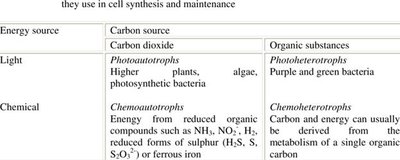
Chemoheterotrophs are the most medically important group, including most human pathogens.
Oxygen Requirements
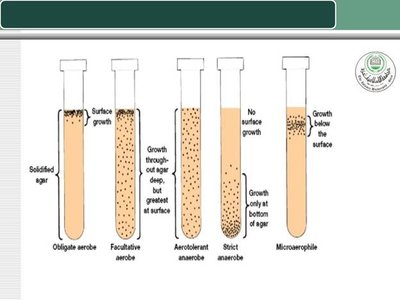
Obligate aerobe: Requires oxygen (e.g., Mycobacterium tuberculosis).
Obligate anaerobe: Killed by oxygen (e.g., Clostridium botulinum).
Facultative anaerobe: Can grow with or without oxygen (e.g., E. coli).
Aerotolerant anaerobe: Tolerates oxygen but does not use it.
Microaerophile: Requires small amounts of oxygen (e.g., Helicobacter pylori).
Heat Control Methods and Standards
Autoclave (Sterilization): 121°C, 15 psi, 15–20 minutes; kills endospores; used for medical instruments and lab equipment.
Boiling: 100°C, 10 minutes; kills most microbes but not endospores; disinfects but does not sterilize.
Pasteurization: Flash: 72°C for 15 seconds; Ultra-high temperature: 140°C for 1–3 seconds; used for milk.
Dry Heat Sterilization: 160–170°C, 2 hours; sterilizes glassware.
Control strategies: Decontamination, sterilization, disinfection, antiseptic, microbiostatic/microbiocidal methods; physical (heat, filtration, radiation) and chemical controls; germicide levels for critical, semicritical, and noncritical items; target-specific control (e.g., endospores, Clostridioides difficile).
Principles of Infectious Disease and Epidemiology
Pathogen Categories
Bacteria
Viruses
Fungi
Protozoa
Helminths
Prions
Opportunistic vs. True Pathogens
True pathogen: Causes disease in healthy hosts.
Opportunistic pathogen: Causes disease when host defenses are compromised or normal microbiota are disrupted.
Host–Microbe Relationships
Mutualism: Both organisms benefit (e.g., gut bacteria and humans).
Commensalism: One benefits, other unaffected.
Parasitism: One benefits, other harmed (e.g., tapeworm).
Amensalism: One harmed, other unaffected (e.g., Penicillium mold killing bacteria).
Normal microbiota support health by competing with pathogens, producing vitamins, and educating the immune system.
Normal Microbiota: Typical Sites
Skin (especially moist/oily areas)
Upper respiratory tract (nasal passages, oropharynx)
Oral cavity (teeth, tongue, saliva)
Gastrointestinal tract (especially colon)
Urogenital tract: vagina (often Lactobacillus-dominant), distal urethra
Sterile sites: blood, CSF, internal organs, most of urinary tract above distal urethra, lower respiratory tract
Reservoirs of Infection
Animal reservoirs: e.g., rabies virus
Human reservoirs: e.g., asymptomatic carriers
Nonliving reservoirs: e.g., soil, water
Zoonoses
Disease transmitted from animals to humans. Transmission routes include direct contact, animal waste, eating animals, and arthropods.
Sources of Infection
Exogenous sources: Outside the body (e.g., contaminated food)
Endogenous sources: From normal microbiota (e.g., surgical infections)
Infection and Disease Progression
Contamination: Microbe present
Infection: Microbe grows
Disease: Damage occurs
Portals of Entry
Skin
Upper respiratory tract
Digestive tract
Placenta
Parenteral route
Key Definitions and Standards to Memorize
Chemoheterotroph
Photoautotroph
Halophile
Facultative halophile
Barophile
Obligate aerobe
Obligate anaerobe
Reservoir
Zoonosis
Mutualism
Commensalism
Parasitism
Amensalism
Standards:
Autoclave: 121°C, 15 psi, 15–20 min
Pasteurization: 72°C, 15 sec
Boiling: 100°C, 10 min
Dry heat: 160–170°C, 2 hr
