 Back
BackViruses: Structure, Classification, and Replication
Study Guide - Smart Notes
 Tailored notes based on your materials, expanded with key definitions, examples, and context.
Viruses: Structure, Classification, and Replication
General Characteristics of Viruses
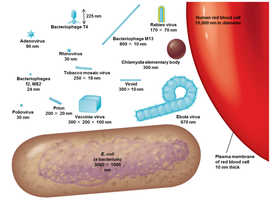
Viruses are the most abundant microbes on Earth and are obligate intracellular parasites, meaning they require living host cells to multiply. They infect specific cells based on receptor compatibility and can infect all types of cells, including prokaryotes and eukaryotes. Viruses are acellular entities that cannot reproduce independently and are extremely small, ranging from 30 nm to 300 nm in diameter.
Obligate intracellular parasites: Require host cells for replication.
Acellular: Not composed of cells; lack cellular structures such as ribosomes and ATP-generating mechanisms.
Genome: Contains either DNA or RNA, never both, and only a few genes.
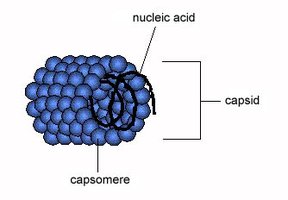
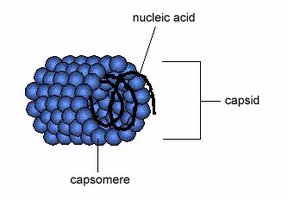
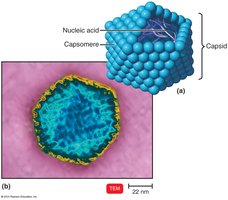
Structure: Composed of a protein coat (capsid), sometimes a lipid envelope, and an interior containing the genome and proteins.
Viruses vs. Bacteria
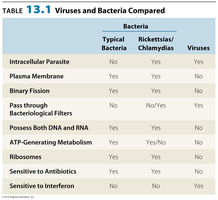
Viruses differ significantly from bacteria in structure, replication, and metabolism. The following table summarizes key differences:
Typical Bacteria | Rickettsias/Chlamydias | Viruses | |
|---|---|---|---|
Intracellular Parasite | No | Yes | Yes |
Plasma Membrane | Yes | Yes | No |
Binary Fission | Yes | Yes | No |
Pass through Bacteriological Filters | No | No/Yes | Yes |
Possess Both DNA and RNA | Yes | Yes | No |
ATP-Generating Metabolism | Yes | No/Yes | No |
Ribosomes | Yes | Yes | No |
Sensitive to Antibiotics | Yes | Yes | No |
Sensitive to Interferon | No | No | Yes |
Structure and Morphology of Viruses
Capsid and Envelope
The capsid is a protein coat composed of subunits called capsomeres that encloses the viral genome. Some viruses possess an external lipid envelope derived from the host cell membrane, which may contain glycoprotein spikes used for attachment to host cells.
Naked viruses: Lack an envelope.
Enveloped viruses: Surrounded by a lipid membrane, often with spikes.
General Morphologies of Viruses
Viruses are classified based on their capsid structure and presence or absence of an envelope:
Helical: Cylindrical capsid with nucleic acid inside (e.g., Rabies, Ebola).
Polyhedral: Many-sided, often icosahedral (e.g., Adenovirus, Poliovirus).
Complex: Complicated structures, such as bacteriophages with polyhedral heads and helical tails.
Enveloped: Surrounded by a lipid membrane (e.g., Influenza, Herpesvirus).
Viral Genome
The viral genome can be DNA or RNA, single-stranded or double-stranded, linear, circular, or segmented. The total amount of nucleic acid varies widely among viruses.
DNA viruses: May have single- or double-stranded DNA.
RNA viruses: May have single- or double-stranded RNA, with positive (+) or negative (–) sense.
Classification and Taxonomy of Viruses
Baltimore Classification System
Viruses are classified based on their nucleic acid type and replication strategy. The Baltimore system divides viruses into seven groups, with taxonomic ranks such as order (-virales), family (-viridae), subfamily (-virinae), and genus (-virus). Viral species share genetic information and ecological niche.

Viral Replication and Life Cycles
Growing Viruses
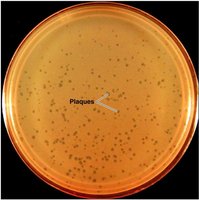
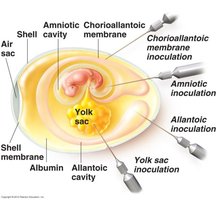
Viruses require living cells for replication. Bacteriophages are grown on bacterial lawns, forming plaques, while animal viruses are grown in living animals, embryonated eggs, or cell cultures.
Viral Multiplication: General Steps
Viral replication involves several key steps:
Attachment: Virus binds to host cell receptors.
Penetration: Entry of viral genome into host cell.
Uncoating: Release of viral genome from capsid.
Biosynthesis: Synthesis of viral nucleic acids and proteins.
Maturation: Assembly of new viral particles.
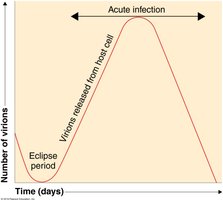
Release: Exit of new virions from host cell (lysis or budding).
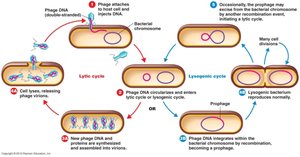
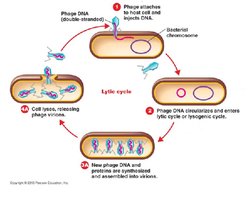
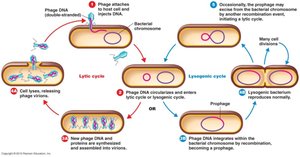
Bacteriophage Life Cycles
Bacteriophages (viruses that infect bacteria) can undergo two types of replication cycles:
Lytic cycle: Virus replicates and lyses the host cell, releasing new virions.
Lysogenic cycle: Viral DNA integrates into the host genome and replicates along with it, potentially conferring new properties to the host (phage conversion).
Multiplication of Animal Viruses
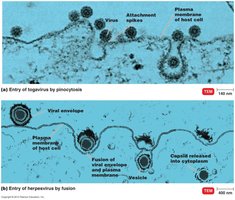
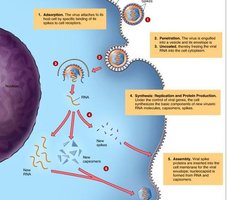
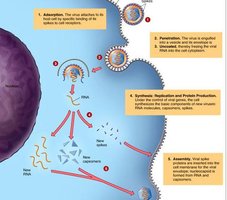
Animal viruses follow similar steps but differ in entry and release mechanisms:
Attachment: To cell membrane via spikes or receptors.
Penetration: By endocytosis or membrane fusion.
Uncoating: Enzymatic removal of capsid.
Biosynthesis: Synthesis of viral components.
Maturation: Assembly of virions.
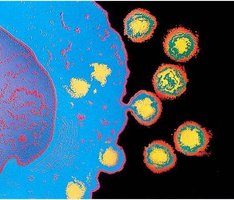
Release: By budding (enveloped viruses) or rupture (naked viruses).

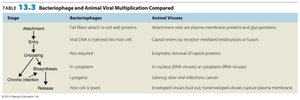
Comparison: Bacteriophage vs. Animal Virus Multiplication
Stage | Bacteriophages | Animal Viruses |
|---|---|---|
Attachment | Tail fibers attach to cell wall proteins | Attachment sites are plasma membrane proteins and glycoproteins |
Entry | Viral DNA injected into host cell | Capsid enters by receptor-mediated endocytosis or fusion |
Uncoating | Not required | Enzymatic removal of capsid proteins |
Site of Synthesis | In cytoplasm | DNA viruses: nucleus; RNA viruses: cytoplasm |
Release | Host cell lysed | Enveloped viruses bud out; nonenveloped viruses rupture plasma membrane |
Viral Genomes and Replication Strategies
DNA Viruses
dsDNA viruses: Replicate in the host nucleus using host or viral polymerases (e.g., Herpesvirus, Papillomavirus).
ssDNA viruses: Require conversion to dsDNA before replication (e.g., Parvovirus).
RNA Viruses
ssRNA(+): Genome acts as mRNA; translated directly by host ribosomes (e.g., SARS-CoV-2, Poliovirus).
ssRNA(–): Genome is complementary to mRNA; must be converted to (+) sense by viral RNA-dependent RNA polymerase (e.g., Influenza, Measles, Ebola).
dsRNA: Both strands present; (+) strand used for translation, and viral RNA polymerase replicates genome (e.g., Rotavirus).
Retroviruses: ssRNA genome is reverse transcribed into DNA, which integrates into the host genome (e.g., HIV-1).
Viruses and Disease
Oncogenic Viruses
Some viruses can cause cancer by integrating their genetic material into the host genome and activating oncogenes. These include both DNA and RNA viruses.
Oncogenic DNA viruses: Adenoviridae, Human Herpesvirus (Epstein-Barr), Papillomavirus, Hepatitis B virus.
Oncogenic RNA viruses: Retroviruses such as Human T-cell Leukemia viruses (HTLV-1 & -2).
Types of Viral Infections
Acute: Rapid onset, e.g., Influenza.
Latent: Virus remains dormant, e.g., Herpes simplex, HIV.
Recurrent: Symptoms reappear, e.g., Shingles.
Persistent/Chronic: Long-term infection, often fatal, e.g., Cervical cancer, AIDS dementia complex.
Plant Viruses, Viroids, and Prions
Plant Viruses and Viroids
Plant viruses enter through wounds or via parasites and can cause significant agricultural losses. Viroids are short pieces of naked RNA that cause diseases such as potato spindle tuber disease. Virusoids are viroids enclosed in a protein coat and require coinfection with a virus.
Prions
Prions are infectious proteins that cause neurodegenerative diseases known as spongiform encephalopathies. These include "mad cow disease," Creutzfeldt-Jakob disease, and fatal familial insomnia. Prions are transmissible by ingestion, transplant, or surgical instruments and are resistant to standard sterilization methods.
