Back
BackViruses: Structure, Replication, and Diversity
Study Guide - Smart Notes
 Tailored notes based on your materials, expanded with key definitions, examples, and context.
Viruses: Structure, Replication, and Diversity
What Is a Virus?
Viruses are genetic elements that can only multiply within living (host) cells. They are not considered living organisms and are not found on the tree of life. Viruses are obligate intracellular parasites, meaning they require a host cell for energy, metabolic intermediates, and protein synthesis. Each virus contains its own nucleic acid genome. The virus particle (or virion) is the extracellular form of a virus, which exists outside the host and facilitates transmission from one host cell to another. Replication and reproduction occur only upon infection (entry into a host cell).
Viral Diversity and Hosts
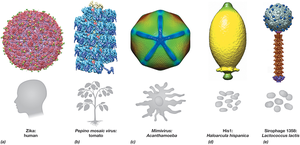
Viruses exhibit significant diversity in their genetic material and host range:
Genomes can be either DNA or RNA, and may be single-stranded or double-stranded.
Viral genomes are usually smaller in size and gene content than those of cells.
Viruses infect a wide range of hosts, including humans, plants, animals, and microorganisms.
Structure of the Virion
The virion is composed of nucleic acid surrounded by a protein coat, and in some cases, an envelope derived from the host cell membrane. Virions may contain specialized enzymes:
Lysozyme: Makes holes in the cell wall to allow nucleic acid entry and lyses bacterial cells to release new virions.
Neuraminidases: (e.g., in influenza) Destroy glycoproteins and glycolipids, facilitating virus release from the cell.
Nucleic acid polymerases: Such as RNA replicases (RNA-dependent RNA polymerases) and reverse transcriptase (RNA-dependent DNA polymerase in retroviruses).
Culturing, Detecting, and Counting Viruses
Bacterial viruses are the easiest to grow, typically using hosts in liquid medium or as lawns on agar plates inoculated with virus. Animal and plant viruses are cultivated in tissue cultures derived from animal organs or plant roots. Viral plaques, clear zones on a lawn of host cells, indicate areas where viruses have lysed cells.

Steps in the Viral Replication Cycle
The replication cycle of viruses in a permissive host involves five key steps:
Attachment: Virus binds to the host cell surface.
Penetration: Entry of viral nucleic acid (prokaryotes) or entire virion (eukaryotes) into the host cell.
Synthesis: Viral genome replication and protein synthesis using host machinery.
Assembly: New virions are assembled from synthesized components.
Release: New virions exit the host cell, often lysing it.

The Replication Cycle of Bacteriophages
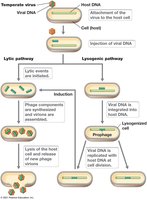
Bacteriophages (viruses that infect bacteria) can follow two main pathways:
Lytic pathway: Leads to the production of new phages and lysis of the host cell.
Lysogenic pathway: Viral DNA integrates into the host genome and replicates along with it, without killing the host immediately.
Viruses of Archaea
All characterized archaeal viruses have DNA genomes, with almost all being double-stranded circular DNA viruses. These viruses display unique morphologies and replication strategies compared to bacterial and eukaryotic viruses.

The Baltimore Classification of Viral Genomes
The Baltimore classification system categorizes viruses based on their genome type and replication strategy. The main classes are:
Class | Genome Type | Example |
|---|---|---|
I | dsDNA | Herpesvirus |
II | ssDNA | Parvovirus |
III | dsRNA | Reovirus |
IV | (+)ssRNA | Poliovirus |
V | (-)ssRNA | Rabies virus |
VI | ssRNA-RT | HIV |
VII | dsDNA-RT | Hepadnavirus |

DNA Viruses
DNA viruses include medically important groups such as poxviruses, adenoviruses, and herpesviruses. Herpesviruses can remain latent for extended periods and reactivate under stress or immune suppression. Poxviruses, such as smallpox, were among the first viruses studied and vaccinated against.

DNA Tumor Viruses
Some DNA viruses, such as herpesviruses (e.g., Epstein-Barr virus), are associated with cancer. These viruses can remain latent and reactivate, sometimes leading to oncogenesis (cancer development).

Chicken Pox - Varicella-Zoster Virus (VZV)
Chicken pox is a common childhood disease caused by the varicella-zoster virus, a herpesvirus. It is characterized by a systemic papular rash and is highly contagious, transmitted via respiratory droplets or mucous membranes. VZV can remain latent and reactivate as shingles later in life.

RNA Viruses
RNA viruses are classified based on the sense and structure of their RNA genomes. They include both positive-strand and negative-strand RNA viruses, each with distinct replication strategies.
Positive-Strand RNA Viruses
Examples include poliovirus and coronaviruses:
Poliovirus: Small icosahedral virus with a linear RNA genome. Replication occurs in the cytoplasm, and new virions are released by cell lysis.
Coronaviruses: Larger, enveloped viruses with glycoprotein spikes. They cause respiratory infections and have a unique replication cycle in the cytoplasm.


Negative-Strand RNA Animal Viruses
All negative-strand RNA viruses infect animals. Examples include rabies virus and influenza virus:
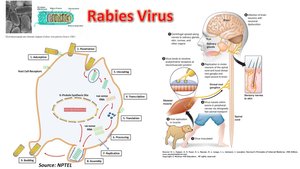
Rabies virus: Bullet-shaped, enveloped virus with a helical nucleocapsid. The viral RNA must be transcribed by a viral replicase into mRNA in the host cytoplasm.
Influenza virus: Enveloped, pleomorphic virus with a segmented genome. Surface proteins (hemagglutinin and neuraminidase) interact with host cells. The virus undergoes antigenic shift and drift, leading to new strains.

Prions
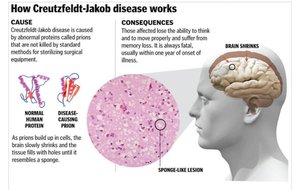
Prions are infectious proteins that cause neurodegenerative diseases such as Creutzfeldt-Jakob disease and chronic wasting disease. Unlike viruses, prions contain no nucleic acid and propagate by inducing misfolding of normal host proteins.