 Back
BackViruses, Viroids, and Prions: Structure, Classification, and Replication
Study Guide - Smart Notes
 Tailored notes based on your materials, expanded with key definitions, examples, and context.
General Characteristics of Viruses
Obligate Intracellular Parasites
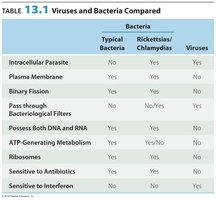
Viruses are obligate intracellular parasites, meaning they require living host cells to multiply. Unlike most bacteria, viruses cannot reproduce or carry out metabolic processes outside a host cell. Some bacteria, such as Chlamydia and Rickettsia, also require host cells for replication, but they differ fundamentally from viruses in structure and metabolism.
Genetic Material: Viruses contain either DNA or RNA, but never both.
Protein Coat: All viruses have a protein coat (capsid) that protects their genetic material.
No Ribosomes or ATP Generation: Viruses lack ribosomes and do not generate ATP, relying entirely on the host cell for these functions.
Host Range and Viral Size
Host Specificity
The host range of a virus is the spectrum of host cells it can infect. Most viruses are highly specific, infecting only certain cell types within a single host species. This specificity is determined by the interaction between viral attachment sites and host cell receptors (e.g., HIV infects CD4+ cells, Hepatitis C targets LDL receptors on hepatocytes).
Bacteriophages: Viruses that infect bacteria, often called 'phages.'
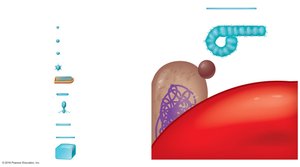
Size: Viruses range from 20 nm to 1000 nm, much smaller than most bacteria.
Viral Structure
Basic Components
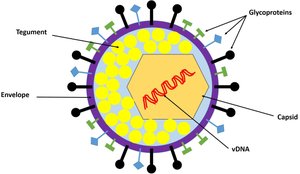
A virion is a complete, fully developed viral particle. The main structural components include:
Nucleic Acid: DNA or RNA, which may be single- or double-stranded, linear or circular.
Capsid: Protein coat made of subunits called capsomeres.
Envelope: Some viruses have an outer lipid, protein, and carbohydrate envelope derived from the host cell membrane.
Spikes: Glycoprotein projections from the envelope, important for attachment to host cells.
Viral Morphologies
Helical Viruses: Hollow, cylindrical capsid (e.g., tobacco mosaic virus).
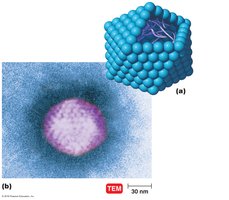
Polyhedral Viruses: Many-sided, often icosahedral (e.g., adenovirus).
Enveloped Viruses: Surrounded by a lipid membrane (e.g., influenza virus).
Complex Viruses: Complicated structures, such as bacteriophages with additional components.
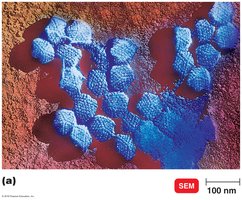
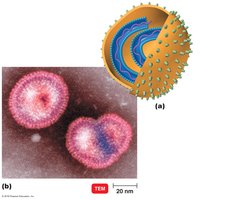
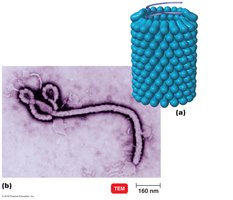
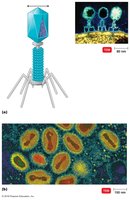
Viroids
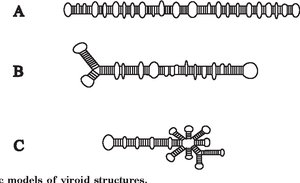
Viroids are infectious agents composed solely of a short strand of circular, single-stranded RNA without a protein coat. They are the smallest known infectious pathogens and primarily infect plants.
Taxonomy of Viruses
Naming and Classification
Viruses are classified based on their genetic material, structure, and host range. The taxonomic hierarchy includes:
Order: Names end in -ales (e.g., Herpesvirales).
Family: Names end in -viridae (e.g., Herpesviridae).
Genus: Names end in -virus (e.g., Simplexvirus).
Species: Group of viruses sharing the same genetic information and ecological niche.
Subspecies: Designated by numbers (e.g., Herpes simplex virus 1, 2, 3).
Isolation, Cultivation, and Identification of Viruses
Growing Bacteriophages
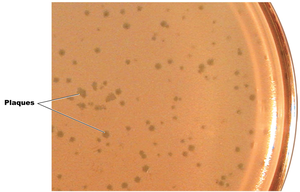
Bacteriophages are grown in bacterial cultures. They form plaques—clear zones on a bacterial lawn—each representing a single virus. The number of plaques can be quantified as plaque-forming units (PFU).
Growing Animal Viruses
In Living Animals: Used for studying pathogenesis and immune response.
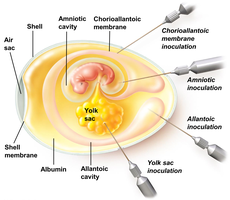
In Embryonated Eggs: Virus is injected into various egg compartments; growth is detected by embryo changes or death.
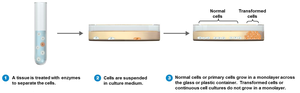
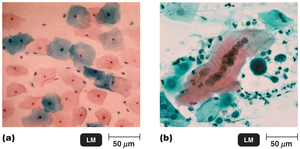
In Cell Cultures: Tissues are enzymatically separated into cells, which are grown in culture. Viral infection is detected by cytopathic effects (CPE), such as cell deterioration. Continuous cell lines are often used for routine virus culture.
Viral Identification
Cytopathic Effects: Observable changes in host cells due to viral infection.
Serological Tests: Detection of viral antigens or antibodies (e.g., Western blotting).
Nucleic Acid Techniques: RFLPs and PCR for detecting viral genetic material.
Viral Multiplication
General Steps
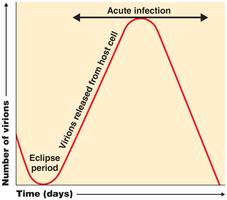
To multiply, a virus must invade a host cell and commandeer its metabolic machinery. The process is often depicted as a one-step growth curve, showing a latent (eclipse) period followed by a burst of virion release.
Multiplication of Bacteriophages
Lytic Cycle: Phage causes lysis and death of the host cell.
Lysogenic Cycle: Phage DNA integrates into the host genome as a prophage, replicating with the host and potentially conferring new properties (phage conversion).
Lytic Cycle of T-Even Bacteriophages
Attachment: Phage attaches to host cell via tail fibers.
Penetration: Phage injects DNA into the host cell.
Biosynthesis: Host machinery synthesizes viral components.
Maturation: Assembly of new phage particles.
Release: Host cell lyses, releasing new virions.
Lysogenic Cycle of Bacteriophage Lambda (λ)
Phage DNA integrates into the host chromosome as a prophage.
Prophage is replicated with host DNA and can later excise to enter the lytic cycle.
Phage conversion may result in new host properties.
Multiplication of Animal Viruses
Attachment: Virus binds to host cell membrane receptors.
Entry: By receptor-mediated endocytosis or membrane fusion.
Uncoating: Viral or host enzymes remove the capsid.
Biosynthesis: Synthesis of viral nucleic acids and proteins.
Maturation: Assembly of viral components.
Release: By budding (enveloped viruses) or cell rupture (nonenveloped viruses).
Biosynthesis of DNA and RNA Viruses
DNA Viruses
Replicate DNA in the host nucleus using viral enzymes.
Synthesize capsid proteins in the cytoplasm using host enzymes.
Major Families of DNA Viruses
Adenoviridae: Double-stranded DNA, nonenveloped; causes respiratory infections.
Poxviridae: Double-stranded DNA, enveloped; causes skin lesions (e.g., smallpox).
Herpesviridae: Double-stranded DNA, enveloped; includes herpes simplex, varicella-zoster, Epstein-Barr, cytomegalovirus, and others.
Papovaviridae: Double-stranded DNA, nonenveloped; includes papillomaviruses (warts, HPV).
Hepadnaviridae: Double-stranded DNA, enveloped; includes hepatitis B virus, uses reverse transcriptase.
RNA Viruses
Replicate in the host cytoplasm using RNA-dependent RNA polymerase.
+ (Sense) Strand: Viral RNA serves directly as mRNA.
– (Antisense) Strand: Viral RNA must be transcribed to a + strand to serve as mRNA.
dsRNA: Both strands present; mRNA is transcribed from the – strand.
Major Families of RNA Viruses
Picornaviridae: ssRNA (+), nonenveloped; includes poliovirus, rhinovirus, hepatitis A.
Togaviridae: ssRNA (+), enveloped; includes rubella virus.
Rhabdoviridae: ssRNA (–), enveloped; includes rabies virus.
Reoviridae: dsRNA, nonenveloped; includes rotavirus.
Retroviruses
Single-stranded RNA viruses that produce DNA using reverse transcriptase.
Viral DNA integrates into the host genome as a provirus (e.g., HIV).
Viruses and Cancer
Oncogenes and Transformation
Oncogenes are mutated genes that cause uncontrolled cell growth and division. Viruses can induce cancer by integrating their genetic material into host DNA, leading to transformation of normal cells into tumor cells. Examples of oncogenes include RAS, MYC, HER2, BCL-2, and MUC16.
Oncogenic Viruses: Viruses that can cause cancer by integrating into host DNA (e.g., HPV, hepatitis B, Epstein-Barr virus).
Transformed Cells: Exhibit tumor-specific antigens and altered growth properties.
Latent and Persistent Viral Infections
Latent Infections
Latent viruses remain dormant in host cells and can reactivate under certain conditions (e.g., herpes simplex virus causing cold sores, varicella-zoster virus causing shingles).
Persistent Infections
Persistent viral infections progress slowly over time and are often fatal (e.g., subacute sclerosing panencephalitis caused by measles virus).
Prions
Proteinaceous Infectious Particles
Prions are infectious proteins that cause neurodegenerative diseases. They are inherited or transmitted by ingestion, transplantation, or contaminated surgical instruments. Prion diseases include:
Creutzfeldt-Jakob disease (CJD)
Mad cow disease (bovine spongiform encephalopathy)
Gerstmann-Sträussler-Scheinker syndrome
Fatal familial insomnia
Sheep scrapie
Normal prion protein (PrPC) is found on cell surfaces. The infectious form (PrPSc) induces abnormal folding of PrPC, leading to accumulation and cell death.
*Additional info: Prions are unique among infectious agents in that they contain no nucleic acids and are resistant to standard methods of decontamination.*
