 Back
BackChapter 5
Study Guide - Smart Notes
 Tailored notes based on your materials, expanded with key definitions, examples, and context.
Viruses: Classification and Structure
Methods of Classifying Viruses
Viruses are classified using two main systems: the International Committee on Taxonomy of Viruses (ICTV) system and the Baltimore Classification System.
ICTV System: Based on shared properties such as nucleic acid type (DNA or RNA), strandedness (single or double), presence of an envelope, host range, capsid shape, immunologic properties, and disease type. Hierarchical levels include Order, Family, Subfamily, Genus, and Species.
Baltimore Classification: Groups viruses into seven categories based on the relationship between their genome and messenger RNA (mRNA) production. This system is used alongside ICTV in modern virology.
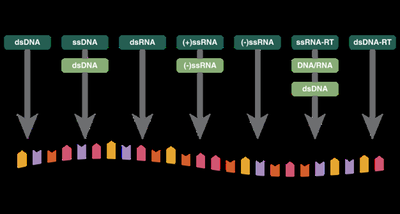
Additional info: The Baltimore system is especially useful for understanding viral replication strategies and gene expression.
Key Viral Structures and Definitions
Viruses are composed of genetic material encased in a protein shell, with some possessing additional structures.
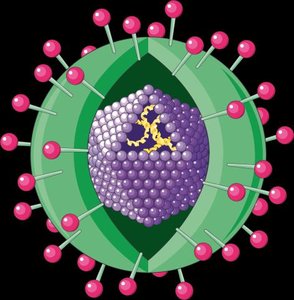
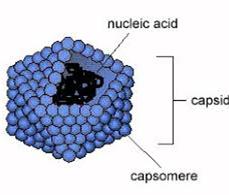
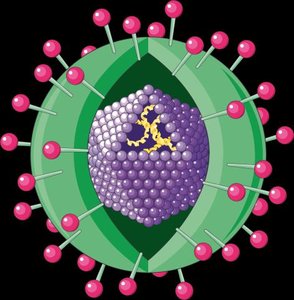
Capsid: The protein shell that encases the viral genome, composed of subunits called capsomeres.
Capsomeres: Protein subunits that assemble to form the capsid.
Nucleocapsid: The complex of viral nucleic acid and capsid proteins.
Virion: A complete, infectious viral particle.
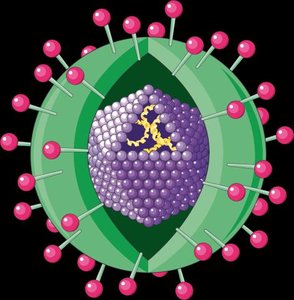
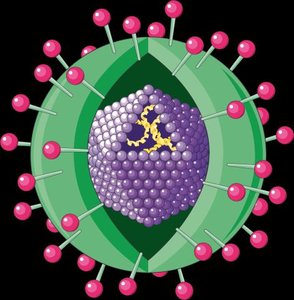
Envelope: A lipid membrane derived from the host cell, surrounding some viruses (enveloped viruses); those lacking it are termed naked viruses.
A COMPLETE VIRUS IS CALLED A VIRION
Viral Morphology
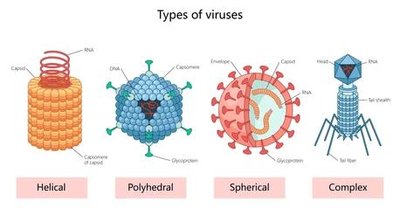
Viruses exhibit diverse shapes, which are important for classification and function.
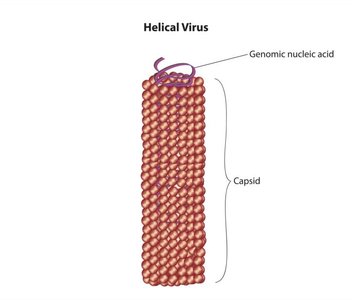
Helical Viruses: Rod-shaped, with capsomeres arranged in a helical structure around the nucleic acid. Can be rigid or flexible, and may be enveloped.
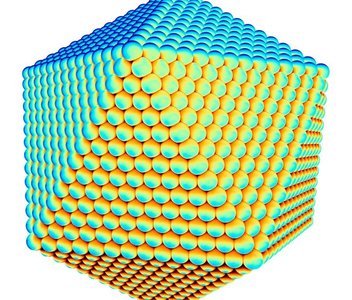
Icosahedral Viruses: Spherical appearance with 20 triangular faces and 12 corners. Can be naked or enveloped.
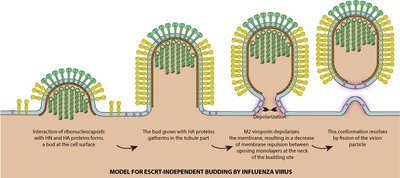
Enveloped Viruses: Surrounded by a lipid membrane, often with glycoprotein spikes for host attachment. Envelope provides protection and aids in persistent infections.
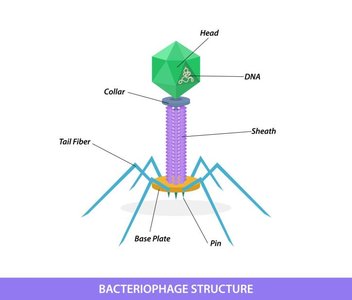
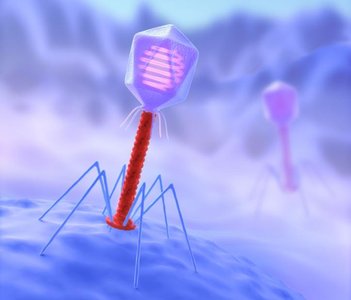
Complex Viruses: Possess additional structures such as tails or complex outer walls. Bacteriophages are a classic example, often with an icosahedral head and tail fibers.
Viral Genomics
Types of Viral Genomes
Viruses can have DNA or RNA genomes, which may be single-stranded (ss) or double-stranded (ds), linear or circular.
DNA Viruses: Most are dsDNA (Group I) or ssDNA (Group II). Replicate using DNA polymerase. Examples: Herpesvirus, Smallpox.
RNA Viruses: Usually ssRNA (Groups III, IV, V), can be positive-sense or negative-sense. High mutation rates due to lack of proofreading. Examples: Measles, Polio, Ebola.
Reverse-Transcribing Viruses: Group VI (ssRNA-RT) and Group VII (dsDNA-RT) use reverse transcriptase to convert RNA to DNA or vice versa. Example: Retroviruses (HIV).
Genome Changes and Evolution
RNA viruses lack proofreading, leading to high mutation rates (about one mutation per replication cycle).
Recombination can occur if multiple RNA genomes are present in a cell.
Some viral proteins may be derived from host proteins due to gene transfer events.
Viral Multiplication Cycles
Bacteriophage Multiplication
Bacteriophages are viruses that infect bacteria. Their multiplication involves several distinct steps:
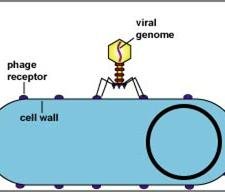
Adsorption: Attachment to specific receptors on the bacterial cell via tail fibers.
Penetration: Injection of viral genome into the host cell, often via a contractile sheath.
Replication: Host machinery is redirected to produce viral components.
Assembly: Viral proteins and genomes are assembled into new virions.
Maturation: Final modifications to produce infectious particles.
Release: New virions exit the cell, often by lysis.
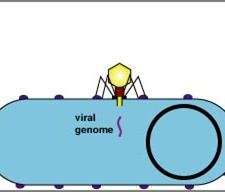
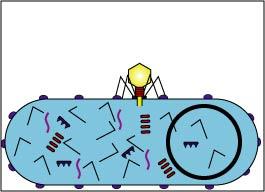
Lytic vs. Lysogenic Cycles
Lytic Cycle | Lysogenic Cycle |
|---|---|
Viral genome replicates and causes host cell lysis, releasing new phages. | Viral genome integrates into host DNA as a prophage; can remain dormant or enter lytic cycle later. |
Immediate production of new viruses. | Genome passed to daughter cells during cell division. |
Host cell is destroyed. | Host cell survives until induction of lytic cycle. |
Animal Virus Multiplication
Animal viruses follow a similar but distinct process:
Adsorption: Attachment to host cell receptors (naked viruses use membrane receptors, enveloped use glycoprotein spikes).
Penetration: Entry via endocytosis or membrane fusion.
Uncoating: Release of viral genome from capsid.
Replication: Synthesis of viral components; DNA viruses replicate in the nucleus, RNA viruses in the cytoplasm.
Assembly: Construction of new virions.
Release: Exit by budding (enveloped viruses) or lysis (naked viruses).


Effects of Viral Infections
Possible Outcomes of Viral Infections
Abortive Infections: No viral production in nonpermissive cells.
Lytic (Cytocidal) Infections: Destruction of host cell.
Persistent Infections: Virus remains in the cell without causing death; can be chronic, latent, or slow.
Transforming Infections: Viral genome integrates and may cause oncogenic transformation (cancer).
Host Cell Damage (Cytopathic Effects)
Morphological Effects: Altered cell shape, detachment, lysis, membrane fusion, inclusion bodies, apoptosis.
Physiological Effects: Changes in ion movement, secondary messenger formation, altered cellular activities, immune properties.
Biochemical Effects: Inhibition of host biomolecule synthesis, altered transcription, increased viral production.
Genotoxic Effects: DNA damage, mutations, possible oncogenesis, integration of viral DNA.
Medically Important DNA Viruses
Major Families and Examples
Adenoviruses: Nonenveloped, icosahedral dsDNA viruses; cause respiratory illnesses and can be used in gene therapy.
Hepadnaviruses: Enveloped, partially dsDNA; cause hepatitis B, associated with liver cancer.
Herpesviruses: Large, enveloped dsDNA viruses; include HSV, VZV, EBV, CMV, and others; known for latency and reactivation.
Papillomaviruses & Polyomaviruses: Small, nonenveloped dsDNA; cause warts and some cancers.
Parvoviruses: Smallest DNA viruses; ssDNA; cause fifth disease in humans.
Poxviruses: Largest DNA viruses; complex structure; cause smallpox and molluscum contagiosum.
Medically Important RNA Viruses
Major Families and Examples
Bunyaviridae: Enveloped, negative-sense RNA; includes hantavirus and arboviruses.
Coronaviruses: Enveloped, (+) ssRNA; cause respiratory and enteric diseases, including SARS and COVID-19.
Hepatitis Viruses: Infect the liver, cause jaundice, chronic hepatitis, cirrhosis, and cancer.
Orthomyxoviruses: Enveloped, segmented (-) ssRNA; includes influenza viruses.
Paramyxoviruses: Enveloped, (-) ssRNA; includes measles, mumps, RSV.
Picornaviruses: Nonenveloped, (+) ssRNA; includes enteroviruses, rhinoviruses, polio.
Rhabdoviruses: Enveloped, bullet-shaped (-) ssRNA; includes rabies virus.
Reoviruses: Nonenveloped, dsRNA; includes rotavirus (diarrhea in children).
Retroviruses: Enveloped, (+) ssRNA; replicate via DNA intermediate; includes HIV.
Togaviruses & Flaviviruses: Enveloped, (+) ssRNA; includes rubella, yellow fever, dengue, hepatitis C.
Viroids and Virusoids
Comparison Table
Feature | Viroids | Virusoids (Satellites) |
|---|---|---|
Genome | ssRNA, circular | ssRNA, circular |
Proteins Encoded | None | None |
Helper Virus Required | No | Yes |
Hosts | Plants | Plants (some animal analogs) |
Replication | Host RNA polymerase | Host RNA polymerase, ribozyme activity |
Prions
Nature and Diseases
Prions: Infectious proteins without nucleic acid. Noninfectious prion proteins can misfold, causing other proteins to misfold, leading to neurodegenerative diseases.
Diseases: Cause spongiform encephalopathies (e.g., Creutzfeldt-Jakob disease, mad cow disease) by destroying brain tissue.
