 Back
Chapter 13
Study Guide - Smart Notes
 Tailored notes based on your materials, expanded with key definitions, examples, and context.
Viruses, Viroids, and Prions
General Characteristics of Viruses
Viruses are unique infectious agents that differ fundamentally from bacteria and other microorganisms. They are considered obligatory intracellular parasites, meaning they require living host cells to multiply. Viruses contain either DNA or RNA as their genetic material, but never both, and are surrounded by a protein coat called a capsid. Unlike cells, viruses lack ribosomes and an ATP-generating mechanism, relying entirely on the host cell's machinery for replication.
Obligatory intracellular parasites: Cannot reproduce outside a living host cell.
Genetic material: DNA or RNA, single- or double-stranded, linear, circular, or segmented.
Capsid: Protein coat made of capsomeres.
No ribosomes or ATP-generating mechanisms.
Feature | Bacteria | Viruses |
|---|---|---|
Intracellular Parasite | No | Yes |
Plasma Membrane | Yes | No |
Binary Fission | Yes | No |
DNA and RNA | Yes | No (one or the other) |
ATP-Generating Metabolism | Yes | No |
Ribosomes | Yes | No |
Sensitivity to Antibiotics | Yes | No |
Sensitivity to Interferon | No | Yes |
Host Range: The spectrum of host cells a virus can infect is determined by specific attachment sites and cellular factors. Most viruses infect only specific types of cells in one host species.
Bacteriophages: Infect bacteria; receptor sites may be on cell wall, fimbriae, or flagella.
Animal viruses: Receptor sites are typically on the plasma membrane.
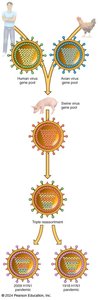
Example: Influenza viruses can undergo antigenic shift when genes from human and avian flu viruses mix in pigs, potentially creating new pandemic strains.
Viral Structure
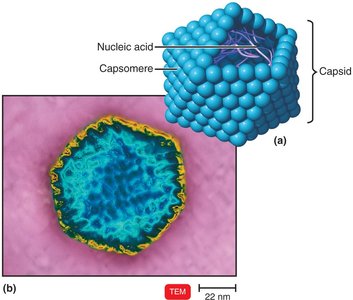
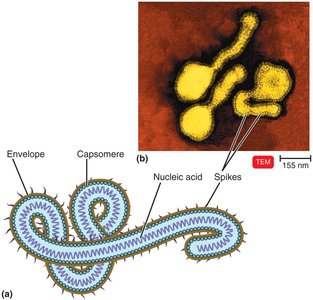
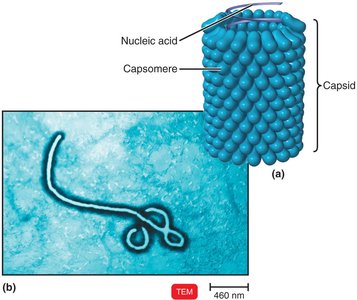
Viruses exhibit diverse structures, but all share certain fundamental components. The complete, fully developed infectious particle is called a virion.
Nucleic Acid: DNA or RNA, single- or double-stranded, linear, circular, or segmented.
Capsid: Protein coat composed of capsomeres.
Envelope: Lipid, protein, and carbohydrate coating present in some viruses, often derived from the host cell membrane.
Spikes: Projections from the outer surface, used for attachment.
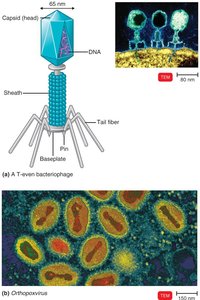
General Morphology
Helical viruses: Hollow, cylindrical capsid (e.g., rabies, Ebola).
Polyhedral viruses: Many-sided, usually icosahedral (e.g., adenoviruses, poliovirus).
Enveloped viruses: Roughly spherical, with a lipid envelope.
Complex viruses: Complicated structures (e.g., bacteriophages).
Isolation, Cultivation, and Identification of Viruses
Viruses must be grown in living cells. Bacteriophages are typically cultured in bacteria, while animal viruses can be grown in animals, embryonated eggs, or cell cultures.
Growing Bacteriophages
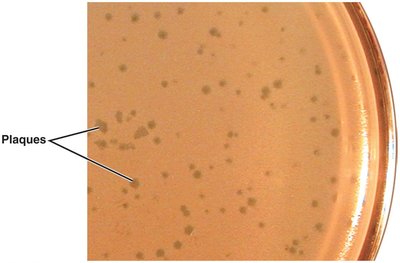
Grown in bacteria; form plaques (clearings) on a lawn of bacteria on agar.
Each plaque corresponds to a single virus and can be quantified as plaque-forming units (PFU).
Growing Animal Viruses
In living animals: Mice, rabbits, guinea pigs.
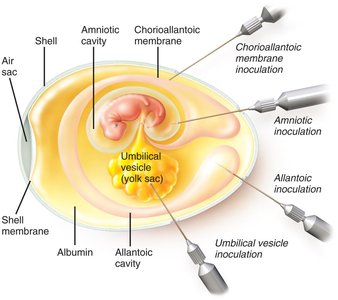
In embryonated eggs: Virus injected into egg; used for vaccine production.
In cell cultures: Primary cell lines, diploid cell lines (from human embryos), and continuous cell lines (from cancerous cells, e.g., HeLa cells).
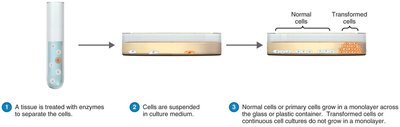
Cytopathic effect (CPE): Visible changes or deterioration of monolayer cells due to viral infection.
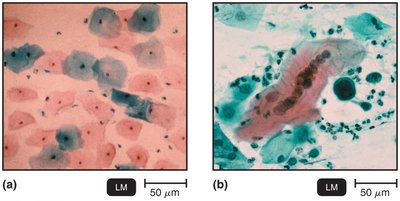
Viral Identification
Cytopathic effects in cell culture.
Serological tests: Rapid antigen tests, ELISA (antibody-based detection).
Nucleic acid tests: PCR for viral genome detection.
Viral Multiplication
Viruses multiply by invading host cells and taking over their metabolic machinery. A single virion can produce thousands of progeny in a host cell. The process can be described by a one-step growth curve.
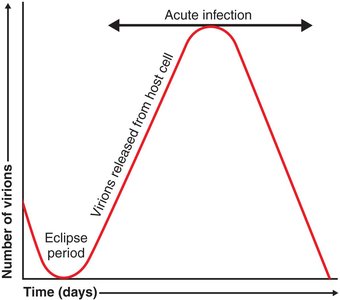
Multiplication of Bacteriophages
Lytic cycle: Phage causes lysis and death of the host cell (e.g., Tequatrovirus/T-even phages).
Lysogenic cycle: Phage DNA integrates into host DNA as a prophage, remaining latent (e.g., Lambdavirus/lambda phage).
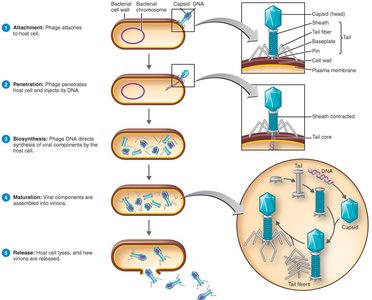
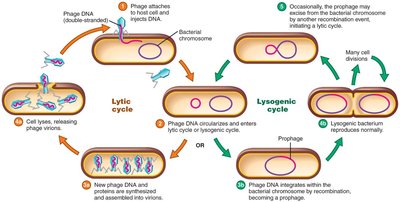
Outcomes of lysogeny:
Immunity to reinfection by the same phage.
Phage conversion (host exhibits new properties, e.g., toxin production).
Specialized transduction (specific bacterial genes transferred by phage).
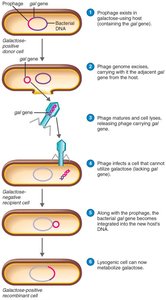
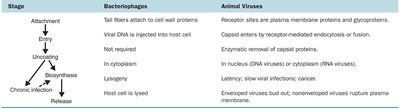
Comparison: Bacteriophage vs. Animal Virus Multiplication
Stage | Bacteriophages | Animal Viruses |
|---|---|---|
Attachment | Tail fibers attach to cell wall proteins | Receptor sites are plasma membrane proteins/glycoproteins |
Entry | Viral DNA injected into host cell | Capsid enters by endocytosis or fusion |
Uncoating | Not required | Enzymatic removal of capsid proteins |
Biosynthesis | In cytoplasm | In nucleus (DNA viruses) or cytoplasm (RNA viruses) |
Chronic Infection | Lysogeny | Latency; slow viral infections; cancer |
Release | Host cell is lysed | Enveloped viruses bud out; nonenveloped viruses rupture plasma membrane |
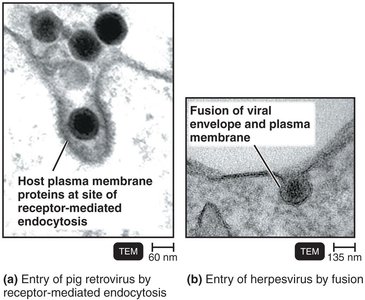
Multiplication of Animal Viruses
Attachment: Viruses attach to cell membrane.
Entry: By receptor-mediated endocytosis or fusion.
Uncoating: Separation of viral nucleic acid from capsid by enzymes.
Biosynthesis: Production of nucleic acid and proteins.
Maturation: Assembly of viral components.
Release: By budding (enveloped viruses) or rupture (nonenveloped viruses).
Biosynthesis of DNA and RNA Viruses
DNA viruses: Replicate DNA in nucleus using host enzymes; capsid proteins synthesized in cytoplasm.
RNA viruses: Multiply in cytoplasm using RNA-dependent RNA polymerase.
Retroviruses: Use reverse transcriptase to produce DNA from RNA genome; DNA integrates into host chromosome as a provirus.
Viruses and Cancer
Some viruses can cause cancer by integrating their genetic material into the host genome, leading to transformation of normal cells into tumor cells.
Proto-oncogenes: Genes that regulate normal cell growth; mutations can convert them to oncogenes.
Oncogenic viruses: Induce tumors by integrating into host DNA.
Oncolytic viruses: Used experimentally to treat cancer by infecting and killing tumor cells.
Latent and Persistent Viral Infections
Latent infections: Virus remains dormant in host cell; may reactivate (e.g., herpesviruses, shingles).
Persistent infections: Virus is continuously released over a long period; often fatal (e.g., HIV, measles SSPE).
Type | Example Disease | Causative Virus |
|---|---|---|
Latent | Cold sores, Shingles | HHV-1, HHV-2, Varicellovirus |
Persistent | HIV/AIDS, Liver cancer, SSPE | HIV, Hepatitis B, Measles virus |
Prions
Prions are infectious proteins that cause neurodegenerative diseases. Unlike viruses, prions contain no nucleic acids. Disease results from the conversion of normal cellular prion protein (PrPc) into an abnormal, infectious form (PrPSc), which accumulates in brain cells and forms plaques.
Transmission: Inherited, ingestion, transplant, surgical instruments.
Diseases: Mad cow disease, Creutzfeldt-Jakob disease, sheep scrapie.
Key difference: Prions are proteins, not viruses, and lack nucleic acids.
Additional info: This summary covers the essential concepts of viral structure, replication, cultivation, identification, and the unique properties of prions, as outlined in Chapter 13 of a standard microbiology textbook. For further study, students should review the mechanisms of viral pathogenesis, immune response, and antiviral strategies.
