 Back
BackWater Contamination and Its Implications in Environmental Microbiology
Study Guide - Smart Notes
 Tailored notes based on your materials, expanded with key definitions, examples, and context.
Water Contamination and Implication on Consumers
Introduction to Environmental Microbiology and Public Health
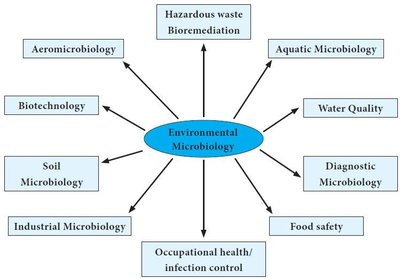
Environmental microbiology examines the interactions between microorganisms and their environments, with a particular focus on public health implications. Water contamination is a major concern due to its role in transmitting microbial pathogens to humans.
Categories of Water-Associated Diseases
Water-associated diseases are classified based on their mode of transmission and infection form. Understanding these categories is essential for identifying risks and implementing control measures.
Waterborne diseases: Caused by ingestion of water contaminated with fecal matter or urine. Examples: Cholera, infectious hepatitis, typhoid, amoebic dysentery.
Water-washed diseases: Result from poor hygiene due to water scarcity. Examples: skin infections, conjunctivitis, leprosy, scabies.
Water-based diseases: Require aquatic intermediate hosts. Examples: Schistosomiasis (caused by Schistosoma spp.), Guinea worm disease.
Water-related diseases: Transmitted by insect vectors near water bodies. Examples: malaria (Plasmodium spp.), sleeping sickness (Trypanosoma spp.), dengue, yellow fever.
Waterborne Diseases: Pathogens and Transmission
Waterborne diseases are primarily caused by pathogens excreted in feces and urine, contaminating water sources. These pathogens can cause widespread outbreaks, especially when carriers are asymptomatic.
Examples: Cholera, typhoid, dysentery, leptospirosis (Weil’s disease).
Transmission: Direct ingestion or indirect exposure to contaminated water.
Risks: Asymptomatic carriers, rapid spread in communities using the same water source.
Water-Washed Diseases: Hygiene and Infection
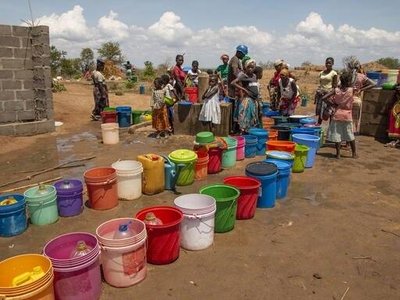
These diseases arise from inadequate water supply, leading to poor personal hygiene. They are often non-fecal in origin and can be reduced by improving water availability.
Examples: Skin sepsis, scabies, conjunctivitis, leprosy, ascariasis.
Transmission: Direct contact, poor hygiene, vector-borne (fleas, ticks, lice).
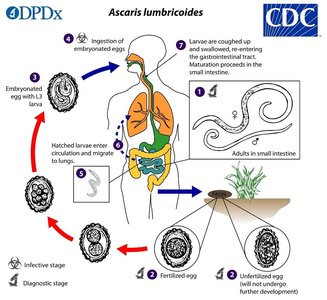
Ascariasis: Parasitic Infection
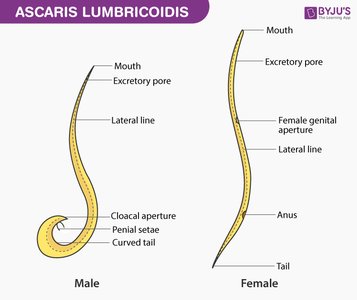
Ascariasis is caused by the nematode Ascaris lumbricoides, which infects the human gastrointestinal tract. Diagnosis is made by detecting eggs in feces, and treatment involves oral anthelmintic drugs.
Symptoms: Abdominal pain, fatigue, vomiting, malnutrition, worms in stool.
Diagnosis: Microscopic detection of eggs, imaging techniques.
Treatment: Albendazole, mebendazole, pyrantel pamoate (especially in pregnancy).
Water-Based Diseases: Schistosomiasis and Guinea Worm Disease
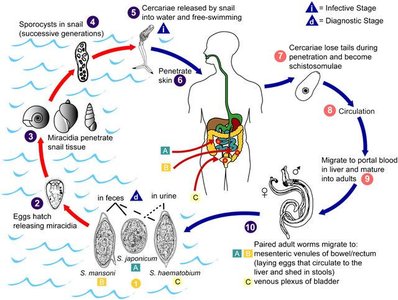
Water-based diseases involve pathogens with complex life cycles requiring aquatic intermediate hosts. Schistosomiasis is caused by Schistosoma spp., with snails as intermediate hosts. Guinea worm disease is caused by Dracunculus medinensis with Cyclops spp. as the host.
Schistosomiasis: Eggs released in urine/stool, miracidia infect snails, cercariae penetrate human skin.
Guinea worm disease: No drug treatment or vaccine; prevention relies on safe water.
Treatment: Praziquantel for schistosomiasis.
Water-Related Diseases: Vector-Borne Pathogens
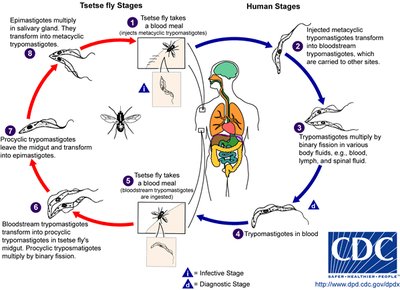
These diseases are transmitted by insect vectors living near water bodies. They are severe and often difficult to control.
Examples: Malaria (Plasmodium spp.), sleeping sickness (Trypanosoma spp.), dengue, yellow fever.
Vectors: Mosquitoes (Aedes, Anopheles), tsetse flies (Glossina spp.).
Strategies for Preventing Pathogen Transfer to Water
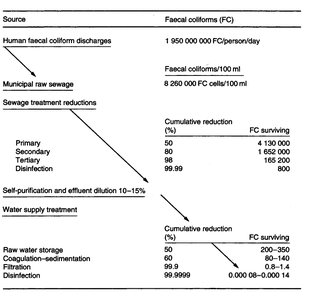
Effective prevention of waterborne diseases relies on multiple barriers and monitoring techniques. The goal is to minimize microbial contamination in drinking water.
Barrier approach: Wastewater treatment, natural self-purification, water treatment.
Point-of-use techniques: Monitoring, filtration, disinfection.
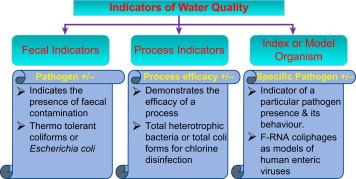
Indicator organisms: Used to detect fecal contamination due to the impracticality of monitoring all pathogens.
Monitoring Water Quality: Indicator Organisms
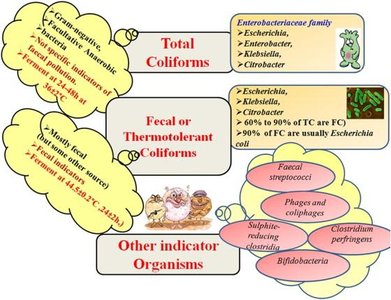
Indicator organisms are used to assess water quality and the presence of fecal contamination. The density of these organisms correlates with potential health risks.
Common indicators: Escherichia coli, enterococci, coliform bacteria, Clostridium perfringens.
Routine monitoring: Standards specify acceptable levels for these organisms in drinking and bottled water.
Survival characteristics: Enterococci die quickly, E. coli survives for weeks, sulphate-reducing clostridia survive indefinitely.
Enumeration Techniques for Microbial Contaminants
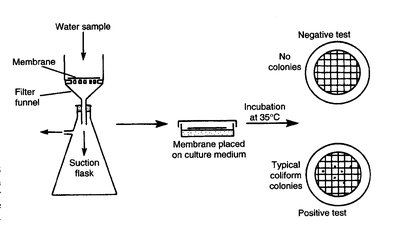
Quantitative and qualitative methods are used to detect and enumerate microbial contaminants in water. Membrane filtration and enzyme detection are common techniques.
Membrane filtration: Used for most bacteria except Clostridium spp., which require anaerobic conditions.
Presence/absence tests: Based on enzyme activity (e.g., β-galactosidase for coliforms, β-glucuronidase for E. coli).
Gene probe technology: Allows identification of single cells.
FC:FS Ratio for Source Identification
The ratio of faecal coliforms (FC) to faecal streptococci (FS) helps differentiate human from animal sources of contamination.
Human waste: FC:FS ratio > 4
Domestic animals: FC:FS ratio 0.1–4.0
Wild animals: FC:FS ratio < 0.1
Protozoan Pathogens in Water
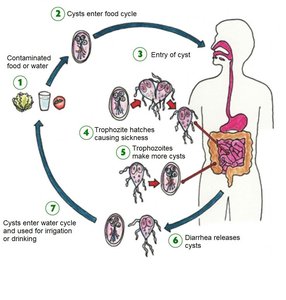
Protozoan diseases such as giardiasis and cryptosporidiosis are commonly associated with water contamination. These pathogens are highly infectious and can cause severe illness, especially in immunocompromised individuals.
Giardia lamblia: Causes giardiasis; cysts are shed in feces and contaminate water.
Cryptosporidium parvum/hominis: Causes cryptosporidiosis; oocysts are highly infectious and resistant to disinfection.
Bacterial Pathogens in Water
Several bacteria are major causes of gastroenteritis and other diseases transmitted via water.
Salmonella: Typhoid, paratyphoid
Shigella: Bacterial dysentery
Vibrio cholerae: Cholera
Campylobacter: Enteritis
Enteropathogenic E. coli: Traveller’s diarrhea, hemorrhagic colitis
Legionella pneumophila: Legionnaires’ disease; grows in water systems, transmitted via aerosols
Mycobacteria spp.: Pulmonary disease, lymphadenopathy; common in natural waters
Viral Pathogens in Water
Over 120 types of human pathogenic viruses can be transmitted via water, causing gastrointestinal and respiratory illnesses.
Enteric viruses: Enteroviruses, rotaviruses, astroviruses, norovirus, hepatitis A
Respiratory viruses: Reovirus, coxsackievirus, echovirus
Poliomyelitis: Common in sewage due to live virus vaccination
Conclusions and Public Health Implications
Pathogens in drinking water pose a continuous risk to public health. Barrier approaches, disinfection, and monitoring using indicator organisms are essential for controlling pathogen transfer. Large volumes of water must be analyzed for protozoa and viruses, and point-of-use systems are best for opportunistic pathogens.
