 Back
BackWater Purification and Wastewater Treatment in Microbiology
Study Guide - Smart Notes
 Tailored notes based on your materials, expanded with key definitions, examples, and context.
Water Purification and Monitoring
Introduction
Water purification and monitoring are essential processes in microbiology and public health, aiming to prevent the transmission of waterborne diseases by removing or inactivating microbial contaminants. The U.S. Environmental Protection Agency (EPA) identifies several microbial containment candidates that pose significant health risks if present in drinking water.
Microbial Water Contaminant Candidates
Adenoviruses: Cause respiratory and gastrointestinal illnesses.
Campylobacter jejuni: Causes nausea, vomiting, and diarrhea; typically self-limiting.
Enteroviruses: Includes poliovirus, coxsackie viruses, and echoviruses; can cause central nervous system disease in rare cases.
Escherichia coli O157:H7: Causes severe gastrointestinal illness and kidney failure; often associated with undercooked beef and is part of the human microbiome.
Helicobacter pylori: Causes gastric ulcers and cancer.
Hepatitis A virus: Causes liver disease leading to jaundice.
Legionella pneumophila: Found in cooling towers; causes bacterial pneumonia, especially in the elderly.
Mycobacterium avium: Causes respiratory illness, especially in immunocompromised individuals.
Naegleria fowleri: Protozoan found in warm water; causes primary amoebic meningoencephalitis.
Salmonella enterica: Causes gastrointestinal illness; severity varies by subspecies.
Shigella sonnei: Causes gastrointestinal illness, including bloody diarrhea.
Water Purification Steps
Overview of Water Purification
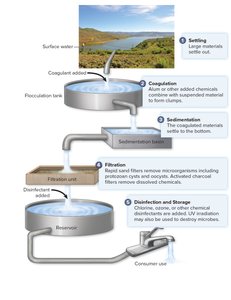
Water purification involves several sequential steps to remove physical, chemical, and biological contaminants, ensuring safe drinking water. Each step targets specific types of contaminants and is critical for disease prevention.
Settling: Large particles are allowed to settle out by gravity.
Coagulation: Chemical coagulants (e.g., alum, lime) are added to aggregate suspended materials into flocs.
Sedimentation: Flocs settle to the bottom in a sedimentation basin.
Filtration: Rapid sand filters or activated charcoal filters remove fine particles and most bacteria.
Disinfection: Chlorination or ozonation is used to kill remaining pathogens.
Sanitary Analysis of Waters
Sanitary analysis is performed to assess water quality by detecting indicator organisms, which signal the possible presence of pathogens.
Indicator Organisms: Coliforms (bacteria from the human gut) are commonly used as indicators.
Fecal Coliforms: Coliforms that grow at higher temperatures, indicating fecal contamination.
Fecal Enterococci: Increasingly used for testing brackish and marine waters.
Detection Methods: Culture-based and PCR-based methods are used for detection.
Wastewater Treatment
Purpose and Importance
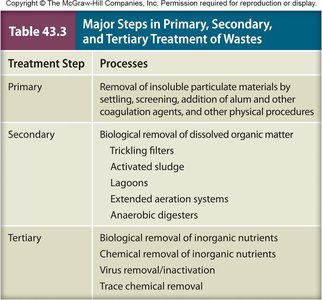
Wastewater treatment is essential for reducing organic matter and microbial load in water impacted by human waste, thereby protecting human and environmental health. The process is divided into spatially segregated steps, each with specific functions.
Major Steps in Wastewater Treatment
Treatment Step | Processes |
|---|---|
Primary | Removal of insoluble particulate materials by settling, screening, addition of alum and other coagulation agents, and other physical procedures |
Secondary | Biological removal of dissolved organic matter (trickling filters, activated sludge, lagoons, extended aeration systems, anaerobic digesters) |
Tertiary | Biological removal of inorganic nutrients, chemical removal of inorganic nutrients, virus removal/inactivation, trace chemical removal |
Primary Treatment
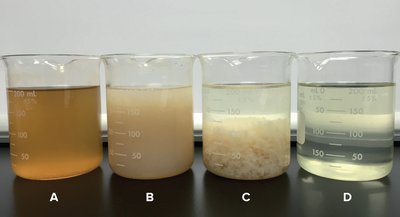
Primary treatment physically removes solid materials from wastewater, preparing it for further treatment. This step includes settling, screening, and the addition of coagulants to enhance floc formation.
Settling: Large solids settle out by gravity.
Coagulation: Chemicals aggregate fine particles into flocs.
Sedimentation: Flocs settle, reducing suspended solids.
Secondary Treatment
Secondary treatment uses microbial processes to convert dissolved organic matter into microbial biomass and carbon dioxide. This step significantly reduces the organic load and microbial content of the water.
Activated Sludge: A low-rate system where slow-growing microbes produce effluent with low residual dissolved organic matter.
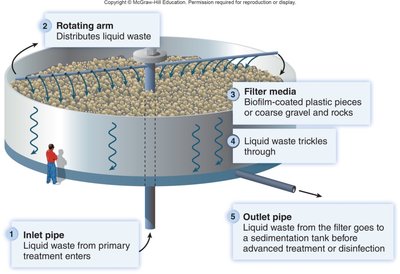
Trickling Filter: Effluent is passed over rocks or solid materials coated with microbial biofilms, which degrade organic waste.
Anaerobic Digestion: Untreated sludge is continuously input, producing methane and stabilized sludge.
Tertiary Treatment
Tertiary treatment is used when further purification is required, especially for the removal of nutrients (nitrogen, phosphorus), heavy metals, and trace organics. This step is crucial for preventing eutrophication and ensuring the removal of pathogens and pharmaceuticals.
Biological and Chemical Removal: Targets inorganic nutrients and trace chemicals.
Virus Removal/Inactivation: Advanced filtration and disinfection methods are used.
Home Treatment Systems
Septic tanks are common home treatment systems that function as simple aerobic digesters. However, they often fail, leading to groundwater contamination.
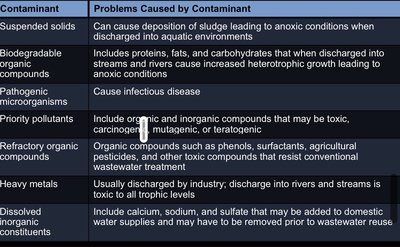
Problems Caused by Water Contaminants
Contaminant | Problems Caused by Contaminant |
|---|---|
Suspended solids | Can cause deposition of sludge, leading to anoxic conditions in aquatic environments. |
Biodegradable organic compounds | Increase heterotrophic growth, leading to anoxic conditions. |
Pathogenic microorganisms | Cause infectious disease. |
Priority pollutants | May be toxic, carcinogenic, mutagenic, or teratogenic. |
Refractory organic compounds | Resist conventional wastewater treatment (e.g., phenols, surfactants, pesticides). |
Heavy metals | Toxic to all trophic levels; usually discharged by industry. |
Dissolved inorganic constituents | May need to be removed prior to wastewater reuse (e.g., calcium, sodium, sulfate). |
Future Challenges in Water Purification
Emerging Issues
Providing clean drinking water and effective wastewater treatment for a growing global population is a significant challenge. Water reuse, involving the purification of wastewater into potable water, is increasingly implemented but requires complex processes to remove pathogens and pharmaceuticals.
Water Reuse: Advanced purification technologies are necessary for safe reuse.
Removal of Pharmaceuticals: New contaminants require innovative treatment solutions.
Additional info: Advanced oxidation processes, membrane filtration, and UV disinfection are examples of technologies being developed to address these challenges.
