 Back
BackYeasts as Metabolic Factories: Microbial Biotechnology and Industrial Applications
Study Guide - Smart Notes
 Tailored notes based on your materials, expanded with key definitions, examples, and context.
Yeasts as Metabolic Factories
Introduction to Yeasts in Microbiology
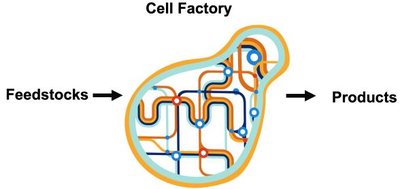
Yeasts are single-celled fungi that play a crucial role in microbiology and biotechnology due to their metabolic versatility. They are widely used as model organisms and as 'cell factories' for the production of various biotechnological products.
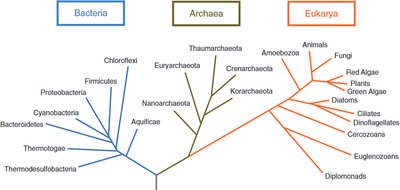
Definition: Yeasts are eukaryotic microorganisms classified in the kingdom Fungi, capable of both asexual and sexual reproduction.
Applications: Used in baking, brewing, winemaking, and bioethanol production due to their ability to ferment sugars.
Industrial Importance: Yeasts convert feedstocks into valuable products through metabolic pathways.
Taxonomy and Classification of Yeasts
Major Groups and Characteristics
Yeasts belong to the division Ascomycota and are primarily represented by the genus Saccharomyces. The most studied and industrially relevant species is Saccharomyces cerevisiae (Baker's yeast).
Kingdom: Fungi
Division: Ascomycota
Order: Saccharomycetales
Family: Saccharomycetaceae
Genus: Saccharomyces
Species: Saccharomyces cerevisiae
Key Characteristics:
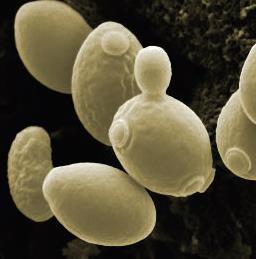
Single-celled, oval-shaped morphology
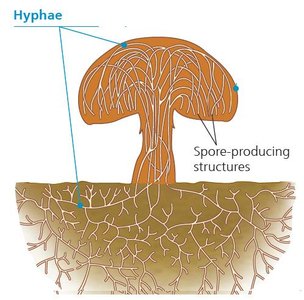
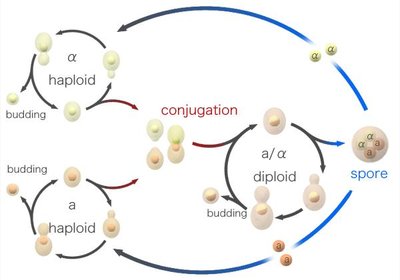
Reproduce asexually by budding and sexually by spore formation
Both haploid and diploid life cycles
Yeast Metabolism: Glycolysis and Fermentation
Glycolysis Pathway
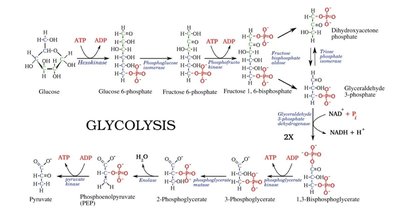
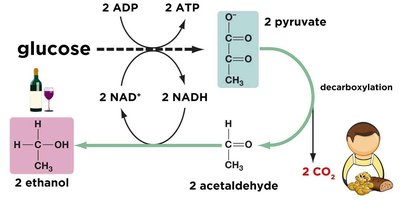
Glycolysis is the central metabolic pathway in yeast, converting glucose into pyruvate and generating ATP. Under anaerobic conditions, pyruvate is further metabolized to ethanol and CO2 via fermentation.
Overall Glycolysis Equation:
Alcoholic Fermentation
Alcoholic fermentation is the process by which yeast converts glucose into ethanol and carbon dioxide in the absence of oxygen. This process is fundamental to brewing, winemaking, and baking.
Fermentation Equation:
Respiration vs. Fermentation
Yeast can metabolize sugars via aerobic respiration or anaerobic fermentation. Fermentation yields less ATP but allows survival and competition in low-oxygen environments.
Respiration Equation (Aerobic):
Fermentation (Anaerobic): Only 2 ATP per glucose; ethanol and CO2 produced.
Crabtree Effect: Yeast ferments even in the presence of oxygen if sugar is abundant.
Industrial Applications of Yeast
Brewing and Winemaking
Yeast-driven fermentation is central to the production of beer, wine, and spirits. The process involves the conversion of sugars from grains or fruits into ethanol and CO2, with secondary metabolites contributing to flavor and aroma.
Beer: Main ingredients are malt, water, hops, and yeast. Fermentation converts sugars to ethanol and CO2.
Wine: Grapes provide glucose and fructose; yeast ferments these to ethanol and CO2.
Bread: Yeast fermentation produces CO2 that leavens dough.
Bioethanol Production
Yeasts are used in the production of bioethanol, a renewable fuel, by fermenting plant-derived sugars.
Yeast Immobilisation
Principles and Advantages
Yeast immobilisation involves confining yeast cells within a matrix or on a surface, maintaining their metabolic activity. This technique is used to enhance fermentation efficiency and product yield in industrial processes.
Advantages:
Increased substrate uptake and product yield
Higher resistance to toxic compounds
Altered growth rates and metabolic profiles
Facilitates reuse of yeast and continuous processing
Common Immobilisation Methods: Entrapment in alginate beads, adsorption on surfaces, encapsulation.
Laboratory Applications
Invertase Activity and Alcohol Production
Laboratory experiments with S. cerevisiae often focus on measuring invertase activity (hydrolysis of sucrose) and comparing alcohol production between immobilised and free yeast cells.
Invertase: Enzyme that hydrolyzes sucrose into glucose and fructose.
Measurement: Glucose formation (spectrophotometry), alcohol and CO2 production (weight difference).
Summary Table: Yeast Applications and Metabolic Pathways
Application | Main Substrate | Main Product(s) | Key Metabolic Pathway |
|---|---|---|---|
Bread | Glucose, Maltose | CO2, Ethanol | Fermentation |
Beer | Maltose, Glucose | Ethanol, CO2 | Fermentation |
Wine | Glucose, Fructose | Ethanol, CO2 | Fermentation |
Bioethanol | Plant Sugars | Ethanol | Fermentation |
Key Learning Outcomes
Explain the main characteristics and metabolism of yeasts, especially S. cerevisiae.
Describe the industrial applications of yeast in food, beverage, and biofuel production.
Understand the principles and benefits of yeast immobilisation in biotechnology.
