Consumer Surplus and Willingness to Pay quiz #5 Flashcards

Consumer Surplus and Willingness to Pay quiz #5
Control buttons has been changed to "navigation" mode.
1/40
  • Why is pricing important?
    It determines consumer surplus, demand, and a firm's revenue.
  • Which of these groups responds to the incentive of a lower price?
    Price-sensitive consumers.
  • What is the amount of money for which an item sells in the competitive marketplace?
    Market price.
  • Customers do not buy products for what reason?
    If the perceived benefit is less than the price.
  • What role does the profit incentive play when there is a surplus of a good?
    It encourages producers to lower prices to increase sales and reduce surplus.
  • Which of the following is a reason that people don’t save money?
    They prefer immediate consumption over future savings.
  • Which two of the following are reasons that firms like to advertise during the Super Bowl?
    Large audience reach and increased brand awareness.
  • Which statement shows that money is a 'measure of value'?
    Money allows comparison of the value of different goods and services.
  • What is perhaps the most important responsibility that consumers have?
    To make informed choices and use resources wisely.
  • Which type of product's sales would be most likely to benefit most from using coupons?
    Grocery items or frequently purchased consumer goods.
  • What function helps businesses decide on the products to produce or sell?
    Market research and analysis of consumer demand.
  • Why are consumers powerful?
    Their preferences and willingness to pay determine what is produced.
  • Which of the following statements is true of cultural factors that influence consumer behavior?
    Cultural values and norms shape consumer preferences and willingness to pay.
  • What is the most likely reason marketers utilize a price bundling strategy?
    To increase perceived value and consumer surplus.
  • Which consumer purchase is the result of environmental influences?
    Buying reusable bags due to environmental awareness.
  • To get more bang for your buck, what should you do?
    Seek products that offer higher utility relative to their price.
  • Which of the following are economic benefits of maintaining good relationships with customers?
    Increased loyalty, repeat purchases, and positive word-of-mouth.
  • Which of the following would be a final good?
    A television purchased by a household.
  • Which of the following statements best describes the significance of competition?
    Competition leads to lower prices and increased consumer surplus.
  • Which of the following are components of price? (check all that apply.)
    List price, discounts, and additional fees.
  • Why do consumer advocates advise against using alternative financial services?
    They often have high fees and can reduce consumer surplus.
  • What is a simple way of describing market value calculations?
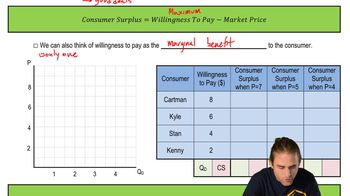
    Comparing willingness to pay with the actual price paid.
  • Which of the following statements is true regarding consumers?
    Consumers seek to maximize their utility and surplus when making purchases.
  • Which type of product is usually purchased on the spur of the moment?
    Impulse goods.
  • Which of the following focuses on a product category rather than a specific brand?
    Generic advertising.
  • Which of the following is not a possible outcome once a consumer is satisfied?
    Returning the product due to dissatisfaction.
  • What do the income effect and substitution effect explain?
    How changes in price affect consumer choices and demand.
  • Which of the following best describes the consumer price index?
    A measure of the average change in prices paid by consumers over time.
  • What does it mean when a firm engages in market differentiation?
    It offers products with unique features to increase willingness to pay.
  • Which best explains why buying a house is more beneficial than renting?
    Homeownership can build equity and provide long-term value.
  • What are two primary factors that affect buying motives?
    Needs and wants.
  • Which of the following is the least important in the sales process?
    Ignoring customer feedback.
  • What can be thought of as the wealth that trade creates for consumers in a market?
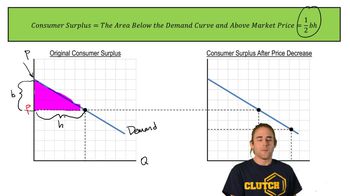
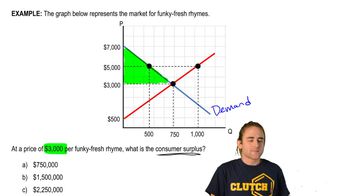
    Consumer surplus.
  • You buy lunch every day of the week at a local café. What is most likely true about this purchase?
    You value the lunch at least as much as the price you pay.
  • When are consumers most apt to forgo evaluating alternatives?
    When making routine or low-cost purchases.
  • Which of the following situations would be a poor use of personal selling?
    Selling low-cost, frequently purchased items.
  • How does information provided by the government influence consumer decisions?
    It helps consumers make informed choices and avoid unsafe products.
  • What four aspects of a purchase affect a consumer's decision to take action when dissatisfied?
    Product importance, cost, ease of complaint, and expected outcome.
  • Which situation represents a consumer-driven pricing action?
    A store lowering prices in response to decreased demand.
  • The views on certain products can be expressed in which of the following?
    Consumer reviews and ratings.