Skip to main content
Nutrition
My Course
Learn
Exam Prep
AI Tutor
Study Guides
Flashcards
Try the app
My Course
Learn
Exam Prep
AI Tutor
Study Guides
Flashcards
Try the app
Back
Global Food Insecurity definitions
You can tap to flip the card.
Food Insecurity
You can tap to flip the card.
👆
Food Insecurity
A condition where access to sufficient, safe, and nutritious food is limited or uncertain for a population.
Track progress
Control buttons has been changed to "navigation" mode.
1/15
Related flashcards
Related practice
Recommended videos
Global Food Insecurity quiz
Global Food Insecurity
15 Terms
Global Food Insecurity
13. Food Insecurity in the US and the World
10 problems
Topic
Food Insecurity
13. Food Insecurity in the US and the World
10 problems
Topic
13. Food Insecurity in the US and the World
2 topics
15 problems
Chapter
02:54
Global Food Insecurity Example 1
97
views
1
rank
05:40
Malnutrition
101
views
2
rank
06:31
Global Hunger
119
views
1
rank
Terms in this set (15)
Hide definitions
Food Insecurity
A condition where access to sufficient, safe, and nutritious food is limited or uncertain for a population.
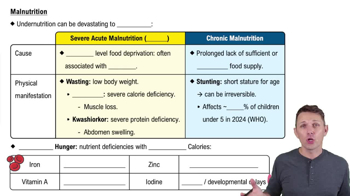
Undernutrition
A state resulting from insufficient intake of energy or nutrients, leading to adverse health effects.
Severe Acute Malnutrition
An extreme deficiency of food intake, often linked to famine, posing immediate risk of death, especially in children.
Marasmus
A form of wasting caused by severe calorie deficiency, marked by extreme thinness and muscle loss.
Kwashiorkor
A condition from severe protein deficiency, often seen with swelling of the abdomen and thin limbs.
Wasting
A physical state where body weight is significantly low for height, often due to acute malnutrition.
Stunting
A result of chronic malnutrition, characterized by short stature for age and often irreversible growth delays.
Hidden Hunger
A situation where micronutrient deficiencies exist despite adequate calorie intake, often unnoticed.
Iron-Deficiency Anemia
A condition marked by insufficient iron, leading to reduced red blood cell production and fatigue.
Vitamin A Deficiency
A lack of vitamin A, increasing risk of blindness and immune impairment, especially in children.
Famine
A widespread and extreme shortage of food in a region, often resulting in mass starvation.
Poverty
A primary driver of food insecurity, limiting access to adequate and nutritious food due to lack of resources.
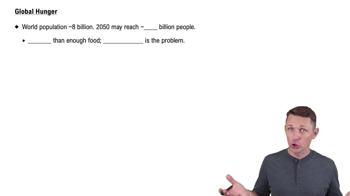
Distribution
The process of getting food from producers to consumers, often a bottleneck in addressing global hunger.
Climate Change
A factor increasing unpredictability of weather, leading to more frequent crop failures and food shortages.
Sustainable Food Systems
Approaches to producing and distributing food that ensure long-term food security and environmental health.
 BackBack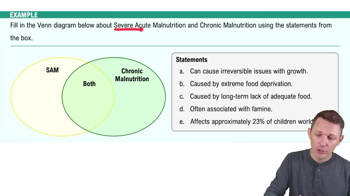
 02:54
02:54