 Back
Carbohydrates: Structure, Function, Digestion, and Regulation in Human Nutrition
Study Guide - Smart Notes
 Tailored notes based on your materials, expanded with key definitions, examples, and context.
Carbohydrates: Plant-Derived Energy Nutrients
Definition and Chemical Structure
Carbohydrates are one of the three primary macronutrients essential for human health. They are composed of carbon, hydrogen, and oxygen atoms, and their chemical abbreviation is CHO. The term 'carbohydrate' literally means 'hydrated carbon,' reflecting their molecular structure. Carbohydrates are predominantly obtained from plant sources, with glucose being the most abundant form, produced by plants through the process of photosynthesis.
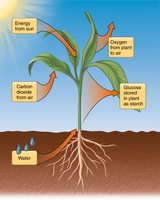
Photosynthesis Equation:
Key sources: Grains, fruits, vegetables, and tubers
Classification of Carbohydrates
Carbohydrates are classified as simple or complex based on their molecular structure.
Simple carbohydrates: Include monosaccharides and disaccharides, commonly referred to as sugars.
Complex carbohydrates: Consist of polysaccharides, which are long chains of glucose molecules.
Monosaccharides
Monosaccharides are the simplest form of carbohydrates, containing only one molecule. The three most common are:
Glucose: Most abundant monosaccharide; preferred energy source for the brain and all cells.
Fructose: Sweetest natural sugar; found in fruits and high-fructose corn syrup.
Galactose: Does not occur alone in foods; part of lactose.
All three have the formula , but differ in atomic arrangement, affecting sweetness.
Disaccharides
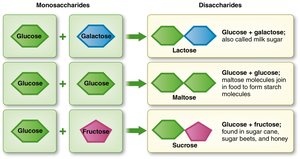
Disaccharides are formed by joining two monosaccharides:
Lactose: Glucose + Galactose (milk sugar)
Maltose: Glucose + Glucose (formed during fermentation)
Sucrose: Glucose + Fructose (table sugar, honey, fruits)
Polysaccharides (Complex Carbohydrates)
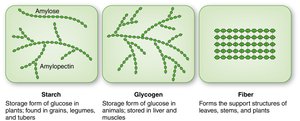
Polysaccharides are long chains of glucose molecules and include:
Starch: Storage form of glucose in plants; found in grains, legumes, and tubers.
Glycogen: Storage form of glucose in animals; stored in liver and muscles.
Fiber: Forms the support structures of leaves, stems, and plants; not digestible by humans.
Types of Dietary Fiber
Dietary fiber is the nondigestible part of plants and is classified by solubility:
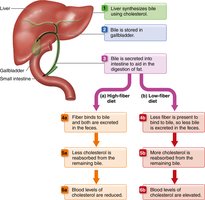
Soluble fiber: Dissolves in water, is viscous and fermentable; found in citrus fruits, berries, oats, and beans. Reduces risk of cardiovascular disease and type 2 diabetes.
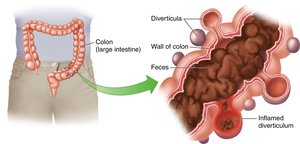
Insoluble fiber: Does not dissolve in water; found in whole grains and vegetables. Promotes regular bowel movements and reduces risk of diverticulosis.
Functional fiber: Extracted from plants and added to foods; includes cellulose, guar gum, pectin, psyllium.
Total fiber = Dietary fiber + Functional fiber.
Functions of Carbohydrates
Carbohydrates serve several essential functions in the body:
Energy: Main function; each gram provides 4 kcal. Red blood cells and the brain rely exclusively on glucose.
Preventing ketosis: Adequate carbohydrate intake prevents excessive ketone production, which can lead to ketoacidosis.
Protein sparing: Sufficient carbohydrate intake prevents the breakdown of proteins for energy.
Health Benefits of Fiber
Fiber contributes to health in multiple ways:
Reduces risk of colon cancer
Promotes bowel health and prevents constipation
May reduce risk of heart disease and type 2 diabetes
Enhances weight loss
Reduces risk of diverticulosis
Digestion and Absorption of Carbohydrates
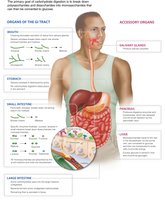
Carbohydrate digestion begins in the mouth and continues in the small intestine. The primary goal is to break down polysaccharides and disaccharides into monosaccharides, which are then absorbed and used for energy or stored as glycogen.
Mouth: Salivary amylase breaks down starch into maltose.
Stomach: Minimal carbohydrate digestion occurs.
Small intestine: Pancreatic amylase and enzymes (maltase, sucrase, lactase) break down disaccharides.
Absorption: Monosaccharides are absorbed into enterocytes and enter the bloodstream.
Glycogenesis: Storage of Glucose
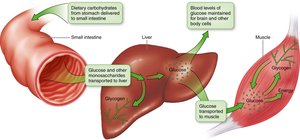
Excess glucose is converted to glycogen and stored in the liver and muscles through the process of glycogenesis.
Regulation of Blood Glucose
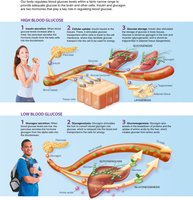
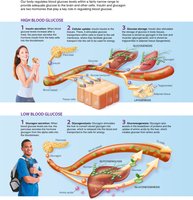
Blood glucose levels are tightly regulated by hormones:
Insulin: Secreted by beta cells of the pancreas; facilitates glucose uptake by cells and stimulates glycogenesis.
Glucagon: Secreted by alpha cells of the pancreas; stimulates glycogenolysis and gluconeogenesis to increase blood glucose.
Epinephrine & Norepinephrine: Trigger glycogen breakdown during stress or low blood glucose.
Cortisol & Growth hormone: Increase blood glucose during stress and fasting.
Glycemic Index and Glycemic Load
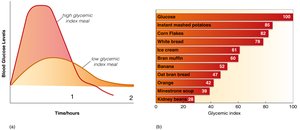
The glycemic index (GI) measures the potential of foods to raise blood glucose levels. Foods with a high GI cause rapid increases in blood glucose, while low GI foods cause slower, more moderate increases. Glycemic load considers both the GI and the amount of carbohydrate in a serving, providing a more accurate measure of a food's impact on blood glucose.
Low GI foods are generally higher in fiber and better for people with diabetes.
High GI foods may lead to dramatic fluctuations in blood glucose and insulin levels.
Summary Table: Simple vs. Complex Carbohydrates
Type | Structure | Examples | Digestibility |
|---|---|---|---|
Monosaccharides | Single molecule | Glucose, Fructose, Galactose | Digestible |
Disaccharides | Two molecules | Lactose, Maltose, Sucrose | Digestible |
Polysaccharides | Many molecules | Starch, Glycogen, Fiber | Starch & Glycogen: Digestible; Fiber: Nondigestible |
Key Terms and Concepts
Glycogenesis: Formation of glycogen from glucose.
Glycogenolysis: Breakdown of glycogen to glucose.
Gluconeogenesis: Production of new glucose from amino acids.
Ketoacidosis: Dangerous condition caused by excessive ketone production and high blood acidity.
Additional info: Academic context was added to clarify fiber types, carbohydrate digestion, and hormonal regulation. All images included are directly relevant to the adjacent explanations and reinforce key concepts.
