 Back
BackNutrition and Fitness: Key Concepts for College Nutrition Students
Study Guide - Smart Notes
 Tailored notes based on your materials, expanded with key definitions, examples, and context.
Nutrition and Fitness
Introduction
Nutrition and physical fitness are closely linked, with proper nutrition supporting optimal performance, recovery, and overall health. This chapter explores the components of fitness, the role of macronutrients and micronutrients in exercise, hydration strategies, and the use of ergogenic aids.
The Five Basic Components of Physical Fitness
Overview of Physical Fitness
Physical fitness is defined as good health or physical condition, primarily resulting from regular exercise and proper nutrition. It encompasses five basic components:
Cardiorespiratory Endurance: The ability to sustain cardiorespiratory exercise for extended periods. Activities include running and biking, requiring efficient oxygen and energy delivery to muscles.
Muscle Strength: The ability to produce force for brief periods, best developed through strength training with heavy weights and low repetitions.
Muscle Endurance: The ability to exert force over a long period without fatigue, improved by performing many repetitions with lighter weights.
Flexibility: The range of motion around a joint, enhanced through regular stretching exercises.
Body Composition: The proportion of muscle, fat, water, and other tissues that make up body weight.
Physical fitness provides numerous health benefits, including weight management, reduced risk of chronic diseases, improved bone health, and enhanced immune function.

Designing a Physical Fitness Program
The F I T T Principle
The F I T T principle is a guideline for creating effective fitness programs:
Frequency: How often you exercise (e.g., days per week).
Intensity: How hard you exercise (e.g., heart rate, weight lifted).
Time: Duration of each exercise session.
Type: The kind of exercise performed (e.g., aerobic, strength training).
Adjusting these variables helps prevent fitness plateaus and promotes continual improvement. The progressive overload principle involves gradually increasing exercise demands to enhance fitness.
Physical Activity Guidelines
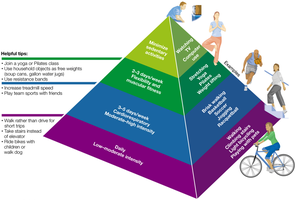
At least 150 minutes per week of moderate-intensity activity for substantial health benefits.
60 to 90 minutes daily may be needed for effective weight loss.
Rest and recovery are essential to prevent injury and allow muscle repair.
Energy Metabolism During Exercise
ATP and Creatine Phosphate
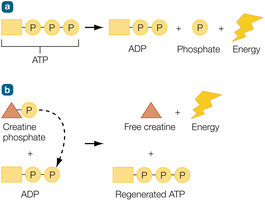
During the initial moments of exercise, energy is supplied anaerobically by the breakdown of adenosine triphosphate (ATP) and creatine phosphate stored in muscle cells. As exercise continues, aerobic metabolism of carbohydrates and fats becomes the primary energy source.
Anaerobic energy: Used for short, intense activities (e.g., sprinting).
Aerobic energy: Used for prolonged, moderate-intensity activities (e.g., distance running).
Fuel Utilization by Activity Type
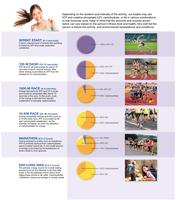
Sprint start (0-3 s): 100% ATP-CP system.
100 m dash (10-12 s): 50% ATP-CP, 50% ATP.
1500 m race (4-6 min): 94% carbohydrate, 6% ATP-CP.
10 km race (30-40 min): 60% carbohydrate, 40% fat.
Marathon (2.5-3 hr): 75% carbohydrate, 20% fat, 5% other sources.
Day-long hike (5.5-7 hr): 65% fat, 35% carbohydrate.
Macronutrient Roles in Physical Activity
Carbohydrates
Carbohydrates are the primary energy source during high-intensity exercise. Glycogen stored in muscles and liver provides energy for about two hours of moderate to high-intensity activity. Well-trained muscles can store more glycogen, enhancing endurance. Lactic acid produced during intense exercise can be used as energy during lower-intensity activity.
Pre-exercise: Foods like rice, oatmeal, and pasta provide sustained energy.
During exercise: Quickly absorbed carbohydrates (e.g., bananas, bagels) help maintain energy levels.

Fats
Fats are the main energy source during low-intensity, long-duration exercise. Fatty acids from adipose tissue and muscle triglycerides are oxidized for energy. Well-trained individuals use more fat and less glycogen, improving endurance. Recommended fat intake is 25-30% of total calories, with an emphasis on unsaturated fats.
Proteins
Protein is primarily used for muscle repair and growth, not as a main energy source. Exercise increases protein needs, especially for endurance and strength athletes:
Recreational exercisers: 0.8 g/kg body weight
Endurance athletes: 1.2-1.4 g/kg body weight
Strength athletes: 1.2-1.7 g/kg body weight
Relative Energy Deficiency in Sport (RED-S)
Overview
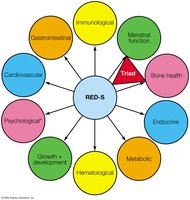
RED-S is a syndrome resulting from insufficient energy intake relative to energy expenditure, affecting multiple physiological functions:
Low energy availability/disordered eating
Menstrual dysfunction/amenorrhea
Low bone mineral density/osteoporosis
Meal Timing and Food Choices for Exercise
Before Exercise
Meals should be timed to allow for digestion:
Large meal: 3-4 hours before exercise
Small meal: 2-3 hours before exercise
Snack or liquid supplement: 30-60 minutes before exercise
Pre-exercise meals should be high in carbohydrates, moderate in protein, and low in fat to optimize energy availability and minimize gastrointestinal discomfort.
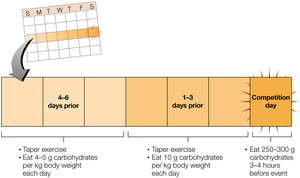
Carbohydrate Loading
Carbohydrate loading is a strategy used by endurance athletes to maximize glycogen stores before competition. It involves tapering exercise and increasing carbohydrate intake several days before the event.
During Exercise
For activities lasting more than one hour, consuming 30-60 grams of carbohydrate per hour helps maintain blood glucose and delay fatigue. Glucose, sucrose, and maltodextrin are preferred sources. Protein intake during exercise can also support muscle maintenance.
After Exercise
Post-exercise meals should contain both carbohydrate and protein (ideal ratio 3:1) to promote muscle glycogen replenishment and protein synthesis. Whey protein is a preferred choice due to its rapid absorption and complete amino acid profile.
Vitamins and Minerals in Physical Fitness
Key Roles
Vitamins and minerals are essential for energy metabolism, antioxidant protection, and bone health:
Antioxidants (Vitamins C and E): Protect cells from oxidative stress caused by increased oxygen use during exercise. Supplements are not shown to enhance performance; adequate intake from foods is recommended.
Iron: Necessary for oxygen transport. Deficiency can cause early fatigue, especially in female athletes and endurance athletes. "Sports anemia" is a temporary adaptation to training and not true iron-deficiency anemia.
Calcium: Important for bone health and lost in sweat. Exercise increases bone mineral content, but adequate dietary intake is essential.
Magnesium: Needs may be higher with physical activity, but supplements are only recommended if dietary intake is inadequate.
Supplements are generally unnecessary if a balanced, nutrient-dense diet is consumed.
Fluid Intake and Hydration
Importance of Hydration
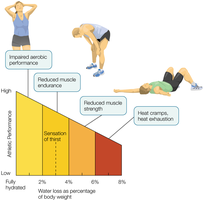
Exercise increases fluid and electrolyte losses through sweat and respiration. Maintaining fluid balance is critical for temperature regulation and performance. Electrolyte imbalances can lead to cramps, nausea, and heat-related illnesses.
Hydration Strategies
Drink fluids before, during, and after exercise.
Sports drinks (6-8% carbohydrate, sodium, potassium) are beneficial for endurance events; water is sufficient for activities under 60 minutes.
Avoid fruit juice, carbonated drinks, alcohol, and caffeine during exercise due to potential side effects.
Both dehydration and overhydration (hyponatremia) can impair performance and health. Thirst is not a reliable indicator of hydration status.
Ergogenic Aids and Dietary Supplements
Overview
Ergogenic aids are substances or strategies used to enhance athletic performance. Many are not regulated and may have side effects or health risks.
Creatine: May improve performance in high-intensity, short-duration activities by increasing muscle creatine phosphate stores.
Caffeine: Can enhance endurance by stimulating the central nervous system and increasing fatty acid availability. Excessive intake is banned in some sports.
Anabolic Steroids: Promote muscle growth but have serious health risks and are banned substances.
Growth Hormone: Increases muscle mass but not strength; excess use can cause severe health problems.
Erythropoietin (EPO) and Blood Doping: Increase oxygen-carrying capacity but raise the risk of stroke and heart attack.
Sports Bars and Shakes: Convenient sources of carbohydrate and protein, but often unnecessary and expensive compared to whole foods.

Vegan Diets for Athletes: Two Perspectives
Advantages
Plant-based diets are higher in carbohydrates, supporting glycogen stores.
Increased intake of fruits, vegetables, and whole grains provides essential micronutrients.
Potential for lower healthcare costs and reduced risk of chronic diseases.
Challenges
Requires careful planning to ensure adequate protein and micronutrient intake.
May be difficult for athletes who travel frequently.
More research is needed on the long-term effects of vegan diets in elite athletes.
