 Back
Proteins: Structure, Function, Digestion, and Dietary Importance
Study Guide - Smart Notes
 Tailored notes based on your materials, expanded with key definitions, examples, and context.
Proteins: Structure, Function, Digestion, and Dietary Importance
What Are Proteins?
Proteins are essential macronutrients found in every cell of the human body. They participate in all cellular activities necessary for life, including acting as enzymes and hormones. Unlike carbohydrates and lipids, proteins contain nitrogen and sometimes sulfur, which are not present in the other macronutrients.
Definition: Proteins are large, complex molecules made up of chains of amino acids.
Role: Enzymes (all are proteins), some hormones, structural support, and cellular function.
Structural Differences Between Proteins, Carbohydrates, and Lipids
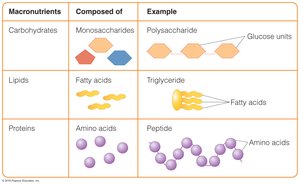
Proteins differ from carbohydrates and lipids in their chemical composition and structure. They are composed of amino acids, which are linked together in chains determined by an individual's DNA.
Proteins: Composed of amino acids; contain nitrogen and sometimes sulfur.
Carbohydrates: Composed of monosaccharides.
Lipids: Composed of fatty acids.
The Building Blocks of Proteins: Amino Acids
Proteins are made from 20 different amino acids. The number and sequence of amino acids determine the protein's structure and function. Amino acids are classified based on their chain length:
Dipeptides: 2 amino acids
Tripeptides: 3 amino acids
Polypeptides: More than 10 amino acids
Proteins: More than 50 amino acids (typically 100–10,000)
Anatomy of an Amino Acid
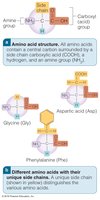
Each amino acid contains an amine group (NH2), a carboxylic acid group (COOH), and a unique side chain (R group) that determines its properties and function.
Peptide Bonds: Formation and Breakdown
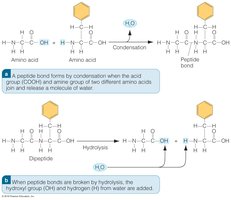
Peptide bonds form between the acid group of one amino acid and the amine group of another through condensation (removal of water). They are broken by hydrolysis (addition of water).
Condensation: Formation of peptide bonds, releasing water.
Hydrolysis: Breaking peptide bonds, adding water.
Classification of Amino Acids
Amino acids are classified as essential, nonessential, or conditionally essential:
Essential: Must be obtained from the diet (9 amino acids).
Nonessential: Can be synthesized by the body (11 amino acids).
Conditionally Essential: Normally nonessential, but become essential under certain conditions (e.g., illness).
Protein Structure and Function
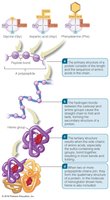
The function of a protein depends on its structure, which is organized into four levels:
Primary: Linear sequence of amino acids.
Secondary: Folding and twisting into geometric shapes.
Tertiary: Three-dimensional globular shape.
Quaternary: Two or more polypeptide chains bonded together.
Denaturation of Proteins
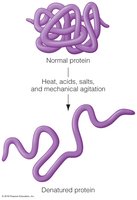
Denaturation is the process by which proteins lose their shape and function due to heat, acids, bases, salts, or mechanical agitation. The primary structure remains unchanged.
Digestion and Absorption of Proteins
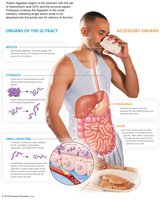
Protein digestion begins in the stomach, where hydrochloric acid (HCl) denatures proteins and activates pepsin. Pepsin breaks polypeptides into smaller chains. Digestion continues in the small intestine, where proteases from the pancreas further break down peptides into amino acids, which are absorbed and transported to the liver.
Stomach: HCl and pepsin initiate digestion.
Small Intestine: Proteases, dipeptidases, and tripeptidases complete digestion.
Absorption: Amino acids are absorbed into the bloodstream via the portal vein.
Metabolic Fate of Amino Acids
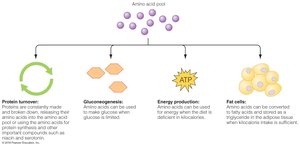
Amino acids in the body are used for protein synthesis, energy production, gluconeogenesis, or converted to fat. The amino acid pool is a collection of available amino acids for these processes.
Protein turnover: Constant breakdown and synthesis of proteins.
Gluconeogenesis: Conversion of glucogenic amino acids to glucose.
Energy production: Amino acids can be oxidized for energy.
Fat storage: Excess amino acids converted to fatty acids and stored as triglycerides.
Protein Synthesis: Genetic Regulation
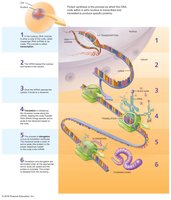
Protein synthesis is controlled by genes and involves three steps:
Transcription: DNA information is copied to messenger RNA (mRNA).
Translation: mRNA is read by ribosomes, and transfer RNA (tRNA) brings amino acids.
Elongation: Amino acids are linked in sequence to form a polypeptide.
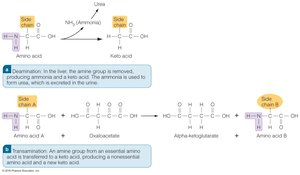
Deamination and Transamination
Deamination removes the amine group from amino acids, producing ammonia, which is converted to urea and excreted. Transamination forms nonessential amino acids by transferring nitrogen from one amino acid to a keto acid.
Deamination: Removal of amine group; ammonia → urea → urine.
Transamination: Formation of nonessential amino acids.
Functions of Protein in the Body
Proteins serve multiple functions:
Structural support: Muscle, skin, hair, nails.
Movement: Actin and myosin in muscles.
Catalysis: Enzymes speed up biochemical reactions.
Chemical messengers: Hormones regulate cell actions.
Fluid and acid-base balance: Maintain homeostasis.
Transport: Carry substances in blood and across membranes.
Immune function: Antibodies are proteins.
Energy: 4 kcal/gram.
Satiety: Promote fullness and appetite control.
Protein Requirements and Nitrogen Balance
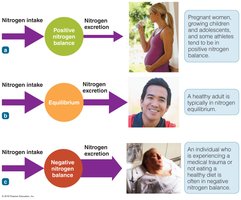
Protein needs are based on nitrogen balance. Healthy adults should consume enough protein to replace daily losses. Positive nitrogen balance occurs during growth, pregnancy, or recovery; negative balance during illness or trauma.
RDA: 0.8 grams/kg body weight for adults.
AMDR: 10–35% of total daily kilocalories.
Athletes: May require 50–100% more protein.
Food Sources and Quality of Protein
High-quality proteins are digestible, contain all essential amino acids, and support synthesis of nonessential amino acids. Methods to assess protein quality include amino acid score, protein digestibility corrected amino acid score (PDCAAS), and biological value.
Complete proteins: Contain all essential amino acids (animal sources, soy).
Incomplete proteins: Lacking one or more essential amino acids (plant sources).
Complementary proteins: Combining foods to supply all essential amino acids (e.g., grains and legumes).
Examples of Protein-Rich Foods
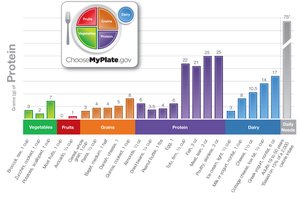
Eggs, meat, fish, soy, dairy
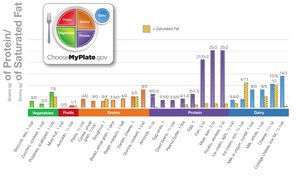
3-ounce serving of cooked meat provides 21–25 grams of protein
Wide variety of foods is best; supplements are generally unnecessary
Health Consequences of Protein Intake
Excess Protein
May increase risk for heart disease (especially with high saturated fat intake)
Increases risk for kidney stones (high animal protein, low carbohydrate)
May increase risk for osteoporosis if calcium intake is low
Can displace other important foods (whole grains, fruits, vegetables)
Insufficient Protein
Protein-energy malnutrition (PEM): More common in infants and children
Impaired GI tract function, reduced absorption, compromised immunity
Three types: Kwashiorkor, marasmus, marasmic kwashiorkor
Types of PEM
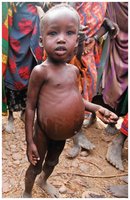
Kwashiorkor: Severe protein deficiency, edema, muscle wasting, brittle hair, prone to infection
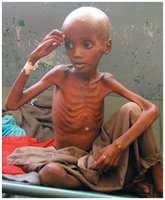
Marasmus: Severe calorie deficiency, emaciation, frailty, low body temperature
Marasmic Kwashiorkor: Chronic deficiency in both protein and calories, edema and "skin and bones" appearance
Vegetarian Diets: Benefits and Risks
Vegetarian diets are chosen for ethical, religious, environmental, or health reasons. They can reduce risks of heart disease, high blood pressure, diabetes, cancer, stroke, and obesity. However, vegetarians must plan meals carefully to avoid deficiencies in protein, calcium, iron, vitamin B12, zinc, vitamins A and D, and omega-3 fatty acids.
Benefits: Lower risk of chronic diseases
Risks: Potential for nutrient deficiencies
