- Download the worksheet to save time writing
- Start solving the practice problems
- If you're stuck, watch the video solutions
- See your summary to get more insights

Which step is crucial in the formation of acetals from carbonyl compounds using a cyclic diol and acid?
Acetals are used as protecting groups for carbonyl compounds (aldehydes and ketones) and diols. A cyclic acetal is formed when a ketone or an aldehyde reacts with a diol. Determine the cyclic acetal produced when the compound below reacts with ethane-1,2-diol under acid catalysis.
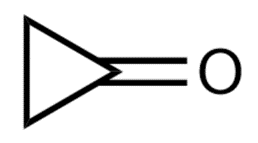
Provide the steps necessary to complete the given synthesis. You may use any additional reagents that are required.

Predict the product of treating a thioacetal with Raney nickel.
Why is BF3 used instead of Bronsted Lowry acids in thioacetal formation?
Which step is crucial in the transformation of an acetal to a thioacetal with dilute acid?
Which structural element is commonly found in imine derivatives but not in their parent imines?
What is the product formed from the reaction of cyclopentanone and hydroxylamine in the presence of a weak acid?
2,4-dinitrophenylhydrazine is commonly utilized to make ketone and aldehyde derivatives since the products, 2,4-dinitrophenylhydrazones, also known as 2,4-DNP derivatives, are more likely to be solids with sharp melting points than the phenyl hydrazones. In a slightly acidic solution, suggest a mechanism for the reaction between 2,4-dinitrophenylhydrazine and butan-2-one.
What factor primarily determines migratory aptitude in Baeyer-Villiger oxidation?
Given a ketone with a primary and a secondary group, which product is expected after Baeyer-Villiger oxidation?
How does Baeyer-Villiger oxidation affect the stereochemistry of a chiral center adjacent to the carbonyl group?
What is the key structural feature of a Gilman reagent?
In the reaction mechanism of organometallics with acid chlorides, what role does the tetrahedral intermediate play?