21. Enolate Chemistry:Reactions at the Alpha-Carbon - Part 1 of 3!
- Download the worksheet to save time writing
- Start solving the practice problems
- If you're stuck, watch the video solutions
- See your summary to get more insights

21. Enolate Chemistry:Reactions at the Alpha-Carbon - Part 1 of 3!
17 problems
Problem 2Multiple Choice
Predict the product of the reaction given below.

Problem 4Multiple Choice
Draw the enolate(s) formed by the treatment of the following molecule with a base.

Problem 8Multiple Choice
Draw the structure of the enol tautomer of the compound given below.

Problem 9Multiple Choice
Draw the structures of the enol tautomers of the following compound and identify the more stable one.

Problem 10Multiple Choice
The following reaction shows an acid-catalyzed rearrangement of a β,γ-unsaturated carbonyl compound to a more stable α,β-unsaturated compound. Draw a mechanism for this rearrangement.

Problem 13Multiple Choice
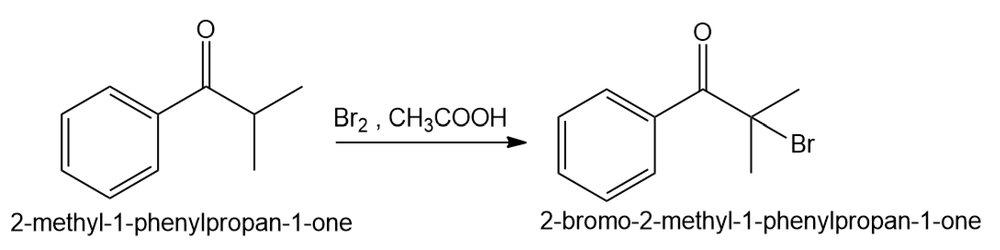
2-bromo-2-methyl-1-phenylpropan-1-one is produced through the acid-catalyzed bromination of 2-methyl-1-phenylpropan-1-one. Provide a mechanism for this reaction.