- Download the worksheet to save time writing
- Start solving the practice problems
- If you're stuck, watch the video solutions
- See your summary to get more insights

For the following 1H NMR spectrum and the given molecular formula, determine the plausible structure of the organic compound.

(Hint: There is a presence of C=O based on the IR spectrum of this compound that is not shown here.)
When 2-chloro-2,3-dimethylbutane is treated with different strong bases then elimination causes the formation of two isomers (A and B) with formula C6H12. When sodium hydroxide is used as a base then the major product is isomer A and when tert-butoxide is used as a base then the isomer B is formed in a higher quantity.
a. Determine the structures of the two isomers using the NMR spectra given below.
b. Explain why isomer A predominates when sodium hydroxide is used while isomer B predominates when tert-butoxide is used.

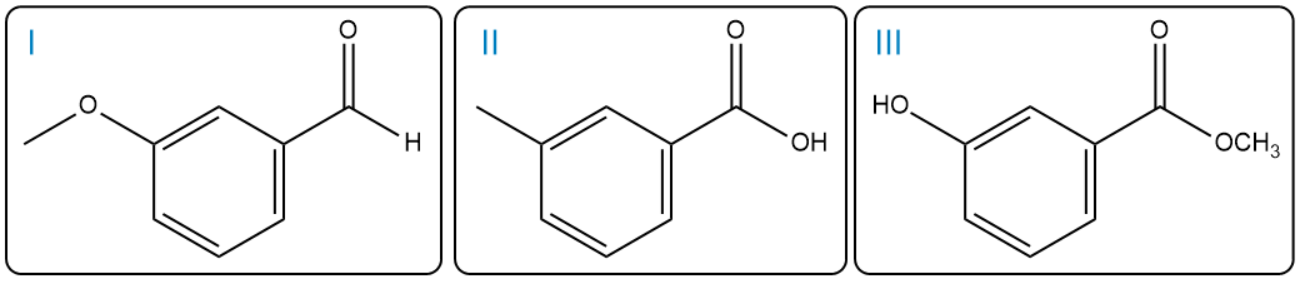
How can the following compounds be distinguished using only the techniques listed below and no other information?
a. using proton NMR spectroscopy
b. using 13C NMR with DEPT experiments.
c. using Infrared spectroscopy