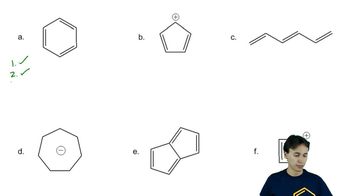
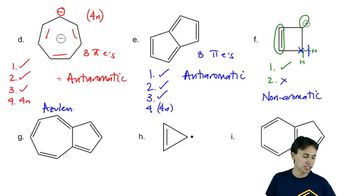
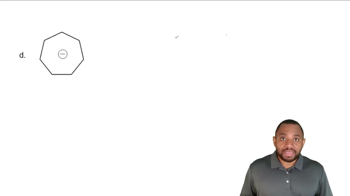
What is an aromatic hydrocarbon, and how can you identify one based on the four tests of aromaticity?
An aromatic hydrocarbon is a molecule that is cyclic, fully conjugated, planar, and contains a number of pi electrons that fits Huckel's rule (4n+2, where n is an integer, resulting in 2, 6, 10, 14, etc.). These criteria confer extra stability and aromaticity to the molecule.
Which common products are composed of aromatic hydrocarbons?
Common products composed of aromatic hydrocarbons include pain relievers and barbeque fuel. Clothing and polyvinyl chloride are not typically composed of aromatic hydrocarbons.
How can you determine if a compound is aromatic?
To determine if a compound is aromatic, check if it is cyclic, fully conjugated, planar, and contains a number of pi electrons that fits Huckel's rule (4n+2, such as 2, 6, 10, 14, etc.). If all these criteria are met, the compound is aromatic.
What criteria must a molecule meet to be classified as aromatic?
A molecule must be cyclic, fully conjugated, planar, and have a number of pi electrons that fits Huckel's rule (4n+2) to be classified as aromatic.
What is the significance of the numbers 2, 6, 10, and 14 in the context of aromaticity?
These numbers represent the allowed counts of pi electrons in a molecule that satisfy Huckel's rule for aromaticity. Molecules with these numbers of pi electrons are especially stable and aromatic.
What happens if a molecule meets the first three aromaticity tests but has a 4n number of pi electrons?
Such a molecule is classified as anti-aromatic, which means it is highly unstable. Anti-aromatic compounds are difficult to synthesize due to their instability.
How does the presence of a radical affect the aromaticity of a molecule?
A radical contributes only one pi electron, which can result in an odd total number of pi electrons. This causes the molecule to fail Huckel's rule and be non-aromatic.
What is Breslow's rule in relation to aromaticity?
Breslow's rule states that a molecule meeting the first three aromaticity tests but having a 4n number of pi electrons is anti-aromatic. This rule helps distinguish between aromatic and anti-aromatic compounds.
What category does a molecule fall into if it fails any one of the four aromaticity tests?
It is classified as non-aromatic. Non-aromatic molecules do not possess the extra stability of aromatic compounds.
Why are molecules with an odd number of pi electrons considered non-aromatic?
Odd numbers of pi electrons do not fit either the 4n+2 or 4n patterns required for aromatic or anti-aromatic classification. Therefore, such molecules fail Huckel's rule and are non-aromatic.