What characteristics make a group the best leaving group in substitution reactions?
The best leaving groups are those that are stable after gaining electrons. This stability is typically due to high electronegativity and large atomic size, as described by the element effect. Iodine is considered one of the best leaving groups because it is both large and highly electronegative.
Which types of molecules contain good leaving groups, and what factors contribute to their effectiveness?
Molecules that contain atoms or groups that are stable after accepting electrons, such as halides (especially iodide), contain good leaving groups. Factors contributing to their effectiveness include high electronegativity, large atomic size, and additional stabilization from inductive or resonance effects.
What properties define a good nucleophile that is also a strong base?
A good nucleophile and strong base is typically a species that readily donates electrons and is not stabilized by resonance or inductive effects. Such species are less stable after gaining electrons and thus are poor leaving groups but are highly reactive as nucleophiles and bases.
How should common leaving groups be ranked from worst to best based on their stability after leaving?
Leaving groups should be ranked from worst to best based on their ability to stabilize a negative charge after leaving. Groups with low electronegativity and small size (such as fluoride) are worse leaving groups, while those with high electronegativity and large size (such as iodide) are the best. The general order is: F⁻ < Cl⁻ < Br⁻ < I⁻.
Why are leaving groups essential for substitution reactions to occur?
Leaving groups are essential because they allow a bond to break, making room for a new bond to form. Without a leaving group, the electrophile cannot accept a new bond since it lacks an empty orbital.
How are the rules for identifying good leaving groups related to acid-base chemistry?
The rules for identifying good leaving groups are similar to those for determining good conjugate bases. Both involve assessing the stability of a species after it gains electrons.
What is the 'element effect' and how does it help predict good leaving groups?
The element effect refers to trends in electronegativity and atomic size across the periodic table. It helps predict good leaving groups by indicating that larger and more electronegative atoms are generally more stable after leaving.
Why is iodine considered an ideal leaving group based on periodic trends?
Iodine is considered ideal because it is both large and highly electronegative, making it very stable after accepting electrons. Its position at the bottom right of the halogen group maximizes these properties.
Besides the element effect, what other factors can influence leaving group stability?
Other factors include the inductive effect and resonance stabilization. These can further stabilize the leaving group after it departs from the molecule.
What exercise is suggested to practice identifying better leaving groups in molecules?
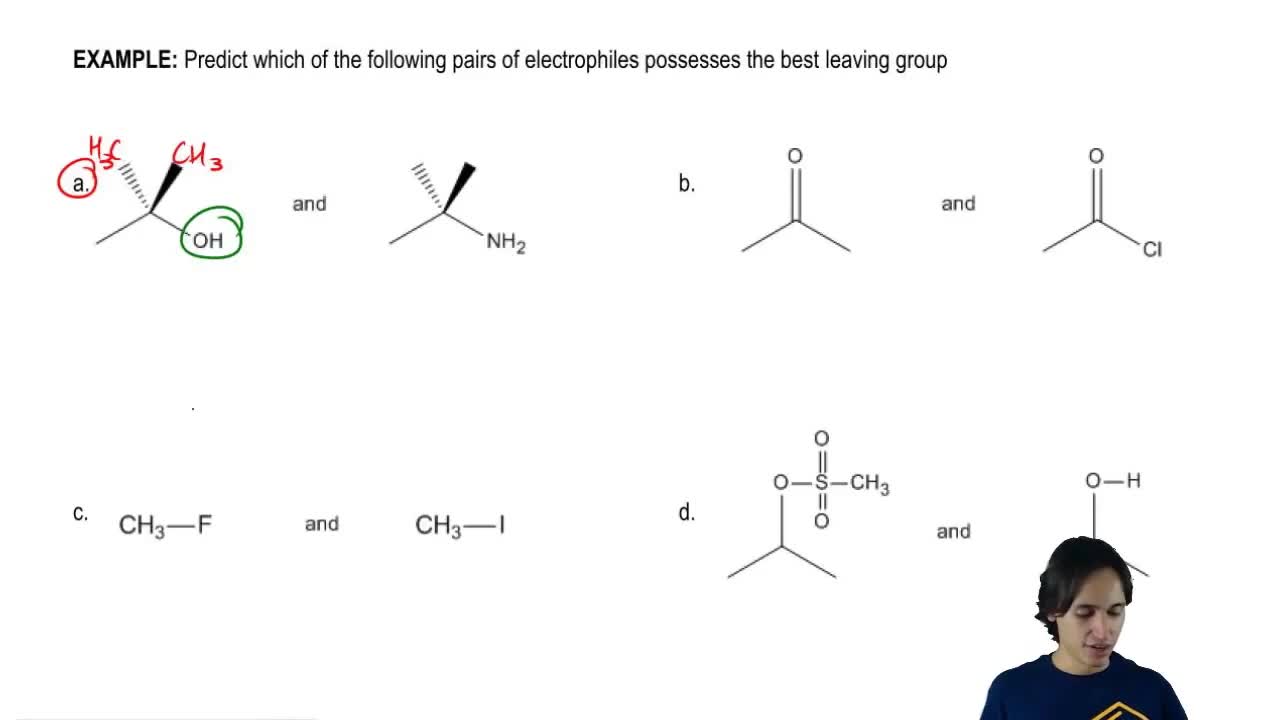
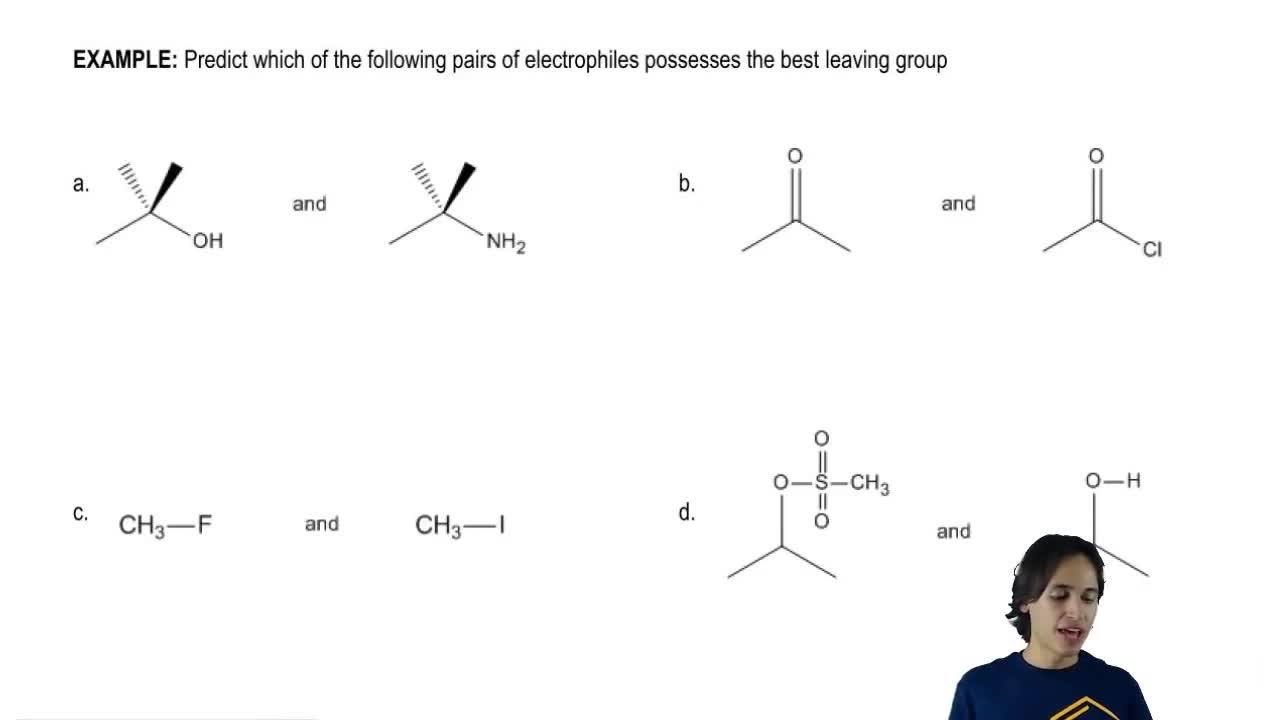
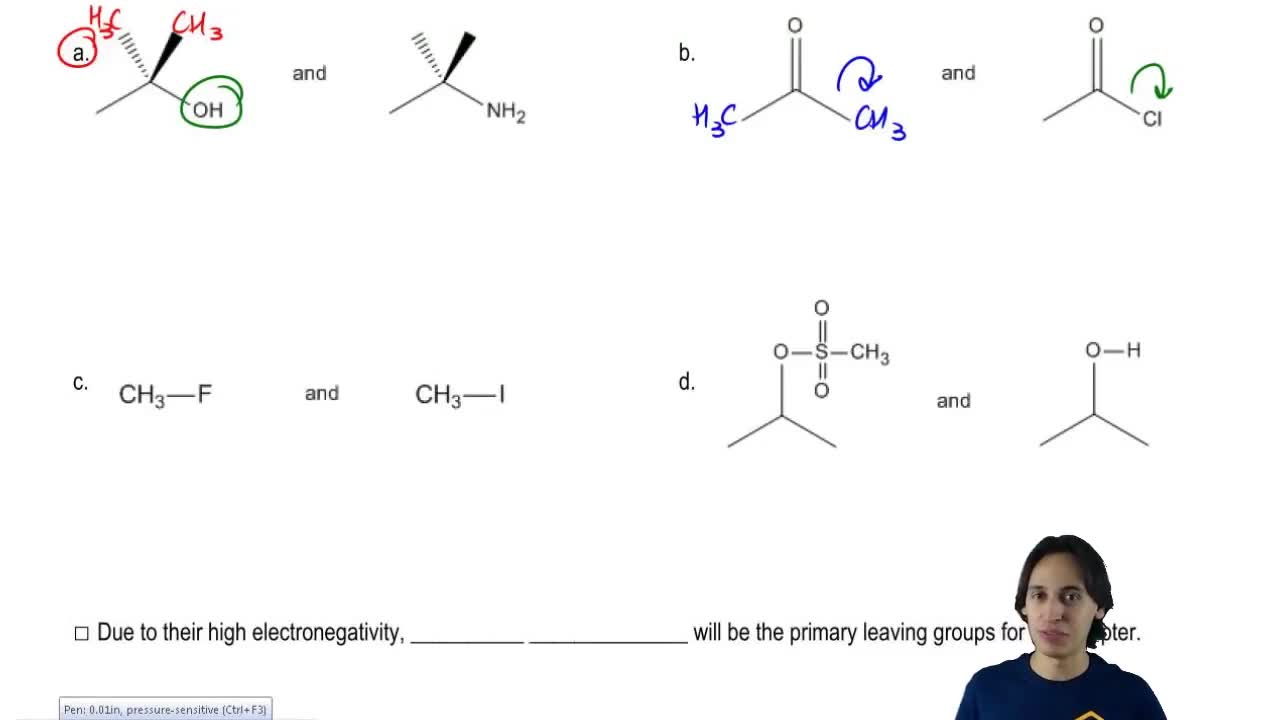
Students are encouraged to compare pairs of molecules and use factors affecting acidity to determine which has the better leaving group. This practice reinforces understanding of the trends and effects discussed.