Back
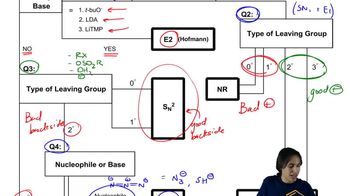
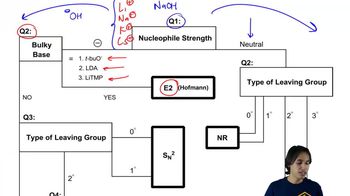
BackSN1 SN2 E1 E2 Chart (Big Daddy Flowchart) quiz #1
You can tap to flip the card.
Control buttons has been changed to "navigation" mode.
1/10SN1 SN2 E1 E2 Chart (Big Daddy Flowchart)
8. Elimination Reactions
7 problems
Topic

Ernest
Cumulative Substitution/Elimination
8. Elimination Reactions
5 problems
Topic

Johnny
8. Elimination Reactions - Part 1 of 3
5 topics 11 problems
Chapter
Johnny
8. Elimination Reactions - Part 2 of 3
5 topics 13 problems
Chapter
Ernest
8. Elimination Reactions - Part 3 of 3
1 topic 3 problems
Chapter
 09:52
09:52