 Back
BackChapter 1: Electronic Structure and Bonding – Foundations of Organic Chemistry
Study Guide - Smart Notes
 Tailored notes based on your materials, expanded with key definitions, examples, and context.
Introduction to Organic Chemistry
Why Organic Chemistry?
Organic chemistry is the study of carbon-containing compounds, which are fundamental to life and modern technology. Organic molecules are found in drugs, clothing, food, and biological systems, making this field essential for understanding both natural and synthetic materials.
Key Point: Organic chemistry explains the structure, properties, and reactions of molecules containing carbon.
Key Point: The versatility of carbon allows for the formation of millions of different compounds.
Example: Luciferin is a light-emitting organic compound found in fireflies, responsible for their bioluminescence.
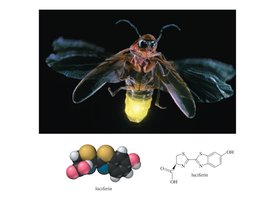
Origins and Definition of Organic Chemistry
Historical Perspective
Originally, organic chemistry focused on compounds derived from living organisms, believed to contain a "vital force." This idea was disproven when Friedrich Wöhler synthesized urea from inorganic materials in 1828, demonstrating that organic compounds could be made artificially.
Key Point: Organic compounds are defined by the presence of carbon atoms.
Key Point: Not all carbon compounds are organic (e.g., CO2, diamond).
Example: Urea synthesis marked the birth of modern organic chemistry.
Atomic Structure and Properties
Structure of the Atom
Atoms are the basic units of matter, composed of protons, neutrons, and electrons. The arrangement and number of these particles determine the element's identity and properties.
Protons: Positively charged, found in the nucleus.
Neutrons: Neutral, found in the nucleus.
Electrons: Negatively charged, occupy orbitals around the nucleus.
Atomic Number (Z): Number of protons in the nucleus.
Atomic Mass: Sum of protons and neutrons.
Isotopes: Atoms with the same number of protons but different numbers of neutrons (e.g., 12C, 13C, 14C).
Electron Configuration and the Periodic Table
Electron Shells and Orbitals
Electrons are arranged in shells and subshells, which consist of atomic orbitals. The distribution of electrons among these orbitals determines chemical behavior.
Aufbau Principle: Electrons fill the lowest energy orbitals first.
Pauli Exclusion Principle: Each orbital holds a maximum of two electrons.
Hund’s Rule: Electrons occupy empty orbitals before pairing up.
Core Electrons: Inner shell electrons.
Valence Electrons: Outermost shell electrons, responsible for chemical reactivity.
The Octet Rule and Bonding
Octet Rule
Atoms tend to gain, lose, or share electrons to achieve a stable configuration with eight valence electrons, similar to noble gases.
Key Point: The octet rule guides the formation of ionic and covalent bonds.
Exceptions: Hydrogen (needs 2 electrons), elements in group 3A, and elements in the third period or higher (can have expanded octets).
Ionic and Covalent Bonds
Bonding occurs when atoms transfer or share electrons to achieve stability.
Ionic Bonds: Formed by electron transfer between metals and nonmetals, resulting in oppositely charged ions.
Covalent Bonds: Formed by sharing electron pairs between atoms, typically nonmetals.
Nonbonding Electrons: Also called lone pairs, these are valence electrons not involved in bonding.
Bond Polarity and Electronegativity
Polar vs. Nonpolar Covalent Bonds
The distribution of electrons in a bond depends on the electronegativity of the bonded atoms.
Nonpolar Bonds: Electrons are shared equally (similar electronegativities).
Polar Bonds: Electrons are shared unequally (different electronegativities), resulting in partial charges (δ+ and δ-).
Bond Dipole Moment: (where is the partial charge and is the bond length).
Lewis Structures and Formal Charges
Drawing Lewis Structures
Lewis structures represent the connectivity of atoms and the arrangement of valence electrons in molecules.
Steps:
Count total valence electrons.
Arrange atoms (least electronegative central, H never central).
Form bonds using electron pairs.
Distribute remaining electrons to satisfy octets.
Formal Charge:
Application: Formal charges help predict reactivity and stability.
Structural Formulas
Types of Structural Formulas
Structural formulas show how atoms are connected and the types of bonds present.
Complete Lewis Structures: Show all atoms, bonds, and lone pairs.
Condensed Formulas: Group atoms without showing all bonds (e.g., CH3CH2OH).
Line-Angle Formulas: Use lines for bonds; carbon atoms are implied at line ends and intersections.
Molecular and Empirical Formulas
Definitions
Molecular formulas indicate the number of each type of atom in a molecule, while empirical formulas show the simplest whole-number ratio.
Molecular Formula: Actual number of atoms (e.g., C2H6).
Empirical Formula: Simplest ratio (e.g., CH3).
Atomic and Molecular Orbitals
Types of Atomic Orbitals
Atomic orbitals are regions where electrons are likely to be found. The main types are s, p, d, and f.
s Orbitals: Spherical shape, centered on the nucleus.
p Orbitals: Dumbbell-shaped, three orientations per shell.
Hybridization and Molecular Geometry
Hybridization in Organic Molecules
Hybridization explains the shapes and bonding in organic molecules by mixing atomic orbitals.
sp3 Hybridization: Tetrahedral geometry, 109.5° bond angles (e.g., methane).
sp2 Hybridization: Trigonal planar geometry, 120° bond angles (e.g., ethene).
sp Hybridization: Linear geometry, 180° bond angles (e.g., ethyne).
Bond Types: Single (σ), double (σ + π), triple (σ + 2π).
Special Cases: Methyl Cation, Radical, and Anion
Carbon Bonding Variations
Carbon can form cations, radicals, or anions, each with distinct hybridization and bonding.
Methyl Cation (CH3+): sp2 hybridized, planar structure.
Methyl Radical (·CH3): sp2 hybridized, one unpaired electron.
Methyl Anion (CH3-): sp3 hybridized, one lone pair.
Hybridization of Nitrogen, Oxygen, and Halogens
Nitrogen and Oxygen
Nitrogen in ammonia (NH3) and oxygen in water (H2O) are sp3 hybridized, with lone pairs affecting geometry and bond angles.
NH3: sp3 hybridized, 107° bond angles.
H2O: sp3 hybridized, 104.5° bond angles.
Halogens in Hydrogen Halides
Halogens form one covalent bond with hydrogen via sp3 hybridization. Bond length and strength decrease as halogen size increases.
Molecular Geometry and Dipole Moments
Geometry and Polarity
The geometry of molecules determines bond angles and overall dipole moments. Symmetrical molecules have no net dipole moment, while asymmetrical ones do.
Key Point: The sum and direction of individual bond dipoles determine molecular polarity.
Example: Chloromethane (CH3Cl) has a net dipole moment due to the orientation of C-H and C-Cl bonds.
Summary Table: Types of Bonds and Hybridization
Bond Type | Hybridization | Geometry | Bond Angle |
|---|---|---|---|
Single (σ) | sp3 | Tetrahedral | 109.5° |
Double (σ + π) | sp2 | Trigonal planar | 120° |
Triple (σ + 2π) | sp | Linear | 180° |
Additional info: This guide covers all major foundational concepts in Chapter 1: Electronic Structure and Bonding, including atomic structure, electron configuration, bonding types, hybridization, and molecular geometry, as relevant to a college-level organic chemistry course.
