Back

Theoretical Perspectives on Deviance definitions

Control buttons has been changed to "navigation" mode.
1/15
  • Functionalist Perspective

    A macro-level approach viewing deviance as a normal, necessary part of society that reinforces norms and can promote change.
  • Social Cohesion

    A sense of unity and belonging among members of a society, often strengthened by shared views on deviance.
  • Strain Theory

    A framework explaining deviance as a response to pressure from societal goals and limited access to legitimate means.
  • Conventional Goals

    Culturally valued objectives, such as wealth or success, that society encourages individuals to pursue.
  • Conventional Means

    Socially approved methods for achieving culturally valued objectives, like education or employment.
  • Social Disorganization Theory

    A theory linking deviance to weak social ties and lack of social control within communities, especially in disadvantaged areas.
  • Conflict Perspective

    A macro-level approach emphasizing how power inequalities shape definitions of deviance and enforcement of laws.
  • White Collar Crime

    Illicit acts committed in business or professional settings, often punished less harshly than street crimes.
  • Organized Crime

    Networks that supply illegal goods or services, such as the mob, often involving complex hierarchies.
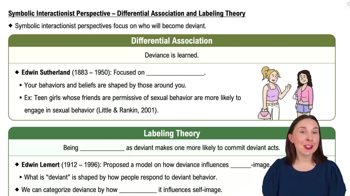
  • Symbolic Interactionist Perspective

    A micro-level approach focusing on how deviance emerges through social interactions and learned behaviors.
  • Differential Association Theory

    A theory stating that deviant behavior is learned through interactions with others who endorse such actions.
  • Labeling Theory

    A framework highlighting how being labeled as deviant can shape self-identity and increase future deviant acts.
  • Stigma

    A powerful negative label that alters self-image and social identity, often resulting from serious deviant acts.
  • Master Status

    A dominant identity that overshadows other roles, often formed when deviant labels become central to self-concept.
  • Social Bond Theory

    A theory proposing that strong attachments, commitments, involvement, and beliefs reduce the likelihood of deviance.