 Back
BackPsychological Theories of Criminal Behaviour: Sociological Context and Applications
Study Guide - Smart Notes
 Tailored notes based on your materials, expanded with key definitions, examples, and context.
Psychological Theories of Criminal Behaviour
Introduction
This study guide explores the psychological theories that seek to explain criminal behaviour, with a focus on the case study of Robert Smith. These theories are foundational for understanding deviance, crime, and social control, which are central topics in Introduction to Sociology. The guide covers biological, developmental, learning, personality, and mental illness perspectives, integrating sociological context and applications.
Case Study: Robert Smith
Background and Sociological Context
Robert Smith is a repeat federal offender with a history of violent and property crimes.
His upbringing involved family instability, exposure to criminal behaviour, and placement in group/foster homes due to disruptive conduct.
He has limited education, vocational skills, and social support, often living on the streets or relying on social assistance.
Robert's social network consists entirely of individuals involved in crime, and he has a history of substance abuse.
He exhibits entrenched criminal attitudes, impulsivity, and difficulty with attention and frustration.
Example: Robert's life course illustrates how socialization, environment, and individual traits interact to produce persistent criminal behaviour.
History of Psychological Theories of Crime
Core Assumptions
Offender deficit: Criminals possess psychological deficits compared to non-offenders.
Discriminating traits: Certain traits distinguish offenders from non-offenders.
Biological Bases of Behaviour
Genetics and Criminal Behaviour
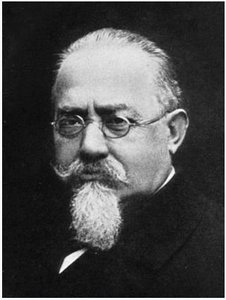
Biological theories propose that genetic factors may predispose individuals to criminal behaviour. Early theorists like Cesar Lombroso suggested that criminals are 'born' with certain physical and psychological traits.
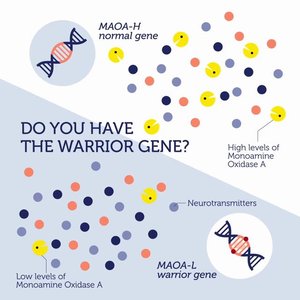
Genetic influences: Twin studies and research on the 'warrior gene' (MAOA) suggest a hereditary component to aggression and impulsivity.
Chromosomal abnormalities: The 'supermale' (XYY) hypothesis posits that males with an extra Y chromosome may be more prone to criminality.
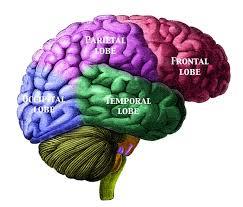
Brain structure: Dysfunction in the prefrontal lobe is linked to poor impulse control and aggression.
Example: Robert's impulsivity and aggression may be partially explained by biological predispositions.

Diathesis-Stress Model and Epigenetics
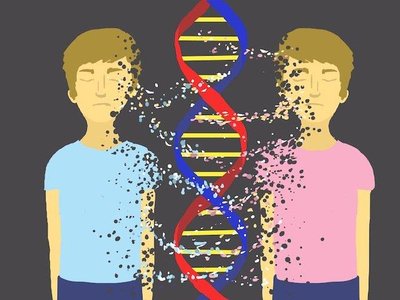
The diathesis-stress model suggests that genetic vulnerabilities interact with environmental stressors to produce criminal behaviour. Epigenetics explores how environmental factors can alter gene expression.
Nature vs. nurture: Both genetic and environmental factors contribute to criminality.

Development Theory
Moffitt’s Developmental Theory of Crime
This theory distinguishes between life-course persistent offenders and adolescent-limited offenders, emphasizing early antisocial behaviour as a predictor of later criminality.
Life-course perspective: Early interventions and protective factors can reduce criminal outcomes.

Kohlberg’s Theory of Moral Development
Kohlberg proposed three levels of moral reasoning: preconventional, conventional, and postconventional. Each level reflects increasing sophistication in ethical decision-making.
Preconventional: Egocentric, focused on punishment and reward.
Conventional: Based on social approval and maintaining authority.
Postconventional: Guided by universal principles and conscience.

Gilligan’s Theory of Moral Development
Carol Gilligan emphasized care-based morality, contrasting it with justice-based approaches. Her model includes survival orientation, conventional care, and integrated care.
Care-based morality: Focuses on empathy and relationships.
Justice-based morality: Focuses on fairness and rights.

Emotions and Moral Development
Cognitive vs. affective empathy: Understanding vs. feeling others' emotions.
Guilt vs. shame: Guilt is linked to specific actions; shame is a global feeling about oneself.
Learning Theory
Operant Conditioning and Differential Reinforcement
Learning theories explain criminal behaviour as a result of rewards and punishments. Operant conditioning posits that behaviour is shaped by consequences.
Differential reinforcement: Criminal behaviour is reinforced when it is rewarded more than punished.

Social Learning Theory
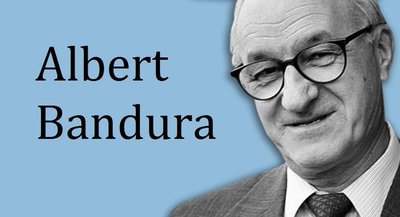
Albert Bandura's social learning theory argues that behaviour is learned through observation and modelling, especially in a social context.
Family and subcultural influences: Aggressive behaviour can be learned from family members or peers.
Symbolic modelling: Media and video games can influence behaviour.


Deterring Aggressive Behaviour
Pro-social alternatives: Providing positive role models and activities.
Legal, social, and self-sanctions: Punishments and social disapproval can reduce aggression.
Personality Theory
Eysenck’s Theory of Personality
Eysenck proposed that personality traits, shaped by classical conditioning, influence antisocial behaviour. The three main dimensions are extraversion, neuroticism, and psychoticism.
Antisocial Personality Disorder (ASPD): Characterized by manipulative, deceitful, hostile, impulsive, and irresponsible traits.
Psychopathy: A more severe form of ASPD, strongly linked to violence.


Psychopathy and Violence
Instrumental violence: Planned, goal-oriented aggression.
Reactive violence: Impulsive, emotional aggression.
ASPD is more prevalent in forensic populations than psychopathy.
Mental Illness and Crime
Definition and Prevalence
Mental illness is a syndrome resulting in dysfunction and significant distress or impairment. It does not include typical cultural responses to stress or socially deviant behaviour alone.
Many offenders have mental health issues, but not all.
Correctional institutions screen for mental health and provide psychiatric services.
Prevalence of Mental Disorders in Prison
Illness | Prison Rate | Community Odds Ratio |
|---|---|---|
Psychosis | 7% | 11.5 |
PTSD | 25% | 10.2 |
Any anxiety disorder | 38% | 5.1 |
Depression | 18% | 2.3 |
Bipolar | 4% | 7 |
Substance use disorder | 66% | 11.4 |
Mental Illness and Violence
Most people with serious mental disorders do not commit violence.
Risk increases with co-occurring ASPD/psychopathy and substance abuse.
Active psychotic symptoms, delusional beliefs, and command hallucinations may increase risk.
Example: Robert's substance abuse and possible mental health issues may have contributed to his criminal behaviour.
Conclusion
Psychological theories provide valuable frameworks for understanding criminal behaviour, but must be integrated with sociological perspectives on socialization, environment, and structural factors. The case of Robert Smith illustrates the complex interplay between individual traits and social context in the development of criminality.
