 Back
BackTrigonometric Function Identities and Their Properties
Study Guide - Smart Notes
 Tailored notes based on your materials, expanded with key definitions, examples, and context.
Reciprocal Identities
Definition and Application
Reciprocal identities express each trigonometric function in terms of its reciprocal. These identities are fundamental in simplifying expressions and solving equations involving trigonometric functions.
Cosecant:
Secant:
Cotangent:
Example:
If , then
If , then
If , then
If , then
Signs and Ranges of Function Values
Quadrant Analysis and Function Signs
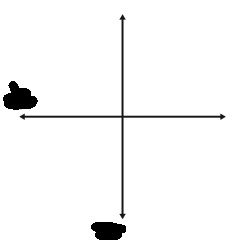
The sign of a trigonometric function depends on the quadrant in which the angle lies. The mnemonic "All Students Take Calculus" helps remember which functions are positive in each quadrant:
Quadrant I: All functions are positive.
Quadrant II: Sine and cosecant are positive.
Quadrant III: Tangent and cotangent are positive.
Quadrant IV: Cosine and secant are positive.
Example: Determine the signs for angles:
54º: Quadrant I, all positive.
260º: Quadrant III, tangent and cotangent positive.
-60º: Quadrant IV, cosine and secant positive.
Example: For , , must be in Quadrant III.
Example: Possible or impossible statements:
: Possible.
: Impossible (cosine range is [-1, 1]).
: Impossible (cosecant is undefined for ).
Example: If is in Quadrant III and , find the other functions using reciprocal and Pythagorean identities.
Ratio (Quotient) Identities
Definition and Usage
Ratio identities relate tangent and cotangent to sine and cosine:
These identities are useful for converting between trigonometric functions and simplifying expressions.
Pythagorean Identities
Derivation and Equivalent Forms
Pythagorean identities are derived from the equation of a circle and relate the squares of trigonometric functions:
These identities are valid for all angles for which the function values are defined.
Example: Find and given and :
Use to solve for .
Calculate .
Practice: Find and given and is in Quadrant II.
Summary Table: Signs of Trigonometric Functions by Quadrant
Classification Table
Quadrant | sin θ | csc θ | cos θ | sec θ | tan θ | cot θ |
|---|---|---|---|---|---|---|
I | + | + | + | + | + | + |
II | + | + | - | - | - | - |
III | - | - | - | - | + | + |
IV | - | - | + | + | - | - |
