Exploring the four Cs: Using future skills to unlock young learners’ potential

Annie Altamirano
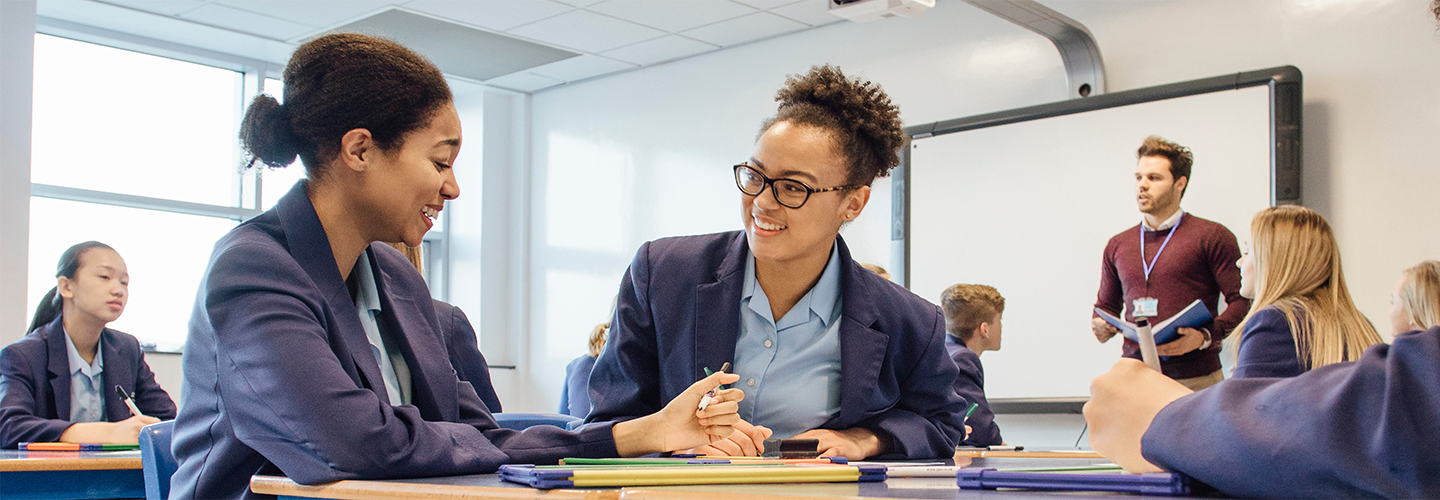
Students sat together in a classroom working together
Reading time: 5 minutes

What do we mean by future skills? 

The skills students will need in their future studies and careers are dramatically different from those required previously. Times are changing rapidly and educational institutions and teachers have a critical role to play in developing those skills in our young learners so that they are able to fulfill their potential and have bright futures ahead of them. 

These skills are referred to as future skills. There is no common consensus on how to define these skills but, broadly speaking, they can be grouped into four categories: 

1. Ways of thinking

Skills in this category include critical thinking, creativity, innovation, problem solving, metacognition and learning skills.

2. Ways of working

Here, we’re talking about the skills of communication and collaboration.

3. Tools for working

Information literacy is an important 21st-century skill, as well as ICT literacy and citizenship, both global and local. 

4. Life skills

The final category covers life and career skills, and is all about personal and social responsibility. 

One way you can encourage young learners to build these skills is through STEAM subjects (that’s science, technology, engineering, arts and math), which will equip them with functional skills such as organizing, planning, cognitive flexibility and self-regulation. 

The four Cs 

The four Cs refer to four important skills for young learners to master: communication, collaboration, critical thinking and creativity. These are essential, not just in an educational context, but in everyday life. 

Falling into the first two categories of future skills (ways of thinking and ways of working), these can help children build confidence and self-esteem. They also encourage healthy emotional development.  

So let’s take a closer look at the theory behind them.

1. Communication

We usually think of communication as speaking and listening, but it’s actually much broader than that. Communication encapsulates telling stories, reading, sharing ideas and experiences, body language, facial expression, eye contact and tone. Children learn to decipher the world around them by learning and practicing these skills.

Strong communication skills, developed early, are directly related to their literacy success. These skills allow children to articulate their thoughts and ideas effectively, and listen to decode meaning. Students then begin to use communication for a range of purposes, and communicate effectively in diverse environments. Furthermore, developing strong patterns of verbal and non-verbal communication also fosters self-esteem and social skills. 

2. Collaboration

Collaboration is how young children begin to build friendships with others. At first, young children will watch what others do and say, before moving on to playing together. As they get older, they become aware of other children’s feelings and ideas. Friendships become motivating and they learn how to make compromises and respect each other’s perspectives and skills. 

Collaboration is enhanced through group work and project-based activities, sharing time with peers. Children thrive when they feel valued by the people around them, not just adults but their peers too. 

3. Creativity

Creativity is a complex concept. Many people think that creativity is being good at painting or drawing, but actually, creativity can manifest itself in a multitude of ways. Some of the key attributes of creative thinking include divergent thinking, imagination, flexibility, and the ability to tolerate ambiguity. 

Children who can express themselves creatively show less frustration and develop a joy of learning. And this expression can take many forms: writing, drama, scientific exploration, and dance and other movement – to name just a few.

Part of creativity is learning to innovate. Innovation is how children test their thinking and how they interact with their world. Creative children are able to create content from their own ideas or other resources. They can use that newly created content to solve problems and participate in creative activities. 

4. Critical thinking

Critical thinking refers to the higher levels of thinking that learners need to enable them to think rationally and effectively about their needs, the best way to do things, identifying links between ideas, analyzing points of view, evaluating arguments, and supporting evidence and reasoning. It’s about thinking in a non-linear, open-ended way, allowing for multiple responses and unspecified answers, and considering issues from various perspectives, challenging assumptions and exploring possible alternatives. 

Critical thinking is not a natural function like sleeping or eating. Children benefit significantly from teaching methods that take the development of their thinking skills seriously. And when children start applying critical thinking skills, they’ll begin to enjoy more challenging tasks. 

Five steps to the four Cs

So how can teachers plan their lessons to develop these four skills in their young learners? There are five steps that provide a framework that challenges and stimulates students: 

1. Determine learning objectives and define behaviors that learners should exhibit

Think about the purpose of your lesson. What new concept or information do you want your students to absorb? And what learning behaviors do you want to elicit from them? Clarifying these aims before your lesson will help you to measure its success afterwards. 

2. Model a new concept and encourage students to think critically and creatively through questioning

It’s important for the teacher to plan significant questions and give students time to respond. Follow up on those responses by asking probing questions and periodically summarizing key points of the discussion. There are various types of questions you can use in class: 

  • Clarification questions, for example, What do you mean? Can you explain that more? Could you put that in another way? 
  • Assumption questions, for example, Why do you think so? Would you make this assumption? 
  • Evidence questions, for example, Can you give me an example? Do you think this is true? 
  • Origin or source questions, for example, Where did you get that idea? Is this your own idea or did you hear it from someone else? 
  • Consequence questions, for example, What effect would that have? What would the implications be? What alternatives could there be? 
  • Viewpoint questions, for example, How are these ideas different? How would different groups of people respond? 

It’s important to include as many students as possible in the discussion. In this way, they are more likely to communicate with each other and discover knowledge on their own. 

3. Choose activities that promote active learning 

One activity that typically receives a positive response is the KWL approach. Create a table with three columns:

  • K = what students know 
  • W = what they want to know 
  • L = what they have learned

Once the class has completed the first two columns, you can put the table aside until the end of the lesson or the topic. Then complete the final column as a way of reviewing everything that has been covered in the lesson. 

Also, try think-pair-share activities. Assign students short tasks to complete individually. Just make sure that they prompt learners to come up with creative responses. Once students have had an opportunity to think critically and creatively about the concept, they can share their ideas with a partner before sharing with the whole class. 

4. Prompt communication and collaboration, and give students an opportunity to review and refine their ideas 

Moving into larger groups, learners can share their work, accept different perspectives and defend their own point of view. Presenting to one another and answering questions will prompt them to review and refine their ideas before the final step in the process.

5. Learners present their work, getting feedback and creating an opportunity for self-assessment 

Depending on the type of work you’re doing, presenting could be as simple as sharing answers to questions or giving a project presentation with a group spokesperson. Encourage the other members of the class to ask questions and provide feedback, as well as giving your own feedback. Then, encourage learners to reflect on their participation in the lesson.

More blogs from Pearson

  • University students walking outside on campus
    Elevate your agency’s brand: The PTE Express effect
    By Alice Bazzi
    Reading time: 2 minutes

    In the competitive world of international education, your agency’s reputation is everything. Families trust you to guide them through one of the most important decisions of their children’s lives, and institutions rely on you to send well-prepared students. Every recommendation you make reflects on your brand.

    That’s why it’s important to choose solutions backed by a strong, trusted global reputation. PTE Express, powered by Pearson, is more than an English test; it also helps strengthen your organisation’s credibility in a competitive market.

    Why reputation matters in student recruitment

    Parents and students do not just look for speed and convenience, but also look for efficiency, reliability and integrity. When you recommend a test that universities recognize, you strengthen your own position as a trusted advisor. Furthermore, Pearson assessments are renowned for their quality and transparency: values that resonate with both your customers and your university partners.

    The Pearson advantage: Global recognition and trust

    Pearson is known throughout the education sector for its excellence. With decades of experience in learning and assessments, Pearson has built a reputation that institutions around the world rely on. PTE Express reflects this heritage, offering a secure, reliable English proficiency test designed with admissions in mind.

    When you recommend PTE Express, you are not just offering speed to your students but also offering a test backed by credibility, innovation and a well-trusted brand.

    How PTE Express enhances your brand

    • Professionalism: Recommending a Pearson-backed test signals that your agency prioritizes quality and compliance.
    • Reliability: Institutions know PTE Express scores are authentic and secure, reducing friction in the admissions process.
    • Client confidence: Families feel reassured when they see a globally-recognized name associated with their child’s academic future.

    The alignment positions your agency as a market leader, capable of delivering solutions that meet university standards.

    Security and speed: A winning combination

    PTE Express not only protects integrity through its high-quality security but also accelerates success. Students receive certified results within 48 hours, enabling them to meet tight deadlines without compromising quality.

    For agents, this means fewer delays, smoother workflows and happier clients who will most likely refer more students in the long run. By promoting a test that combines speed with security, you differentiate yourself from competitors.

    Building long-term relationships through trust

    Your reputation grows through consistently supporting your students and earning the trust of families who recommend you to others. As more students progress to your partners, your agency gains wider recognition.

    When you offer a secure and efficient English test, families feel more confident in your process. That trust supports stronger partnerships, repeat business, and referrals.

    Lead with value in every interaction

    When discussing PTE Express with students or institutions, emphasize the benefits of what matters the most:

    • Pearson’s global reputation
    • Secure testing environment that is also flexible for the student
    • Rapid turnaround for results

    Elevate your brand today and find out more about PTE Express here.

  • Teacher talking to girl working on laptop in classroom smiling
    Designed for learning, built for growth: How Big Ben Education Group reimagined short-term programs
    By Emma Currie
    Reading time: 3 minutes

    The challenge: Creating meaningful learning in short-term programs

    In recent years, Big Ben Education Group faced a challenge: how to deliver meaningful learning within short-term programs. Although teachers were passionate and students motivated, their short-term courses lacked a clear academic structure, making learning feel rushed and less impactful. At the same time, they relied heavily on a single market and sought to attract a more diverse, global student mix.

    This raised a critical question: How do you design a short-term program that is both academically meaningful and appealing to a global student audience? That question led to the launch of their first Winter Camp in 2024.

    The turning point: From camp to structured learning experience

    The Winter Camp marked a major shift. For the first time, students from across China, Korea, Japan, Central Asia and the Middle East were brought together. Managing this level of cultural and linguistic diversity required more than enthusiasm; it required structure.

    The school introduced Big English as a core academic framework, giving teachers clarity on learning objectives and ensuring consistency across levels, even within a condensed timeframe.

    But the transformation didn’t stop in the classroom. Excursions were redesigned with clear learning goals, turning them into opportunities for real-world language application. This shift from activities to outcomes required careful planning and strong collaboration between academic and operations teams.  What emerged was something new – a structured, student-centered learning experience that balanced academic rigor with real-world engagement.

  • Students sat at a table with microphones talking
    Building fluent, confident speakers: better ways to assess speaking
    By Charlotte Guest
    Reading time: 6 minutes

    Why traditional speaking assessments can make students feel stressed

    Traditional speaking tests often feel high-stakes and performative. Students are asked to respond on demand, usually in front of a teacher or peers, with little room for hesitation or self-correction. This setup can make it harder for students to show what they can really do because:

    • Time pressure shifts focus from communicating meaning to avoiding mistakes
    • Teacher-centered evaluation can feel judgmental rather than supportive
    • One-off testing may not capture a learner's true abilitiy, especially if they're nervous. 

    When people feel anxious, it often affects their fluency. They find it harder to think so they pause more, forget words and feel less confident. As a result, assessments may reflect how comfortable someone feels under pressure, rather than how effectively they can communicate.

    Key components of speaking fluency to evaluate

    Fluency isn't just about talking fast. It involves several clear signs.