Assessing and tracking your students' language learning

Pearson Languages
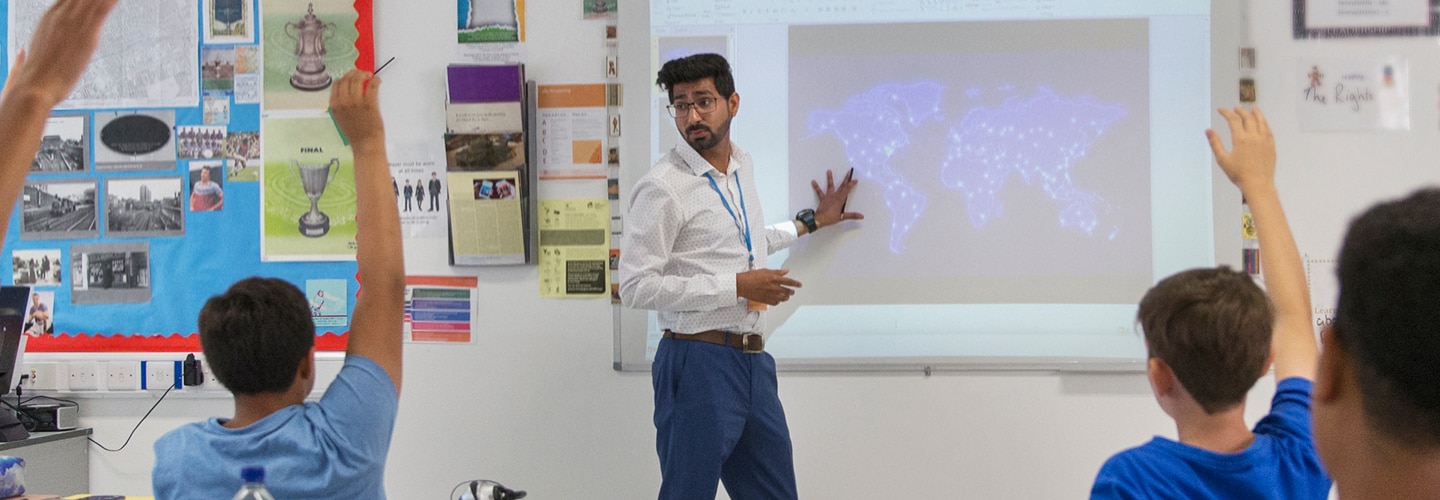
A teacher stood at the front of a class with a book, pointing at a student. Students are sat at desks with their hands raised.

Reading time: 4 minutes

As a language teacher, your goal is not just to impart knowledge but to guide your students on a transformative journey toward fluency. Assessing and tracking learning progress is a dynamic process that empowers both educators and learners, rather than being just a routine task.

In today's language learning blog post, we will explore the significance of assessment in language teaching and provide valuable insights on how to track and assess your students' linguistic development.

The benefits

Informed instruction

Regular assessments enable teachers to tailor instruction to meet individual student needs. Identifying strengths and weaknesses helps educators adapt teaching methods, promoting a more personalized and effective learning experience.

Motivational tool

Assessment results can be very useful in motivating students. Even small progress should be acknowledged as it can boost their confidence and encourage a positive attitude towards learning. It is important to share success stories, celebrate achievements and foster a culture of continuous improvement within your language classroom.

Feedback for growth

Assessment feedback can help students improve their skills by giving them a clear idea of their strengths and weaknesses. Teachers can use this feedback to encourage students to take responsibility for their learning journey and foster a growth mindset that is resilient even in the face of linguistic difficulties.

Tracking and assessment methods

Diverse assessment methods

Embrace a variety of assessment methods to capture the multifaceted nature of language learning. Beyond traditional exams, integrate speaking assessments, project-based evaluations and collaborative activities. This diversity ensures a comprehensive understanding of your students' language proficiency.

Example: Consider assigning projects that involve researching, creating presentations and demonstrating creative expression (like plays or videos) in the target language. Assessing various aspects such as language skills, creativity and critical thinking. Design projects around your class's interests and motivations.

Formative assessments

Integrate formative assessments into your teaching strategy. These ongoing evaluations, such as quizzes, class discussions and short writing assignments, provide real-time feedback. For instance, if you notice that your students are struggling with a particular concept, you can use formative assessments to evaluate the effectiveness of your teaching approach and make necessary adjustments.

Example: Conduct regular quizzes, polls or short assessments during class to evaluate students' understanding. Use quick checks to gauge student understanding to adjust teaching methods accordingly. This will help you tailor your teaching methods in real time to ensure effective lesson delivery.

Portfolio assessment

Encourage students to maintain language portfolios. These portfolios can include samples of their written work, recorded conversations and reflections on their language learning journey. Portfolio assessments offer a holistic view of progress and provide students with a tangible record of their achievements.

Example: Conduct periodic portfolio reviews to discuss progress and set goals. Encourage frequent reflection to show learners how far they've come. 

Self-assessment

Empower students to self-assess. Encourage reflection on their language skills, setting goals and evaluating their own progress. Self-assessment also fosters a sense of responsibility and independence in the learning process. When students take ownership of their progress, they become more invested in their education and are more likely to achieve their goals.

Example: Provide your language students self-assessment checklists or rubrics for them to evaluate their proficiency and set personal goals.

Technology integration

Use language learning platforms' analytics and progress reports for data-driven decision-making. It's great to help save time and provide reliable and up-to-date reports. 

Example: Using online platforms for assignments, quizzes and collaborative projects with built-in tracking features. Our learning platforms, Pearson English Connect (PEC) and MyEnglishLab (MEL), can help you keep track of your students' progress.

Cultural projects

Cultural projects are a great way to engage students in the broader context of the language they are learning. These projects could involve researching cultural practices, traditions or historical events related to the language.

Students learn how to navigate cultural nuances, understand diverse perspectives and effectively communicate in different cultural contexts by participating in cultural projects. Such projects help students form a personal connection with the language and bridge the gap between theory and real-world application, making language learning more meaningful.

Example: Assign projects that explore certain cultural aspects of the target language, encouraging a deeper understanding of context. These can be evaluated on how well it's presented, its clarity, and how factually accurate it is.

Peer reviews

Peer review is a valuable practice that promotes a sense of community within the language learning classroom. It involves students working together and offering constructive feedback to each other, which leads to the development of their language skills. It creates a collaborative learning environment where students actively participate in the improvement of their peers, learning from one another's strengths and weaknesses.

Students often put more effort into assignments when they know peers will review their work. This increased accountability can lead to higher-quality work and a greater commitment to language learning.

Example: Implement peer review sessions where students provide feedback on each other's written or spoken assignments. Encourage constructive criticism to enhance collaboration and learning. To accommodate shy students, this process can be anonymous.


Assessing and tracking language learning progress is integral to effective language teaching, requiring continuous interaction between educators and students.

By utilizing diverse assessment methods and fostering a culture of constant improvement, language teachers play a vital role in guiding their students toward linguistic fluency. Helping language students celebrate their successes and overcome challenges helps them to be not only proficient speakers but also lifelong language enthusiasts.

As well as our learning platforms, PEC and MEL, we offer various English assessments and courses to help track your learner's progress and to certify their English level, so make sure to explore our range to find the best solution for your students.  

More blogs from Pearson

  • Children and teacher looking at a tablet smiling and laughing in the classroom

    Incorporating reflection activities to kickstart the New Year

    By Charlotte Guest
    Reading time: 5 minutes

    A new calendar year offers a natural reset, an opportunity for your learners to pause, look back and lean forward with purpose. Reflection isn’t just a feel-good exercise; it’s a powerful learning accelerator. It helps students consolidate knowledge, develop metacognition and set actionable goals. It also helps you, the teacher, gain insights into what’s working, what needs adjustment and how to sustain momentum. Below are activities that fit into real classrooms and real schedules, with variations for different age groups and subject areas.

    Why start with reflection?

    Reflection builds self-awareness and agency. When students name what they’ve learned and where they want to grow, they’re more likely to persevere and achieve. For you, structured reflection provides a clearer picture of learning gaps and strengths, enabling intentional planning. Think of these routines as small investments that pay off in greater engagement, clearer goals and smoother instruction all year long.

    Quick wins you can do in one class period

    Rose–Thorn–Bud

    • Purpose: Recognize successes ("rose"), challenges ("thorn") and emerging opportunities ("bud").
    • How-to: Give students three sticky notes or three boxes on a digital form. Prompt: “One thing that went well last term”, “One challenge I faced”, “One idea I want to try”.
    • Teacher moves: Sort responses to identify class-wide trends. Celebrate roses. Normalize thorns with a growth mindset. Turn buds into a short list of new strategies to try together.
    • Variations: Pair-share for younger grades; content-specific (rose = strategy that helped with fractions, thorn = multi-step problems, bud = practice with word problems).

    Start–Stop–Continue

    • Purpose: Turn reflection into immediate behavior and study habits.
    • How-to: Ask students to list one habit to start, one to stop, and one to continue this term. Provide sentence stems: “I will start…”, “I will stop…”, “I will continue… because…”
    • Teacher moves: Have students star the one they’ll commit to this week and set a check-in date. Invite a brief self-assessment after two weeks.
    • Variations: Subject-specific (start annotating texts, stop cramming, continue reviewing notes nightly).

    3–2–1 Learning snapshot

    • Purpose: Capture key learning quickly.
    • How-to: Prompt with “three concepts I understand now”, “two questions I still have” and “one resource or strategy that helped me learn”.
    • Teacher moves: Use the “two questions” to plan mini-lessons or office-hours topics. Share a class list of “one resource” to build a peer-sourced toolkit.
    • Tools: Paper exit tickets or a quick digital form, whatever is easier and quicker for you. 

    Peer reflection interviews

    • Purpose: Build belonging and metacognition through conversation.
    • How-to: In pairs, students ask: “What’s one thing you’re proud of from last term?”, “When did you feel stuck – and how did you get unstuck?”, “What’s a goal you have for this month?”
    • Teacher moves: Teach active listening (eye contact, paraphrasing) and capture themes. Close with a 2-minute write: “One insight I gained from my partner.”
    • Variations: Record short audio or video reflections for classes using multimedia tools.

    Two stars and a wish (Portfolio refresh)

    • Purpose: Reflect using evidence.
    • How-to: Students choose two artifacts from last term to highlight ("stars") and one area to improve ("wish"). They attach a brief reflection: what it shows and why it matters.
    • Teacher moves: Model with your own sample. Provide a rubric for reflective depth (specificity, evidence, next steps).
    • Variations: Early grades can draw or use photos; older students link to digital artifacts.

    Deeper dives for week-one routines

    Personal learning timeline

    • Purpose: See growth over time and connect effort to outcomes.
    • How-to: Students draw a timeline of the term: key topics, pivotal moments, breakthroughs, setbacks and supports that helped. They mark future milestones: “By Week 4, I will…”
    • Teacher moves: Guide students to identify strategies that worked (study groups, retrieval practice), then add them to their plan. Create wall or digital gallery for optional sharing.
    • Extension: Have students revisit the timeline mid-term to add new milestones.

    Goal-setting conferences

    • Purpose: Craft specific, measurable goals with support.
    • How-to: Provide a short goal sheet: “My priority skill”, “Evidence I’ll use”, “Daily/weekly actions”, “Support I need”, “Check-in date”.
    • Teacher moves: Rotate through 3-minute conferences to coach students toward clarity and feasibility. Encourage process goals (such as practicing 10 minutes daily) alongside performance goals.
    • Variations: Small-group coaching if individual conferences aren’t feasible; student-led with peer feedback for time efficiency.

    Class norms refresh (Community agreements)

    • Purpose: Re-center your classroom culture.
    • How-to: Invite students to propose two norms that helped learning and one to adjust. Synthesize into 5–7 concise agreements.
    • Teacher moves: Co-create routines that enact the norms (silent start, exit reflections, peer tutoring). Post and practice with brief weekly check-ins.
    • Equity lens: Ensure norms protect voice and belonging, not just compliance.

    Make it stick: Implementation tips

    • Keep it short and regular. Even just 5–10 minutes a week builds powerful habits.
    • Use sentence stems to reduce cognitive load: “A strategy that helped me was…”, “Next time I’ll try…”
    • Celebrate progress. Highlight student reflections that show growth, not just perfection.
    • Close the loop. Bring reflections back into instruction: “I noticed many of you asked about synthesizing sources—let’s start with a mini-lesson.”
    • Make it visible. A reflection wall or digital board keeps goals at the forefront.

    Inclusive informed considerations

    • Offer multiple modalities: writing, drawing, audio or a private form. Choice increases safety and authenticity.
    • Normalize struggle and curiosity. Use language that validates effort: “Challenges are data, not defects”.
    • Protect privacy. Invite, but don’t require, public sharing. Summarize themes anonymously.

    Using tools you already have

    Many of you use courseware, dashboards and assessment reports. Use them to ground reflection in evidence:

    • Pull a quick progress report to anchor 3–2–1 reflections in actual performance trends.
    • Use item analysis to identify common thorns and plan targeted practice.
    • Invite students to look at their data with you during goal-setting conferences.

    A quick start plan for week one

    • Day 1: Rose–Thorn–Bud plus a short norms refresh.
    • Day 2: 3–2–1 Learning Snapshot tied to last term’s key skills.
    • Day 3–4: Goal-setting conferences; peers do Two Stars and a Wish.
    • Day 5: Personal Learning Timeline and a brief share-out; set check-in dates.

    Reflection is a powerful tool. Begin small, stay consistent and let students’ feedback guide you. With clear prompts, support and the right tools, including Pearson’s, you can turn New Year’s energy into steady progress for your class.

  • University students stood in a class together working on tablets

    How PTE Express helps agents beat admissions deadlines

    By Alice Bazzi
    Reading time: 2 minutes

    For students applying to US universities, timing is everything. Admissions deadlines can be tight, and delays in English proficiency scores can lead to missed opportunities. Your reputation as an agent depends on helping students have a seamless process, which includes meeting timelines.

    Why speed matters for US admissions

    US institutions often require English test scores before issuing offers or processing visas. Traditional testing methods can take days or even weeks for results, creating stress for students and agents. PTE Express changes the game by delivering certified results within 48 hours, ensuring students can submit scores quickly and confidently.

  • Young students in a classroom raising their hands and smiling

    Putting inquiry-based learning into practice with young learners

    By Jeanne Perrett
    Reading time: 5 minutes

    What are the benefits of inquiry-based learning?

    Inquiry-based learning is all about using questions to generate interest. Starting a class with a question helps young learners engage with the topic straight away. Introductory questions can be big or small, and here are some examples of big questions: 

    • What makes someone a hero? 
    • Why do we go to school? 
    • Why do people live in cities? 

    These open questions get students thinking about lots of different aspects of each topic. However, small questions can work as well: 

    • What is your favourite superhero called? 
    • Do you like your school? 
    • Do you live in a village or a city?

    These closed questions don’t necessarily lead to further discussion. However, they are a way to introduce a topic and give learners an easy way to contribute without the pressure of getting an answer right or wrong. 

    When students are invited to share their opinions, they feel that their contributions are valuable. It also lets the teacher gain insight into what the learners already know. 

    How can we help students explore big questions?

    Inquiry-based learning can support students to answer these big questions in an easy and satisfying way, including:

    • Making notes on their ideas, or drawing a sketch
    • Working in pairs or groups to share ideas
    • Using a bulletin board

    A bulletin board fits in well with the concept of inquiry-based learning. The teacher pins a big question to the center and then encourages learners to add their notes, sketches and ideas to the board. 

    Because there are many possible answers to the big questions, it’s important to emphasize that learners can change their minds as they learn more: after all, that’s the whole point of learning.

    The Now I Know! series follows this structure. Each unit has language aims based around a big question to get learners thinking more deeply.

    How can inquiry-based learning work in practice?

    You can put it into practice in your own classroom by starting off with a topic, and then thinking of a big question to get things started. So, for example, if your topic is outer space, your big question could be: Why do we explore space? 

    That will get your students thinking and sharing their knowledge about space travel, moon landings, astronauts, aliens – you might be surprised at some of their answers. Ask them to write notes, do a sketch or do a mind map, then pin their contributions to your bulletin board. 

    There are lots of options for follow-up activities: 

    • Assign pairs a planet from the solar system to research
    • Share an interesting fact about an unnamed planet and encourage students to research which planet it is
    • Allow students to play to their strengths: one student can draw the planets and another can name their order from the sun (for example)
    • Create a game: get learners to write two false facts and one true fact about their planet, and the rest of the class has to guess which is which

    Once you’ve piqued their interest and the students are excited about the topic, it’s time to channel that enthusiasm into a more focused activity. For example, you could introduce the story of the Golden Record on the Voyager space probe. At the time of the Voyager launch in 1977, a phonograph record was included onboard which contained, in the words of then-president Jimmy Carter, “a present from a small, distant world, a token of our sounds, our science, our images, our music, our thoughts and our feelings.” The record included music from different cultures, greetings in 55 languages and sounds of the natural world. There were also 115 images of life on Earth, many annotated with explanations. 

    Bring it back to inquiry-based learning, and instead of telling students what is on the record, ask them what they think might have been included. Again, they can add their ideas to the bulletin board. 

    Follow-up activities could include: 

    • Making their own recording for an interplanetary space voyage
    • Doing a sound quiz where students record sounds and ask their classmates to guess what each sound is 
    • Making a modern playlist for aliens to listen to 
    • Taking photographs of their daily lives and adding comments, just as the NASA committee did, and doing more research into the Voyager space probe
    • Checking its progress through interstellar space on the NASA website

    This is just one example of a topic, but any topic can be treated in the same way. If you, as a teacher, share your curiosity and enthusiasm with your students, they’ll pick up on that and become enthused in turn.

    How do we nurture enquiring minds?

    The spirit of enquiry is one of the most important things we can instill in our young learners. Inquiring minds are innate - just think of the way toddlers ask “Why?” about everything. The mistake that adults can sometimes make is to reply to the ‘why’ questions with an answer, when actually, sometimes children just want to have a discussion. 

    As educators, it’s important to reply to children’s questions by opening up a discussion, no matter how abstract the question. For example, if a toddler asks something like “Why a leaf?”, you can expand that conversation to talk about colours, trees, nature, things that grow... the possibilities are endless. 

    In fact, this is our main role as educators: to facilitate and continue those conversations, to pique our learners’ curiosity, to share our enthusiasm and wonder rather than simply teach the correct answer.

    Show your students that you don’t have to find immediate answers, that there’s no such thing as a silly answer. It’s okay to wonder and muse. In your lessons, focus not on giving students the answers but on equipping them with the tools to research and find them themselves. In this way, you’ll create lifelong learners with a passion for education.