
Teacher technology adoption: What’s age got to do with it?

Jennifer Williams
A older techer sat with students, in particular looking at a laptop with one of the students
Reading time: 4 minutes

Educators, by design, are innovators. Living and working in a constant state of beta, teachers bring to the classroom a natural desire to explore and better understand new practices and methodologies to support students in their search for knowledge.

Guided by an internal drive to make the world a better place and powered by the rewards of working daily with the youth that can create that positive change, teachers collectively are part of a profession different from any other. Within one classroom on any single day, a teacher can become a scientist, a historian, an inventor, or a scholar. Over time, whether in a one-room schoolhouse a century ago or in a technology enhanced classroom of the digital age, these defining characteristics of “teacher” have seemed to stay constant.

Bridging the generational and digital divide

Today, as citizens of our digital and global world, we are in an extraordinary time where divides are closing and collaboration becomes standard – where differences are truly celebrated and associations are surpassing separations in society. As educators, this change reflects what we have consistently asserted in our classrooms.

Yet, terms like 'generational gap” and “digital divide” suggest a significant separation between us as teachers and our students. In truth, teachers and students are increasingly using a shared language of innovation and exploration. Rather than sticking to notions of a technology-based generational divide, many are transcending the labels of “digital immigrants” and “digital natives”.

This is further reinforced by current research demonstrating that technology adoption in education has less to do with age and instead is based more on exposure and experience (Bennett & Maton, 2010; Bullen, Morgan, & Qayyum, 2011; Guo, Dobson, & Petrina, 2008; Helsper & Eynon, 2010).  As opposed to a focus on divides, this new evidence offers supportive pathways of possibilities to bring together older and younger generations in the process of learning in our world through exploration and wonder.

Embracing skill development

Moving attention away from a fixed age factor to emphasizing a continuum of proficiency based on exposure and experience enables teachers of all ages to identify as part of this digital age of education. Though digital technologies are fixtures in the daily lives of many (if not most) of our students, the ways students use technologies are not always consistent.

Students of today – like students of previous generations – continue to need the guidance of teachers in finding ways to take and apply their understanding of technology to effectively convey perspectives with the world, influence the opinions of others, and contextualize and synthesize information in meaningful ways.

Timeless lessons from teachers

Teachers as innovators – young and old, tech-savvy and tech-novice – have extraordinary gifts to bring to their students, who are also navigating through digital environments. Though there are countless lessons teachers bring to students, here are several timeless ones that transcend any generation of teaching. Teachers guide students to use advanced technologies so that they can be...

Critical consumers

Today, students in our classrooms are bombarded with information at nearly every moment in time. With basic searches for information often leading students in multiple directions, research at every level has now become a highly complex and sophisticated process. The result is that we now see learning practices shifting from finding answers to discovering more questions.

Teachers can guide students to evaluate and consume information critically. By promoting transparency and sharing, they help learners consider context and sources, reason with evidence and build knowledge.

Creators of rich content

As classrooms advance as blended learning environments, seamless integration of technologies and innovative teaching practices offers students opportunities to transform from passive learners to active content creators. With countless digital tools available for content creation, students can seek guidance from teachers on matching the best tool to a particular communicative purpose.

Teachers who are skillful in creating synthesized messages can show students ways to comprehend and compose with combinations of digital technologies. Less in the role of directing lessons, the teacher becomes a catalyst for learning, inspiring students to work creatively and collaboratively to solve problems and respond to instructional lessons as producers of information.

Centered on relationships

A defining quality of a master teacher is the ability to create a positive learning community built on empathy and understanding. The focus on relationships in these classrooms models the continued importance of valuing alliances and friendships.

Soft skills, such as joy, honesty, trust and respect, become even more essential as our students continue to interact in a highly networked and diverse world. Balance, too, becomes a critical area for discussion as students look to divide attention, time and social-emotional reserves between onscreen and in-person experiences.

Within responsive classrooms and digital learning spaces that keep emphasis on the formation of relationships, teachers can offer opportunities for students to develop through collaboration, teamwork, solidarity and conflict resolution.

Resilient in endeavors

Our students are looking out onto a world where anything is possible. Digital age technologies are empowering students to believe: “if you can dream it, you can do it”. The impossible is within reach, and a mindset of grit and determination moves sparked ideas to a place of accomplishment and excellence.

Through the creation of learner-driven classrooms centered on the student, teachers can help guide students to narrow their interests and ultimately find their passions. With relevance and authentic purpose, teachers can connect students in the process of learning through design thinking and trial and error – shifting the outlook from fear of failure to resilience and 'stick-to-itiveness' to advance learning to a place of discovery and invention.

And it is this mindset – a position of inquiry and exploration – held by students and teachers, young and old, that can show that great will come from risk. We all just need to be ready to try.

References

Bennett, S. J. & Maton, K. (2010). Beyond the 'digital natives' debate: towards a more nuanced understanding of students' technology experiences. Journal of Computer Assisted Learning, 26(5), 321-331

Bullen, M., Morgan, T. & Qayyum, A. (2011). Digital learners in higher education: generation is not the issue. Canadian Journal of Learning & Technology, 37(1)

Guo, R. X., Dobson, T. & Petrina, S. (2008). Digital natives, digital immigrants: an analysis of age and ICT competency in teacher education. Journal of Educational Computing Research, 38(3), 235–254

Helsper, E. J., & Eynon, R. (2010). Digital natives: Where is the evidence? British Educational Research Journal, 36(3), 503-520

More blogs from Pearson

  • A teacher stood in front of a whiteboard teaching a class
    Lesson tips for Special Educational Needs
    By Richard Cleeve
    Reading time: 5 minutes

    Creating an inclusive classroom is essential for helping every student reach their full potential. Students with Special Educational Needs (SEN) and neurodiverse learners bring unique strengths, perspectives and ways of thinking to the classroom. However, many teachers feel unsure about how to adapt lesson plans to effectively meet diverse learning needs.

    By implementing inclusive teaching strategies, educators can create engaging learning environments that support students with ADHD, dyslexia, autism spectrum disorder (ASD), anxiety disorders and other learning differences. These approaches not only benefit neurodiverse learners but often improve engagement and outcomes for the entire class.

    Drawing on insights from experienced SEN Coordinator James Laidler, this post explores practical lesson planning strategies that can help teachers create more accessible, supportive and effective learning experiences. Many of these tips are also great for keeping all students engaged, SEN or otherwise.

    Defining Special Educational Needs

    A child has Special Educational Needs (SEN) if they have a learning difficulty or disability that calls for special educational provision. Learners with conditions such as autistic spectrum disorder (ASD), attention deficit hyperactivity disorder (ADHD), dyslexia, dyspraxia or anxiety disorders come under this framework.

    Inclusive lesson tips for neurodiverse students

    Although teachers want to create inclusive lessons, many feel ill-equipped to support neurodiverse students. To help, James offers some tips for lesson planning that aim to turn learning diversities into strengths.

    Attention Deficit Hyperactivity Disorder (ADHD)

    ADHD is a condition that can include symptoms such as inattentiveness, hyperactivity and impulsiveness. Students with this disorder may have a short attention span, constantly fidget or act without thinking.

    Lesson tips for ADHD students:

    Movement breaks – Students with ADHD may struggle to sit still for extended periods of time. Include short breaks in your lessons that offer them the opportunity to get up and move around at regular intervals.

    Group work – To keep learners active and engaged, include group work in class. This means they don’t have to focus on the board for too long.

    Dramatize lessons – A really effective activity is to bring drama into the classroom. For example, students can act out role plays or other fun drama-based activities. It keeps them motivated, holds their attention and can be fun for all of the class.

    Dyslexia

    Dyslexia primarily affects the skills involved in accurate and fluent reading and spelling. It may affect a person’s phonological awareness, verbal memory and verbal processing speed.

    Lesson tips for dyslexic students:

    Visual aids – Learners with dyslexia tend to have excellent visual memories. Try bringing in pictures to illustrate ideas or add them to lengthy texts to help students when doing reading comprehension exercises.

    Font and spacing – When setting reading tasks, simply changing the font, enlarging the font size and double-spacing are hugely beneficial to dyslexic students. Simply adapting the text can make their learning experience much easier.

    Text-to-speech software – Using specialized text-to-speech software often provides significant support to those who struggle with reading or digesting text on computer screens. Tools such as ClaroRead or Kurzweil 3000 can help improve accessibility.

    Autism Spectrum Disorder (ASD)

    ASD is a developmental condition that involves challenges in social interaction, speech and nonverbal communication, as well as restricted or repetitive behaviors. The severity of symptoms is different in each person.

    Lesson tips for ASD students:

    Encourage systematic skills – Often students with ASD may be more systematic than other students. This means they favor routines, regular processes and predictable activities. Try bringing out these skills by asking students to spot patterns, analyze numbers or evaluate data.

    Talk about interests – Autistic students may have specific interests they love to research. Engage them by getting them to talk about their hobbies or ask students to create projects on a topic they choose that they can present to the class.

    Teaching online or blended learning – If you have a learner who is struggling socially at school, it may be an option to include hybrid or blended learning. This takes away some of the social and emotional challenges of school and people interaction, which can benefit ASD students.

    Anxiety Disorders

    Anxiety disorders differ from normal feelings of nervousness or anxiousness. They involve intense fear or anxiety that can significantly affect a student’s ability to learn. This condition has become increasingly common in young people and can impact concentration, participation and confidence in the classroom.

    Lesson tips for students with anxiety disorders:

    Changing language and terminology – Our education system is often highly exam-driven, which can create stress for students. By offering reassurance, guidance and motivation, teachers can help reduce feelings of anxiety.

    Talk openly – Encourage learners to discuss their feelings if they are struggling. They can do this with you, a classmate or a support worker at the school. If they open up to you, focus on strategies to combat negative feelings and emotions.

    Mindfulness techniques – Try adding five minutes at the start of the day for guided meditation or breathing exercises. This can help students begin the day in a calm and relaxed manner.

  • Teenage students looking at a phone together outside
    Six easy ways to learn English
    By Steffanie Zazulak
    Reading time: 3 minutes

    Learning English can open doors to better career opportunities, travel experiences and global communication. However, staying motivated while learning a new language can sometimes be challenging. The good news is that there are many easy ways to learn English that fit into your daily routine.

    Whether you're a beginner or looking to improve your fluency, these practical English learning tips will help you build confidence and develop your speaking, listening, reading and vocabulary skills faster.

    1. Play word games to build your English vocabulary

    One of the most enjoyable ways to learn English is through word games. Games like Scrabble, Words With Friends, crossword puzzles and word search apps can help you expand your English vocabulary while having fun.

    Word games encourage you to think in English, recognize spelling patterns and learn new words naturally. If you're studying with friends or classmates, make it a regular activity to practice together and challenge each other's vocabulary skills.

    Benefits:

    • Improves vocabulary retention
    • Enhances spelling skills
    • Makes learning English enjoyable
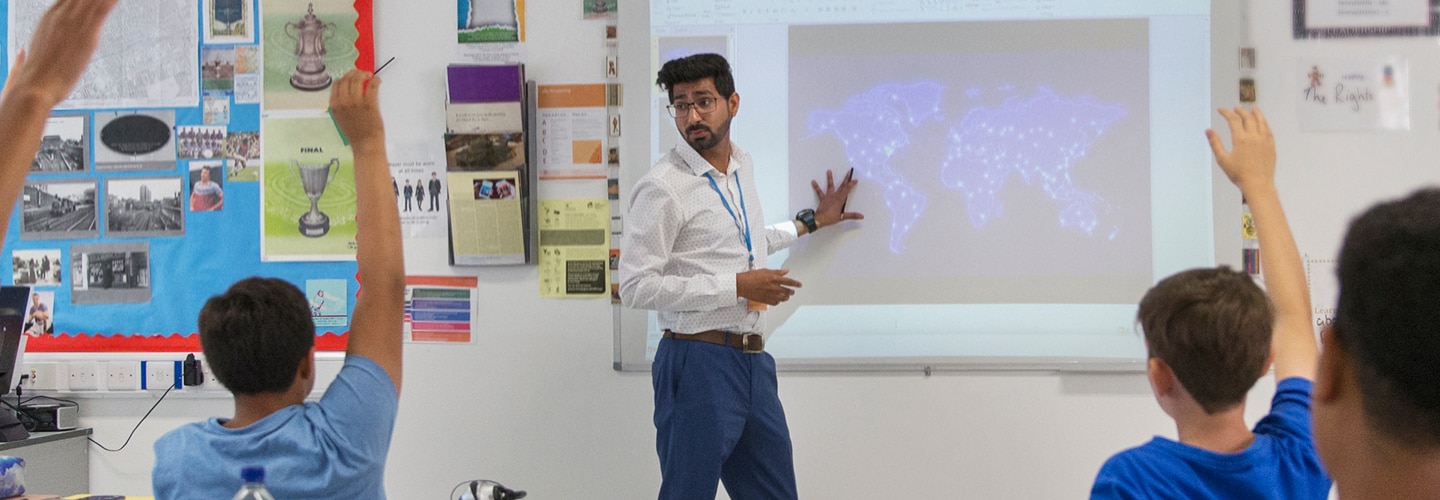
  • A teacher working on a interactive whiteboard and students raising their hands
    Universal Design for Learning (UDL) in language education
    By Charlotte Guest
    Reading time: 5 minutes

    Language classrooms are naturally diverse. Some students are confident speakers but struggle with writing. Others may be multilingual learners, students with learning differences or learners who simply need more time and support. Universal Design for Learning (UDL) offers a practical framework for meeting these varied needs without creating separate lessons for every student.

    UDL was developed by CAST, a nonprofit organization focused on education research and development, and is based on the idea that barriers to learning often exist in the design of instruction rather than in the learners themselves. Instead of expecting all students to learn in the same way, UDL encourages teachers to provide flexible pathways that help everyone access and engage with learning. According to CAST's overview of UDL , UDL aims to improve learning for all students through flexible goals, methods, materials and assessments.

    The three core principles of UDL

    At the heart of UDL are three principles that help teachers design more inclusive learning experiences.

    1. Multiple means of engagement

    This principle focuses on motivation and participation. Students are more likely to learn when they see value in what they are doing and have some choice in how they learn.

    In a language classroom, this might include:

    • Allowing students to choose discussion topics related to their interests
    • Using authentic materials such as podcasts, songs, news articles or social media posts
    • Offering different levels of challenge within the same activity

    When students feel connected to the content, they are more willing to take risks and use the target language. The CAST UDL Guidelines provide detailed recommendations for increasing learner engagement and motivation.

    2. Multiple means of representation

    Students do not all process information in the same way. UDL encourages teachers to present information through different formats so that learners have several ways to understand new content.

    For language teachers, this could mean:

    • Combining written text with audio recordings
    • Using images, diagrams, gestures and videos to support comprehension
    • Pre-teaching key vocabulary before introducing a complex reading task
    • Providing transcripts for listening activities

    These supports are not only beneficial for students with identified learning needs; they often improve comprehension for the entire class. CAST's guidance on representation highlights how varied formats can support learner understanding.

    3. Multiple means of action and expression

    Students should have different opportunities to demonstrate what they know. Traditional language assessments often favor a narrow set of skills, but learners may show understanding in many ways.

    Examples include:

    • Recording an oral presentation instead of delivering it live.
    • Creating a video, podcast or digital story.
    • Participating in an interview or conversation.
    • Producing written work using supportive technologies.

    The learning objective remains the same, but students have more than one way to demonstrate achievement. The educational resource Understood.org explains this principle in its guide to UDL.

    Why UDL matters in language education

    Language learning involves reading, writing, listening, speaking, vocabulary development and cultural understanding. Because so many skills are involved, barriers can emerge in different places for different learners. UDL helps teachers anticipate these differences and design lessons that provide access from the start rather than adding accommodations later.

    Research from CAST suggests that designing for learner variability benefits all students, not just those with identified educational needs. This is particularly relevant in language classrooms, where students often have diverse linguistic backgrounds, proficiency levels and learning preferences.

    Importantly, UDL is not about creating separate lessons for every learner. Instead, it is about building flexibility into lesson design so that a wider range of students can participate successfully.

    UDL strategies for language teachers

    If you are new to UDL, start small. Consider adding one or two flexible options to your existing lessons.

    Here are a few simple ideas:

    • Provide both written and spoken instructions.
    • Use captions on videos whenever possible.
    • Offer vocabulary lists with visuals and examples.
    • Allow students to choose between speaking or writing for some tasks.
    • Include collaborative and independent learning opportunities.
    • Use digital tools that support translation, text-to-speech or speech-to-text functions.
    • Clearly communicate learning goals before each lesson.

    For additional classroom examples, CAST's UDL Guidelines website contains guidance that teachers can adapt across different age groups and language-learning contexts.