Fostering self-care and wellbeing through the world of reading

Nicola Schofield
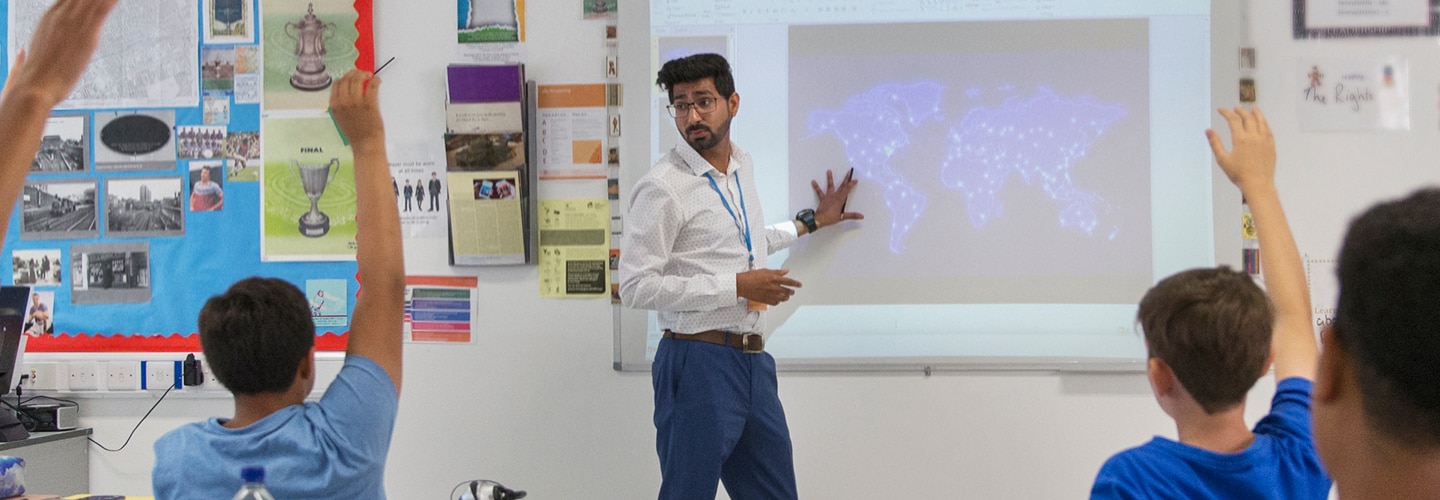
A teacher sat outdoors with young students looking at a book togethr
Reading time: 6 minutes

Growing up is an exciting time. Children are curious and open-minded, and every day welcomes a new thing to learn. They are constantly exploring and discovering themselves and the world around them. But children also have to face many challenging times too as they get older. It is, therefore, important that we teach our young people to be aware of their own wellbeing and self-care, what they can do to lead a balanced and healthy life, and give them the tools they need to help them in difficult times, both mentally and physically.  

Boosting children's wellbeing with reading
Play
隱私和Cookies

觀看此視頻表示你同意培生可於一年內使用你觀看的數據以作分析及營銷之用。你可以通過清除cookies撤銷設定。

What are the key factors to a child’s wellbeing?

Have a look at Maslow’s Hierachy of Needs below. It describes people’s basic needs for good mental and physical wellbeing.

Self-actualization – Children need to be aware of their own feelings and understand how to process them.

Esteem – Children need to grow in confidence, feel valued and receive praise for their achievements. Having hobbies and interests too is key.

Love/belonging – Children need to develop meaningful relationships or feel part of a community. This could be friendships, family, a class, a club or school.

Safety – Children must feel safe in their surroundings.

Physiological – Children must have a home and access to food, water, sleep and exercise.

However, do children know how to look after their wellbeing? 

Ask them to make a list and share your ideas together as a class or as a family. What do they do to look after their mental and physical health? Are there any things that they do lots of or don’t do enough of? What can they start doing or try to do more of?

Alternatively, you could also ask them to put the following items in order of importance. Ask them, ‘What makes you happy?’, ‘What is important to you?’ 

  • Food
  • Water
  • House
  • School
  • Friends
  • Family
  • Exercise
  • Sleep
  • Hobbies 

How can Disney Kids Readers help children’s wellbeing?

Let’s refer back to the hierarchy of needs and see how they can link into reading.

Self-actualization – Disney Kids Readers can help increase empathy and self-awareness through reading about other characters’ emotions and putting ourselves in their shoes. It can help us to understand and process our own emotions too. For example, in Inside Out, we see Riley struggle with her emotions when her family moves to San Francisco. Through the characters of Joy, Sadness, Fear, Anger and Disgust, we can see how normal it is to feel a range of emotions and not feel happy all the time.

Esteem – Disney Kids Readers also help children to develop confidence and self-esteem as they progress through the levels. By completing the wide range of activities at the end of the books, children can see that they are learning and improving their English skills as well as having fun reading a book. 

Readers can also help us navigate difficult moments in life and teach us resilience and strength in challenging times. When we read the stories, we see how the characters overcome obstacles and deal with their problems. This can teach children key lessons and help them tackle their own problems in the real world.

For example, many of the characters go through difficult times to which children can relate. In The Jungle Book, Mowgli is scared but then his friend Baloo comes to help him. In Frozen II, Elsa goes on a difficult journey to restore justice for the people of Arendelle and The Enchanted Forest. 

Love/belonging – Reading Disney Kids Readers as a class, in pairs, or as a family can really strengthen relationships and a sense of belonging, which is such an important part of children’s development. Sharing a book is something special that can allow people to develop common interests and therefore make children feel that they are part of a wider community.

Safety – Children can feel safe and more secure when a parent or a caregiver reads to them before bed. Disney Kids Readers are perfect bedtime stories and help children to fall asleep listening to their favorite Disney characters on exciting adventures. Also, in times of stress, reading can help reduce anxiety, allowing children to enjoy the present moment and escape the real world for a little while.

Physiological – Reading exercises your brain. In addition to physical exercise, reading is an excellent mental workout which is so important to children’s health. Ask the children to memorize some pages from the reader and recite it without looking or ask them to memorize the phonics rhyme on the phonics page. You could also ask them to memorize the key words from the glossary list and see how many they remember.

Activity ideas

Now try out some of the activities below which can be linked to the Readers which will help your children/young learners focus on their wellbeing.

1. Paint a scene

This activity is calm, relaxing and mindful for the children to complete. The world is a busy place, and this activity links in with the idea of self-actualization and esteem. Painting or drawing keeps our mind focused on one task, and reduces stress and anxiety. It can help us process difficult emotions and can cheer us up when we are feeling down.  

Encourage your young learners to paint or draw a peaceful scene that they can imagine themselves in. It could be a beach, a forest, or even outer space. This activity allows children to express their creativity and imagination while also promoting relaxation and mindfulness.

Need: Self-actualization, Esteem

2. Reading emotion diary

Self-awareness is such a useful tool for our wellbeing – through this activity, the children take a moment each day to read a few pages of a book and then look inside themselves to think about how they are feeling before and after reading. This is powerful, as over time the children will understand that reading is a good way to calm the mind and manage emotions – something that can help them improve their own wellbeing and feel safe. 

Encourage your learner to write down their feelings in a diary after reading and reflect on how the reading has affected their emotions. This activity promotes self-awareness and emotional intelligence, which are crucial for maintaining good mental health.

Need: Self-actualization, Safety

3. Reading emotions

Emotional intelligence is such an important part of life. Understanding how someone is feeling through body language, such as facial expressions, gestures and body movements, can be useful when someone is sad, angry or upset. It can help us decide what they need and can help them feel listened to, loved and valued. In this activity, the children practice this by analyzing the characters’ emotions. It will help children build confidence when dealing with difficult or sensitive topics with family and friends. 

Choose a Reader with a diverse range of characters and ask your learner to identify and describe the emotions shown by each character. This activity promotes empathy, communication skills and social-emotional learning.

Need: Love/belonging, Esteem 

4. Guess the scene meditation

This activity is a great exercise for the brain. It helps children to visualize and picture different surroundings in their minds and imagine different smells, sounds and textures, and bring them to life. As the children’s minds are focused on one thing, they begin to relax and feel calm. This activity can be a great tool to use before bedtime to help children fall asleep peacefully.

Guide your learners through a guided meditation where they imagine themselves in different peaceful scenes. You can also ask them to create their own scene and describe it in detail. This activity promotes relaxation, mindfulness and creativity.

Need: Self-actualization, Safety

5. Develop resilience

In every story there is a lesson to be learned, and through this activity children learn how to deal with difficult situations through the characters. It teaches children that although there are hard times in life, if we are patient, work together and show resilience, then we can work through our problems.  

Choose a Reader with characters facing challenges and discuss with your learners how the characters handle the situation. Encourage them to think of ways they can apply this to their own lives when facing difficulties.

Need: Belonging, Esteem 

6. Create an exercise routine

This activity is creative and fun and will get the children moving and laughing at the same time. Physical exercise is so important to our wellbeing, so what is better than doing a workout with your favorite Disney character? The children can do these workouts in small groups, with family or as a class. This activity promotes physical health and social bonding.

Choose a few Disney characters and create simple exercises for each one. You can also use props or make it into a game by having the children take turns being different characters.

Need: Physiological

More blogs from Pearson

  • Students looking at notebooks smiling
    Get same-day results with Pearson English Express Test
    By Abi Fordham
    Reading time: 2 minutes

    If you’ve ever taken an English test and found yourself constantly checking your inbox, wondering when your score will arrive, you’re not alone. I worked across Pearson’s social media channels for years, and I heard from students every day who were anxious to know how they did, despite it only being an hour into the standard 48-hour turnaround time.

    That’s why I’m so excited about the Pearson English Express Test - because it gives you something most tests don’t: a score in minutes.

    The score that helps you plan

    Let’s talk about the unofficial score. You’ll see it just minutes after finishing the test. While it’s not certified for university applications just yet, it’s a powerful tool for planning your next move.

    If your score is where you hoped it would be, you can start preparing your application materials with confidence. If it’s not quite there, you’ve got a head start on knowing what to improve, and you haven’t lost time waiting to find out. It’s like getting a sneak peek at your future, and it’s one of the most empowering parts of the Pearson English Express Test experience.

    Fast and reliable certified results

    Of course, you’ll still need your certified score to apply to universities. That’s delivered within 48 hours, after a security review.

    • AI scoring ensures fairness and consistency.
    • Remote proctoring and ID checks keep the process secure.
    • Certified results align with CEFR standards and are trusted by institutions.

    You get speed and reliability – without compromise.

    Why fast English test results matter for students

    When you’re applying to study in the USA, every day counts and you’ll have so many things to tick off your list. You might be juggling deadlines, coordinating with universities, or planning your next big move. The Pearson English Express Test was built to support you, not slow you down.

    It’s fast, fair and designed for students who want to move forward with confidence.

    Ready to take the Pearson English Express Test?

    If you’re looking for a test that gives you answers quickly and helps you plan your next step, this is it.

    Take your test today and experience the difference for yourself.

  • A student and lecturer talking together in a lecture room
    Language education trend predicitions for 2026
    By Charlotte Guest
    Reading time: 4 minutes

    Language education has never been more active or challenging. We've experienced significant changes in technology, changing student needs and higher expectations for practical results. Looking ahead to 2026, the outlook is positive: better tools, clearer skill guides and learning that feels more personal and human.

    Below are nine trends to keep an eye on in 2026 for your language teaching. 

    AI becomes your co-teacher, not your replacement

    Generative AI is moving from novelty to dependable support: drafting lesson variants, generating levelled texts, offering initial feedback on writing and speaking, and freeing you to focus on pedagogy and relationships. The emphasis in 2026 is on ethical, transparent use: you set the learning goals and the guardrails; AI accelerates the workflow.

    Try: Use AI to produce three versions of a reading at different proficiency bands, then validate levels using a recognized framework.

    Data-informed personalization with clear proficiency frameworks

    Teachers want data they can trust and act on. Proficiency frameworks like the Global Scale of English (GSE) make progress visible and instructional decisions simpler, connecting learning objectives, materials and assessments across skills and levels. Expect more “micro-mastery” milestones and dashboards that turn evidence into next-step teaching.

    Try: Map unit outcomes to specific "can-do" statements, then build short practice cycles around those micro-goals. Use GSE-aligned resources to set targets and monitor growth.

  • A girl sitting reading a book cross legged with a teddy bear next to her
    3 perfect holiday readers
    By Charlotte Guest
    Reading time: 3 minutes

    It’s that time of year again. Students are heading off on their winter breaks to spend time with their friends and family. It’s the perfect time to think about what we can do to keep our students motivated to practice their English during the break.

    Reading is a great way for students to expand their vocabulary and improve their language skills from the comfort of their sofas. The problem learners often have, however, is finding a book that is both suitable for their level and entertaining enough to hold their attention.

    Here are three festive readers that you can recommend to your students to keep them busy this holiday season. We have also included downloadable teaching notes and audio samples so you can introduce them in your classes and get an idea of how these could be used as teaching materials.