 Back
BackEnzymes exam


 02:32
02:32
Terms in this set (29)
Enzyme
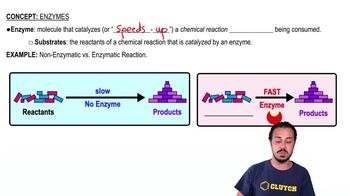
A molecule that catalyzes or speeds up a chemical reaction without being consumed.
Substrate
The reactants in an enzymatic reaction.
What is the role of enzymes in protein synthesis?
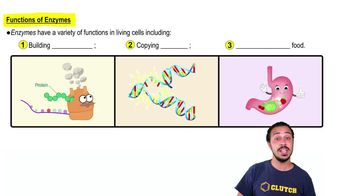
Enzymes help build proteins at a fast rate, such as peptidyl transferase forming peptide bonds.
Denaturation
The process where an enzyme loses its shape and function due to environmental factors.
How does temperature affect enzyme activity?
Temperature can increase or decrease enzyme activity; optimal temperature is crucial for maximum activity.
What happens to enzyme activity at high temperatures?
High temperatures can cause enzymes to denature, reducing their activity.
Optimal Conditions
Specific environmental conditions where an enzyme functions best.
What is the effect of pH on enzyme activity?
Enzyme activity is optimal at a specific pH; too acidic or too basic conditions can reduce activity.
Reactant Concentration
The amount of substrate available for the enzyme to act upon.
How do enzymes assist in DNA replication?
Enzymes help copy DNA quickly and accurately.
Catalyst
A substance that increases the rate of a chemical reaction without being consumed.
What is the function of enzymes in food digestion?
Enzymes break down food in the stomach, speeding up digestion.
Enzyme Activity
A measure of the amount of product produced by an enzyme in a given time.
What happens if the concentration of reactants is too low?
The enzyme will not produce a lot of products.
What is the impact of high reactant concentration on enzyme activity?
It increases enzyme activity until saturation, after which the rate plateaus.
Biological Catalyst
Another term for an enzyme, highlighting its role in speeding up biological reactions.
What is the relationship between substrates and reactants?
Substrates are the reactants in reactions catalyzed by enzymes.
Environmental Factors
Conditions such as temperature, pH, and reactant concentration that affect enzyme activity.
How do enzymes affect the rate of chemical reactions?
They speed up reactions, making them occur much faster.
What is the consequence of enzyme denaturation?
The enzyme loses its shape and function, leading to decreased activity.
Protein Synthesis
The process of building proteins, facilitated by enzymes like tRNA synthetases and Peptidyl transferase.
Why are optimal conditions important for enzyme activity?
Deviations from optimal conditions can reduce enzyme efficiency or cause denaturation.
Chemical Reaction
A process where reactants are converted into products, often accelerated by enzymes.
What is the role of enzymes in living cells?
They catalyze various biochemical processes, including protein synthesis, DNA replication, and digestion.
How does pH affect enzyme denaturation?
Extreme pH levels can cause enzymes to denature, losing their shape and function.
What is the significance of enzyme activity measurement?
It indicates how much product an enzyme produces in a given time, reflecting its efficiency.
DNA Replication
The process of copying DNA, facilitated by enzymes to ensure speed and accuracy.
What are the three main functions of enzymes mentioned?
Building proteins, copying DNA, and digesting food.
How do enzymes influence biochemical processes?
They accelerate reactions, making essential biochemical processes occur at a viable rate for life.