 Back
BIO 210: Cells & Molecules – Comprehensive Study Notes for Exam I
Study Guide - Smart Notes
 Tailored notes based on your materials, expanded with key definitions, examples, and context.
Introduction to Cell Biology
Overview of Cell Biology
Cell biology is the study of cells, their structure, function, and processes. It is a reductionist science, meaning that understanding the parts of the cell helps explain the whole organism. The field has evolved through advances in microscopy and molecular techniques, allowing scientists to explore cellular complexity and diversity.
Cells are the fundamental units of life.
Cell biology integrates cytology (structure), biochemistry (function), and genetics (information flow).
Modern cell biology investigates both unity and diversity among cells.
Discovery of Cells and Microscopy
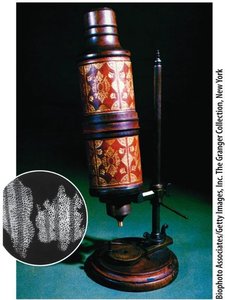
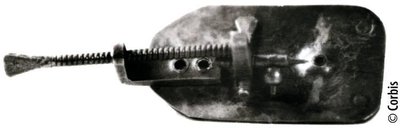
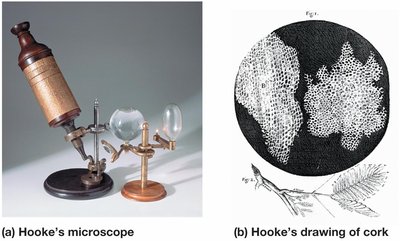
The discovery of cells was made possible by the invention and refinement of the microscope. Robert Hooke first observed cells in cork, while Antonie van Leeuwenhoek used a single-lens microscope to observe bacteria and protozoa.
Microscopes are essential tools for cell biology, enabling visualization of cellular structures.
Advances in microscopy improved resolution and magnification, allowing detailed studies of cells.
The Cell Theory
Historical Development
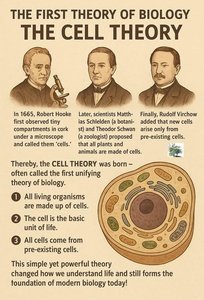
The cell theory is a foundational concept in biology, articulated by Schleiden, Schwann, and Virchow in the 19th century.
All living organisms are composed of one or more cells.
The cell is the basic unit of structure and function in organisms.
All cells arise from pre-existing cells by division.
Unity and Diversity of Cells
Cellular Diversity
Cells vary greatly in appearance and function, yet share fundamental biochemical properties. All present-day cells are thought to have evolved from a common ancestral cell.
Genes provide instructions for cell form, function, and behavior.
HeLa cells are an example of human cells cultured for extended periods.
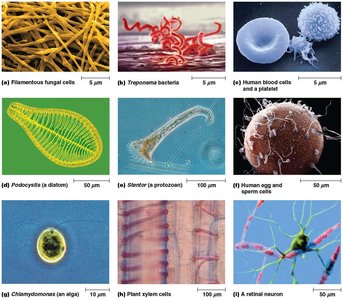
Basic Properties of Cells
Cells are highly complex and organized, possess a genetic program, can grow and reproduce, acquire and utilize energy, and are capable of self-regulation and evolution.
Cells can reproduce, with each daughter cell receiving a complete set of genetic instructions.
Cells acquire energy through photosynthesis or by metabolizing glucose.
Classes of Cells: Prokaryotes and Eukaryotes
Comparison of Prokaryotic and Eukaryotic Cells
Cells are classified into two fundamental types: prokaryotic and eukaryotic. Prokaryotes include bacteria and archaea, while eukaryotes include protists, fungi, plants, and animals.
Prokaryotes are simpler, lack membrane-bound organelles, and have a nucleoid region.
Eukaryotes are more complex, possess membrane-bound organelles, and have a nucleus.
Cell division: Eukaryotes divide by mitosis; prokaryotes by binary fission.
Locomotion: Eukaryotes use cilia and flagella; prokaryotes have simpler flagella.
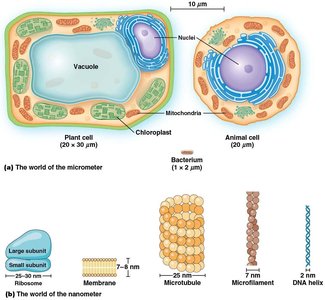
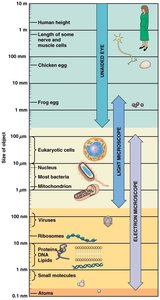
Cellular Dimensions and Microscopy
Cell size and structure are studied using various types of microscopes. The light microscope is used for eukaryotic cells, while electron microscopes are required for smaller structures like viruses and ribosomes.
Cell size is limited by the surface area-to-volume ratio.
Microscopy allows visualization of organelles and molecular structures.
Genetic Information and Central Dogma
Genetic Program of Cells
Cells possess a genetic program encoded in DNA, which guides cellular reproduction, activity, and structure. The hereditary information in the fertilized egg determines the nature of the multicellular organism.
Genes encode information for building cells and organisms.
All cells transcribe portions of their hereditary information into RNA.
Central Dogma of Molecular Biology
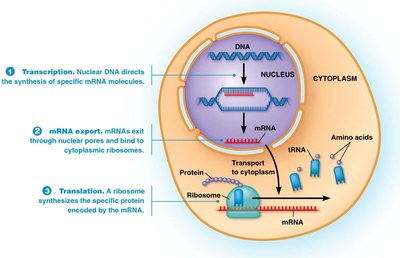
The central dogma describes the flow of genetic information from DNA to RNA to protein.
Transcription: DNA is used to synthesize RNA.
Translation: RNA guides the synthesis of proteins.
Many different sets of RNA can be made, allowing cell specialization.
Biological Macromolecules
Types and Synthesis
Biological macromolecules are large molecules essential for life, built from smaller organic molecules. The four major classes are nucleic acids, proteins, carbohydrates, and lipids.
Macromolecules are formed from monomers via dehydration synthesis.
Polymers break down into monomers during hydrolysis.
Enzymes catalyze both synthesis and breakdown reactions.
Proteins: Structure and Function
Proteins are polymers of amino acids with diverse functions, including structural, regulatory, contractile, protective, transport, storage, and enzymatic roles.
Protein structure is determined by the sequence and number of amino acids.
Proteins have four levels of structure: primary, secondary, tertiary, and quaternary.
Enzymes are proteins that catalyze biochemical reactions.
Cellular Organelles and Structures
Eukaryotic Cell Organelles
Eukaryotic cells contain membrane-bound organelles, each with specialized functions.
Nucleus: Information store, contains chromosomes and nucleolus.
Mitochondria: Generate energy via cellular respiration.
Chloroplasts: Capture energy from sunlight (photosynthesis).
Endoplasmic Reticulum: Synthesizes proteins (rough ER) and lipids (smooth ER).
Golgi Apparatus: Modifies, packages, and ships proteins.
Lysosomes and Peroxisomes: Digest and detoxify cellular materials.
Vacuoles: Storage, especially prominent in plant cells.
Cytoskeleton: Provides structural support and enables cell movement.
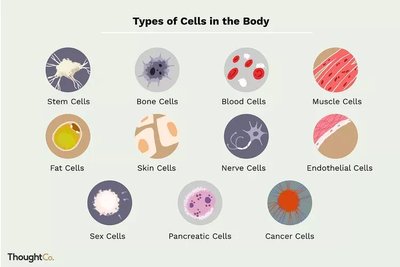
Origin and Evolution of Cells
Endosymbiotic Theory
The endosymbiotic theory explains the origin of mitochondria and chloroplasts as formerly free-living prokaryotes engulfed by ancestral eukaryotic cells.
Evidence includes organelle DNA, ribosomes, and replication by binary fission.
Prokaryotic cells arose first and gave rise to eukaryotic cells.
Abiotic Synthesis and Miller-Urey Experiment
The Miller-Urey experiment demonstrated that simple organic molecules could form abiotically from inorganic starting materials when energy was supplied, supporting the idea of chemical evolution.
Amino acids and other organic compounds were produced under simulated early Earth conditions.
Viruses, Viroids, and Prions
Viruses
Viruses are acellular pathogens that require host cells for replication. They consist of genetic material (DNA or RNA), a protein capsid, and sometimes a lipid envelope.
Viral infection can be lytic or involve integration into the host genome.
Viroids and prions are other types of infectious agents, with viroids being small RNA molecules and prions being misfolded proteins.
Plasma Membrane and Fluid Mosaic Model
Structure and Function
The plasma membrane is a phospholipid bilayer with embedded proteins, cholesterol, and carbohydrates. The fluid mosaic model describes its dynamic and flexible nature.
Proteins in the membrane serve as enzymes, anchors, and transporters.
Membrane fluidity is influenced by temperature, cholesterol, and fatty acid composition.
Summary Table: Prokaryotic vs. Eukaryotic Cells
Feature | Prokaryotic Cells | Eukaryotic Cells |
|---|---|---|
Complexity | Simple | Complex |
Organelles | No membrane-bound organelles | Membrane-bound organelles |
Nucleus | Nucleoid region | Membrane-bound nucleus |
Cell Division | Binary fission | Mitosis |
Genetic Material | Single, circular DNA | Multiple, linear chromosomes |
Locomotion | Simple flagella | Cilia and flagella (complex) |
Summary Table: Levels of Protein Structure
Level | Description | Example |
|---|---|---|
Primary | Sequence of amino acids | Insulin A and B chains |
Secondary | Local folding (α-helix, β-sheet) | Keratin, silk |
Tertiary | 3D structure due to R group interactions | Globular enzymes |
Quaternary | Interaction of multiple polypeptides | Hemoglobin |
