Pearson+ LogoPearson+ Logo
Ch. 6 How Cells Harvest Chemical Energy
Taylor - Campbell Biology: Concepts & Connections 10th Edition
Taylor, Simon, Dickey, Hogan10th EditionCampbell Biology: Concepts & ConnectionsISBN: 9780136538783Not the one you use?Change textbook
Chapter 6, Problem 11

Explain how your body can convert excess carbohydrates in the diet to fats.
Can excess carbohydrates be converted to protein?
What else must be supplied?

Verified step by step guidance
1
Carbohydrates consumed in excess are broken down into glucose molecules during digestion. These glucose molecules enter the bloodstream and are used for immediate energy or stored as glycogen in the liver and muscles.
When glycogen storage capacity is exceeded, the excess glucose undergoes a process called glycolysis, where it is converted into pyruvate. Pyruvate is then further processed into acetyl-CoA, a key molecule in metabolic pathways.
Acetyl-CoA can enter the lipogenesis pathway, where it is used to synthesize fatty acids. These fatty acids are then combined with glycerol to form triglycerides, which are stored in adipose tissue as fat.
Excess carbohydrates cannot be directly converted into proteins because proteins are made from amino acids, which are nitrogen-containing molecules. Carbohydrates lack nitrogen, so the body cannot synthesize amino acids from carbohydrates alone. To produce proteins, the body requires a dietary source of nitrogen, typically from amino acids found in protein-rich foods.
In addition to carbohydrates, the body must have sufficient energy (ATP) and cofactors such as NADPH to drive the lipogenesis process. For protein synthesis, essential amino acids must be supplied through the diet, as the body cannot produce them on its own.

Verified video answer for a similar problem:

This video solution was recommended by our tutors as helpful for the problem above.
Video duration:
1m
Was this helpful?

Key Concepts

Here are the essential concepts you must grasp in order to answer the question correctly.

Carbohydrate Metabolism

Carbohydrate metabolism involves the breakdown of carbohydrates into glucose, which is then used for energy. When there is an excess of glucose, the body can convert it into glycogen for short-term storage in the liver and muscles. Once glycogen stores are full, the body transforms excess glucose into fatty acids through a process called lipogenesis, which are then stored as fat.
Recommended video:
Guided course
04:53
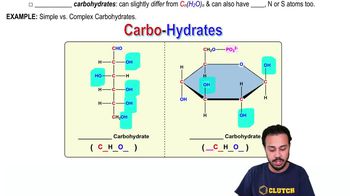
Carbohydrates

Lipogenesis

Lipogenesis is the metabolic process through which excess carbohydrates are converted into fatty acids and subsequently stored as fat in adipose tissue. This process occurs primarily in the liver and adipose tissue and is stimulated by insulin, which promotes the uptake of glucose and its conversion into fat when energy needs are met.

Protein Synthesis and Nitrogen Requirement

While carbohydrates can be converted into fats, they cannot be directly converted into proteins. Protein synthesis requires amino acids, which are the building blocks of proteins. For the body to synthesize proteins, it must have an adequate supply of essential amino acids, which are obtained from dietary proteins, along with sufficient energy from carbohydrates or fats.
Recommended video:
Guided course
06:31
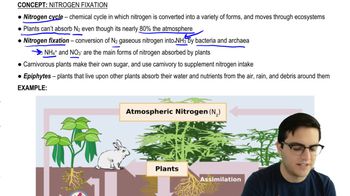
Nitrogen Cycle