Pearson+ LogoPearson+ Logo
Ch. 38 Conservation Biology
Taylor - Campbell Biology: Concepts & Connections 10th Edition
Taylor, Simon, Dickey, Hogan10th EditionCampbell Biology: Concepts & ConnectionsISBN: 9780136538783Not the one you use?Change textbook
Chapter 38, Problem 11

What are the causes and possible consequences of climate change?
Why is international cooperation necessary if we are to solve this problem?

Verified step by step guidance
1
Understand the causes of climate change: Climate change is primarily caused by the accumulation of greenhouse gases (GHGs) such as carbon dioxide (CO₂), methane (CH₄), and nitrous oxide (N₂O) in the atmosphere. These gases trap heat, leading to global warming. Major sources include burning fossil fuels, deforestation, industrial processes, and agricultural practices.
Examine the possible consequences of climate change: Climate change can lead to rising global temperatures, melting ice caps, rising sea levels, extreme weather events (e.g., hurricanes, droughts, floods), loss of biodiversity, and disruptions to ecosystems. It can also impact human health, food security, and water availability.
Recognize the global nature of the problem: Climate change affects the entire planet, regardless of national borders. For example, rising sea levels can threaten coastal regions worldwide, and extreme weather events can disrupt global supply chains and economies.
Understand the need for international cooperation: Since greenhouse gas emissions from one country can impact the global climate, addressing climate change requires coordinated efforts among nations. International agreements, such as the Paris Agreement, aim to set collective goals for reducing emissions and mitigating climate impacts.
Explore mechanisms for cooperation: International cooperation can involve sharing technology, funding climate adaptation and mitigation efforts in developing countries, and setting global standards for emissions reductions. Collaboration ensures that all nations contribute to solving the problem and benefit from shared solutions.

Verified video answer for a similar problem:

This video solution was recommended by our tutors as helpful for the problem above.
Video duration:
3m
Was this helpful?

Key Concepts

Here are the essential concepts you must grasp in order to answer the question correctly.

Greenhouse Gases

Greenhouse gases, such as carbon dioxide and methane, trap heat in the Earth's atmosphere, leading to an increase in global temperatures. Human activities, particularly the burning of fossil fuels and deforestation, have significantly increased the concentration of these gases, contributing to climate change. Understanding their role is crucial for addressing the root causes of climate change.
Recommended video:
Guided course
07:48
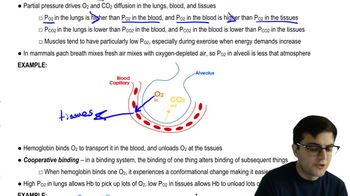
Diffusion of Gases

Ecosystem Impact

Climate change affects ecosystems by altering habitats, disrupting food chains, and leading to species extinction. Changes in temperature and precipitation patterns can result in shifts in biodiversity and ecosystem services, such as pollination and water purification. Recognizing these impacts is essential for predicting the broader consequences of climate change on the planet.
Recommended video:
Guided course
03:35
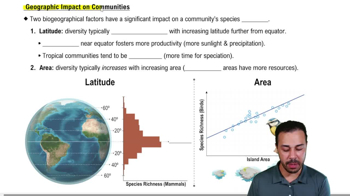
Geographic Impact on Communities

International Cooperation

International cooperation is vital in combating climate change because it is a global issue that transcends national borders. Effective solutions require coordinated efforts to reduce emissions, share technology, and support vulnerable countries. Collaborative agreements, like the Paris Agreement, aim to unify countries in their commitment to mitigate climate change and adapt to its effects.
Recommended video:
Guided course
07:48
Diffusion of Gases
Related Practice
Textbook Question
Which of the following statements about protected areas is not correct?a. We now protect 25% of the land areas of the planet.b. National parks are only one type of protected area.c. Most reserves are smaller in size than the ranges of some of the species they are meant to protect.d. Management of protected areas must coordinate with the management of lands outside the protected zone.
965
views
Textbook Question
What are the three levels of biological diversity? Explain how human activities threaten each of these levels.
1601
views
Textbook Question
What are 'greenhouse gases'? Why are they important to life on Earth?
1258
views
Textbook Question

The human-generated increase in greenhouse gases (see Module 38.3) provides many opportunities to study the effects of climate change. For example, snowshoe hares are adapted to the climate of their habitat in the taiga of the high mountains and northern regions of North America. One adaptation is seasonal changes in fur color—a white winter coat that turns brown in the spring—that camouflage hares from a long list of predators. These color changes are triggered by day length. As increasing spring temperatures cause earlier snowmelt in the taiga, biologists have observed many white hares sitting on brown earth. Suggest how this natural experiment could be used to investigate the effects of climate change on populations and communities in the taiga ecosystem (assume historical data are available).

927
views
Textbook Question

Researchers studied active and abandoned pika colonies at two sites (one in southeast Oregon and one in northwest Nevada) to understand how elevation might influence pika range (see Module 38.0 and Module 38.11). Sites were classified as old (no longer occupied) or current. How would you summarize the findings?

Does this study support the hypothesis that pika ranges are shifting to higher elevations due to climate change?

What are some limitations to describing patterns in nature as compared to doing a controlled experiment?

782
views
Textbook Question

Will increasing atmospheric levels of CO₂ make you sneeze as well as itch?

Scientists studying the effects of rising CO₂ levels have looked at ragweed, whose pollen is the primary allergen for fall hay fever. They grew ragweed in three levels of CO₂: a pre-industrial concentration of 280 ppm, a year 2000 level of 370 ppm, and a projected level of 600 ppm. They found that pollen production increased by 131% and 320% in the plants exposed to the recent and projected CO₂ levels, respectively.

What was the hypothesis of this experiment?

Do the results support the hypothesis?

Given what you know about climate change, what other variables would you like to test, and what other measurements would you like to take?

1184
views