Understanding the geographic impact on communities is essential for grasping how species diversity is influenced by biogeographical factors, particularly latitude and area. Latitude has an inverse relationship with species diversity, meaning that as one moves away from the equator, species diversity typically decreases. This phenomenon can be attributed to several factors. The equatorial region benefits from a climate that promotes biological productivity, supporting a wider range of species. This is largely due to the equator receiving more direct sunlight and higher annual precipitation compared to other latitudes. Additionally, tropical communities are generally older than those at higher latitudes, as glaciation events during ice ages have reset many northern communities, while equatorial regions have had more time for speciation to occur, leading to greater species diversity.
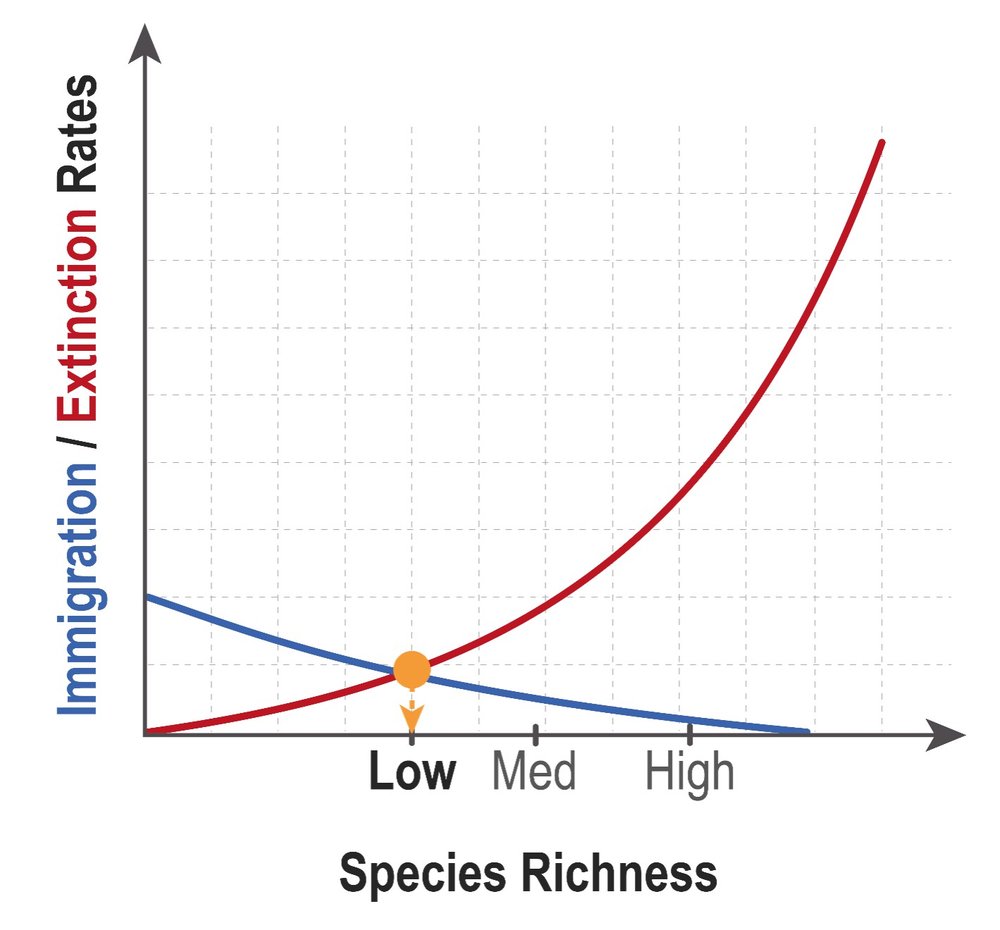
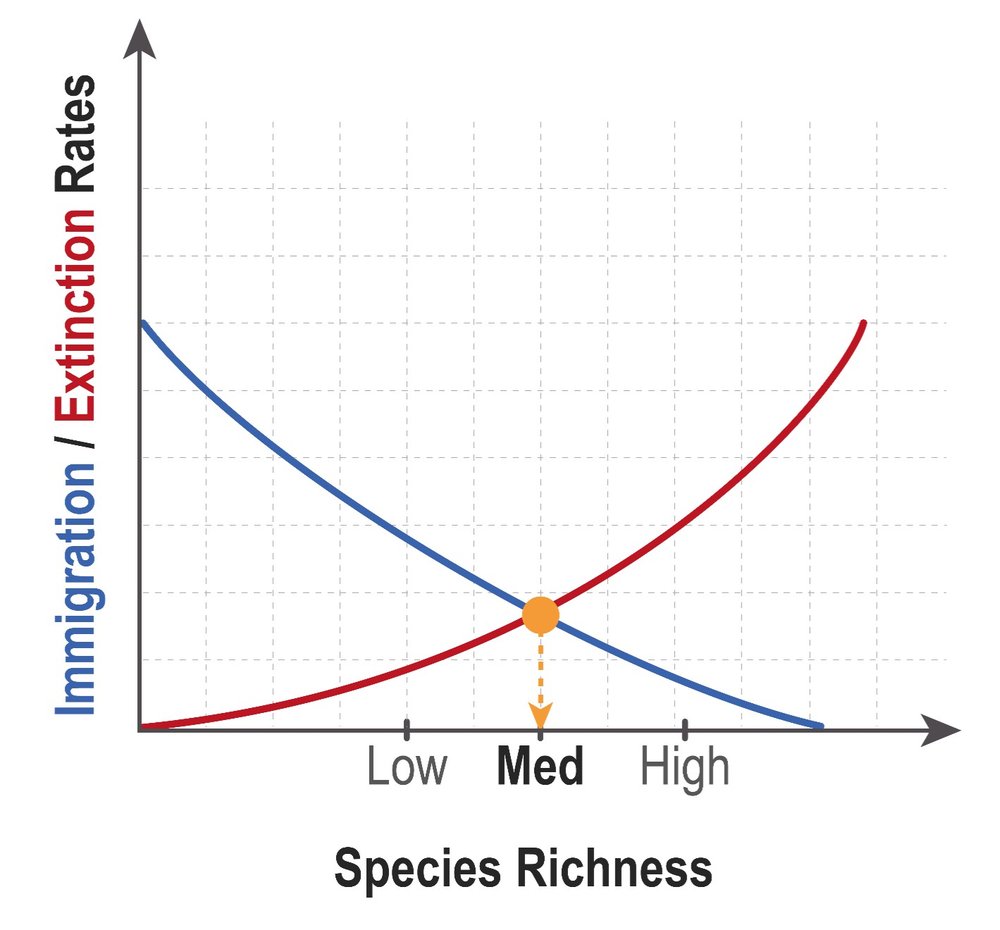
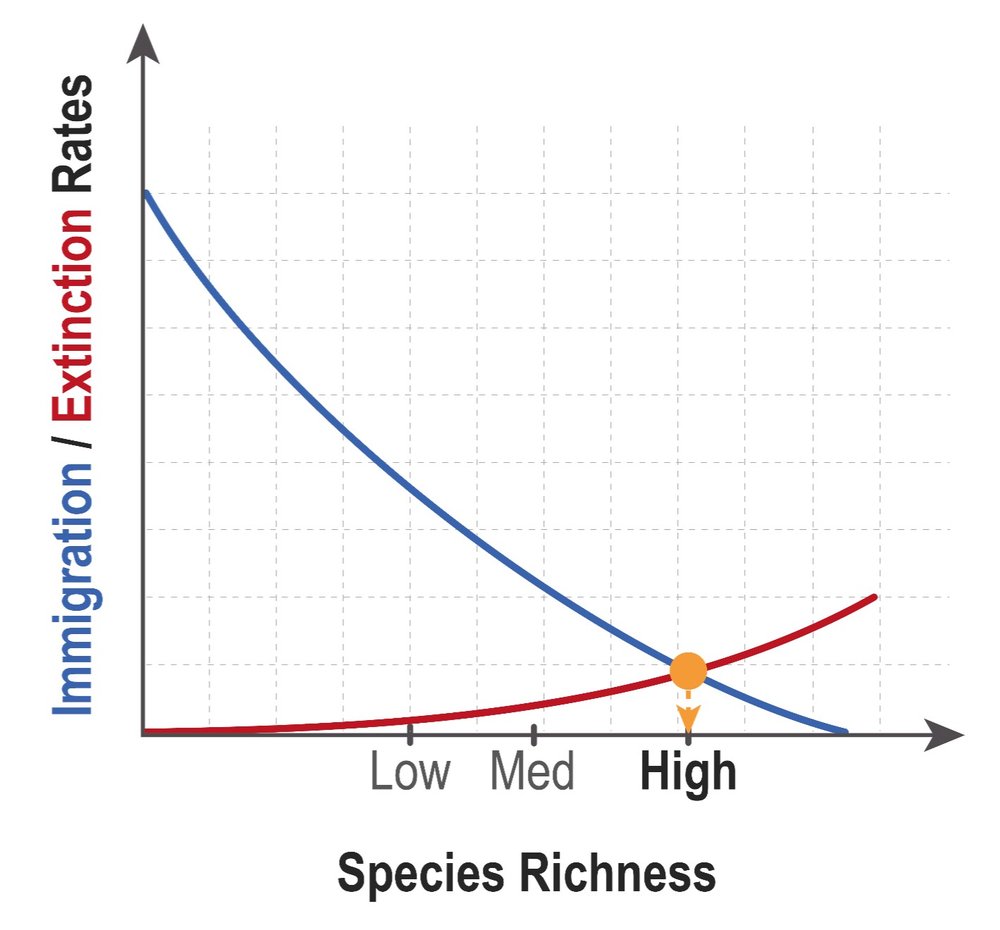
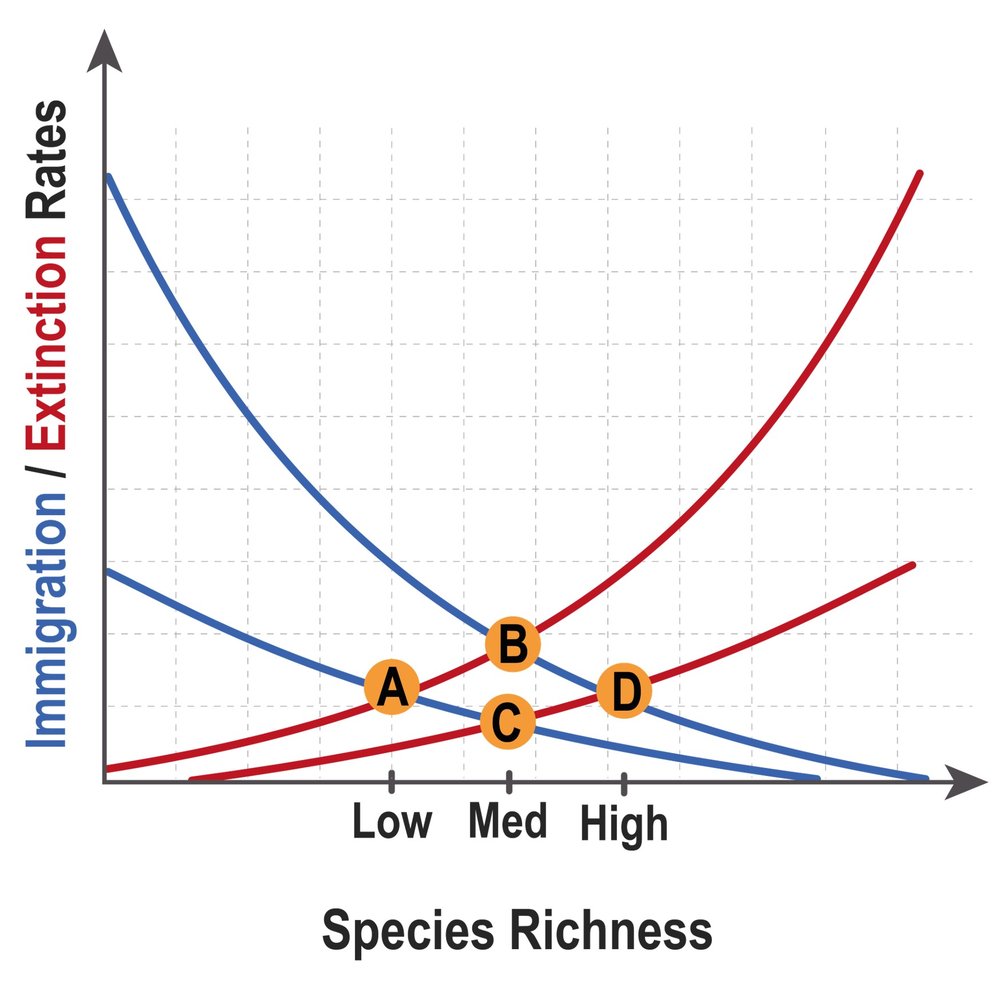
In contrast, area has a directly proportional relationship with species diversity. As the area increases, so does the species diversity. Larger areas provide more resources, habitats, and microhabitats, which can accommodate a broader range of species. Furthermore, larger areas are more likely to be discovered by migrating species, enhancing the potential for greater biodiversity.
Visual representations of these concepts further illustrate the relationships. For instance, a graph depicting species richness for mammals shows that species richness peaks at the equator and declines as one moves toward higher latitudes. Similarly, another graph demonstrates that smaller islands exhibit lower species richness, while larger islands correspond with increased species richness and diversity.
These insights into the effects of latitude and area on species diversity are crucial for understanding ecological dynamics and will be applicable in future discussions on biodiversity and conservation.