Pearson+ LogoPearson+ Logo
Ch. 1 Biology: The Study of Scientific Life
Taylor - Campbell Biology: Concepts & Connections 10th Edition
Taylor, Simon, Dickey, Hogan10th EditionCampbell Biology: Concepts & ConnectionsISBN: 9780136538783Not the one you use?Change textbook
Chapter 1, Problem 16c

The graph below shows the results of an experiment in which mice learned to run through a maze. List some variables that must have been controlled so as not to affect the results.
Graph showing average maze completion time for mice with and without food reward over six days.

Verified step by step guidance
1
Identify the independent variable in the experiment, which is the type of reward given to the mice (no reward vs. food reward). This variable is manipulated to observe its effect on the dependent variable.
Recognize the dependent variable, which is the average time it takes for the mice to complete the maze (measured in minutes). This is the outcome being measured in response to the independent variable.
List potential controlled variables that must remain constant to ensure the validity of the experiment. Examples include: the maze design (same layout for all mice), the age and species of the mice (to ensure similar physical and cognitive abilities), and the time of day the experiment is conducted (to avoid variations in activity levels).
Consider environmental factors that must be controlled, such as lighting, noise levels, and temperature in the testing area, as these could influence the mice's behavior and performance.
Ensure that the number of trials and the duration of the experiment are consistent for all groups of mice. For example, all mice should have the same number of days to practice running through the maze and the same number of attempts per day.

Verified video answer for a similar problem:

This video solution was recommended by our tutors as helpful for the problem above.
Video duration:
4m
Was this helpful?

Key Concepts

Here are the essential concepts you must grasp in order to answer the question correctly.

Controlled Variables

Controlled variables are factors that are kept constant throughout an experiment to ensure that any observed changes in the dependent variable are due to the independent variable. In the context of the maze experiment, variables such as the age, sex, and health of the mice, as well as the maze environment and time of day, should be controlled to avoid influencing the results.
Recommended video:

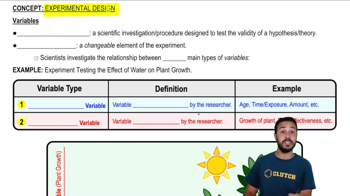
Independent and Dependent Variables

In an experiment, the independent variable is the factor that is manipulated, while the dependent variable is the outcome that is measured. In this case, the independent variable is the presence or absence of a food reward, and the dependent variable is the average time taken by the mice to complete the maze. Understanding this distinction is crucial for analyzing the results accurately.
Recommended video:

Learning and Memory in Mice

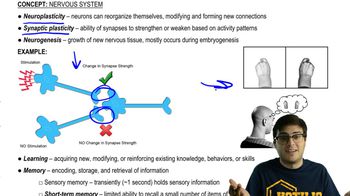
Learning and memory are critical concepts in behavioral biology, particularly in studies involving maze navigation. Mice can learn to associate certain cues with rewards, which can affect their performance over time. The experiment's design should account for the learning curve of the mice, as repeated trials may lead to improved maze completion times, independent of the reward condition.
Recommended video:
Guided course
07:41
Neuroplasticity, Learning, and Memory