Pearson+ LogoPearson+ Logo
Ch. 22 Gas Exchange
Taylor - Campbell Biology: Concepts & Connections 10th Edition
Taylor, Simon, Dickey, Hogan10th EditionCampbell Biology: Concepts & ConnectionsISBN: 9780136538783Not the one you use?Change textbook
Chapter 22, Problem 14

Mountain climbers often spend weeks adjusting to the lower partial pressure of oxygen at high altitudes before and during their ascent of high peaks. During that time, their bodies begin to produce more red blood cells. Some runners and cyclists prepare for competition by training at high altitudes or by sleeping in a tent in which PO₂ is kept artificially low. Explain why this training strategy may improve an athlete's performance.

Verified step by step guidance
1
Understand the concept of partial pressure of oxygen (PO2): At high altitudes, the partial pressure of oxygen is lower, meaning there is less oxygen available in the air for the body to use. This creates a condition called hypoxia, which triggers physiological adaptations in the body.
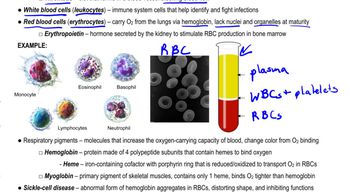
Explain the role of red blood cells in oxygen transport: Red blood cells contain hemoglobin, a protein that binds oxygen and transports it to tissues throughout the body. Increasing the number of red blood cells enhances the body's ability to carry oxygen, especially under conditions of low PO2.
Describe the body's response to low PO2: When exposed to low oxygen levels, the kidneys release a hormone called erythropoietin (EPO), which stimulates the production of more red blood cells in the bone marrow. This process is called erythropoiesis and helps improve oxygen delivery to tissues.
Connect the adaptation to athletic performance: By training or sleeping in environments with low PO2, athletes can increase their red blood cell count. This adaptation allows their bodies to transport more oxygen to muscles during exercise, improving endurance and performance in competitions, especially at normal altitudes.
Discuss the long-term benefits: The increased red blood cell count and enhanced oxygen transport capacity persist for a period of time after returning to normal altitude, giving athletes a competitive edge during events where oxygen demand is high.

Verified video answer for a similar problem:

This video solution was recommended by our tutors as helpful for the problem above.
Video duration:
1m
Was this helpful?

Key Concepts

Here are the essential concepts you must grasp in order to answer the question correctly.

Partial Pressure of Oxygen (PO2)

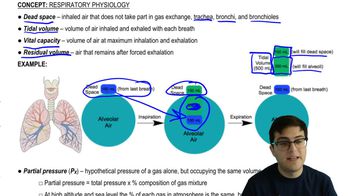
Partial pressure of oxygen refers to the pressure exerted by oxygen in a mixture of gases, such as the atmosphere. At high altitudes, the overall atmospheric pressure decreases, leading to a lower partial pressure of oxygen. This reduced availability of oxygen can challenge the body, prompting physiological adaptations that enhance oxygen delivery and utilization during physical exertion.
Recommended video:
Guided course
08:52
Air Movement and Partial Pressure

Erythropoiesis

Erythropoiesis is the process of producing red blood cells (RBCs) in the bone marrow. When exposed to lower oxygen levels, the body increases the production of erythropoietin, a hormone that stimulates erythropoiesis. An increase in RBCs enhances the blood's oxygen-carrying capacity, which can improve athletic performance by allowing muscles to receive more oxygen during intense activities.
Recommended video:

Altitude Training

Altitude training involves training at high elevations where oxygen levels are lower, or simulating such conditions through specialized equipment. This strategy encourages the body to adapt by increasing red blood cell production and improving cardiovascular efficiency. Athletes who undergo altitude training often experience enhanced endurance and performance when competing at lower altitudes, where oxygen is more readily available.
Recommended video:
Guided course
10:26
Animal Physiology and Fitness Trade-Offs
Related Practice
Textbook Question

Trace the path of an oxygen molecule in its journey from the air to a muscle cell in your arm, naming all the structures involved along the way.

6892
views
Textbook Question

Carbon monoxide (CO) is a colorless, odorless gas found in furnace and automobile engine exhaust and cigarette smoke. CO binds to hemoglobin 210 times more tightly than does O2. CO also binds with an electron transport protein and disrupts cellular respiration. Explain why CO is such a deadly gas.

1338
views
Textbook Question

Partial pressure reflects the relative amount of gas in a mixture and is measured in millimeters of mercury (mm Hg). Llamas are native to the Andes Mountains in South America. The partial pressure of O2 (abbreviated PO₂) in the atmosphere where llamas live is about half of the PO₂ at sea level. As a result, the PO₂ in the lungs of llamas is about 50 mm Hg, whereas that in human lungs at sea level is about 100 mm Hg. A dissociation curve for hemoglobin shows the percentage of saturation (the amount of O2 bound to hemoglobin) at increasing values of PO₂ As you see in the graph below, the dissociation curves for llama and human hemoglobin differ. Compare these two curves and explain how the hemoglobin of llamas is an adaptation to living where the air is 'thin.'

1767
views
Textbook Question
One of the many mutant opponents that the movie monster Godzilla contends with is Mothra, a giant mothlike creature with a wingspan of 7–8 m. Science fiction creatures like these can be critiqued on the grounds of biomechanical and physiological principles. Focusing on the principles of gas exchange that you learned about in this chapter, what problems would Mothra face? Why do you think truly giant insects are improbable?
862
views
Textbook Question

E-cigarettes pose a dilemma for public health officials. Because e-cigarettes produce fewer toxic chemicals than regular cigarettes, they may be a safer alternative for people who want to quit smoking but still crave nicotine. On the other hand, e-cigarettes may encourage nicotine addiction among teenagers. Evaluate the scientific evidence. Are e-cigarettes an effective aid for quitting cigarettes? What evidence supports the assertion that e-cigarettes are especially harmful to adolescents? The Centers for Disease Control website is a good place to start. cdc.gov/tobacco/basic_information/e-cigarettes/

790
views